How to Rank for "Plumber Near Me": A Local SEO Playbook for Emergency Shops
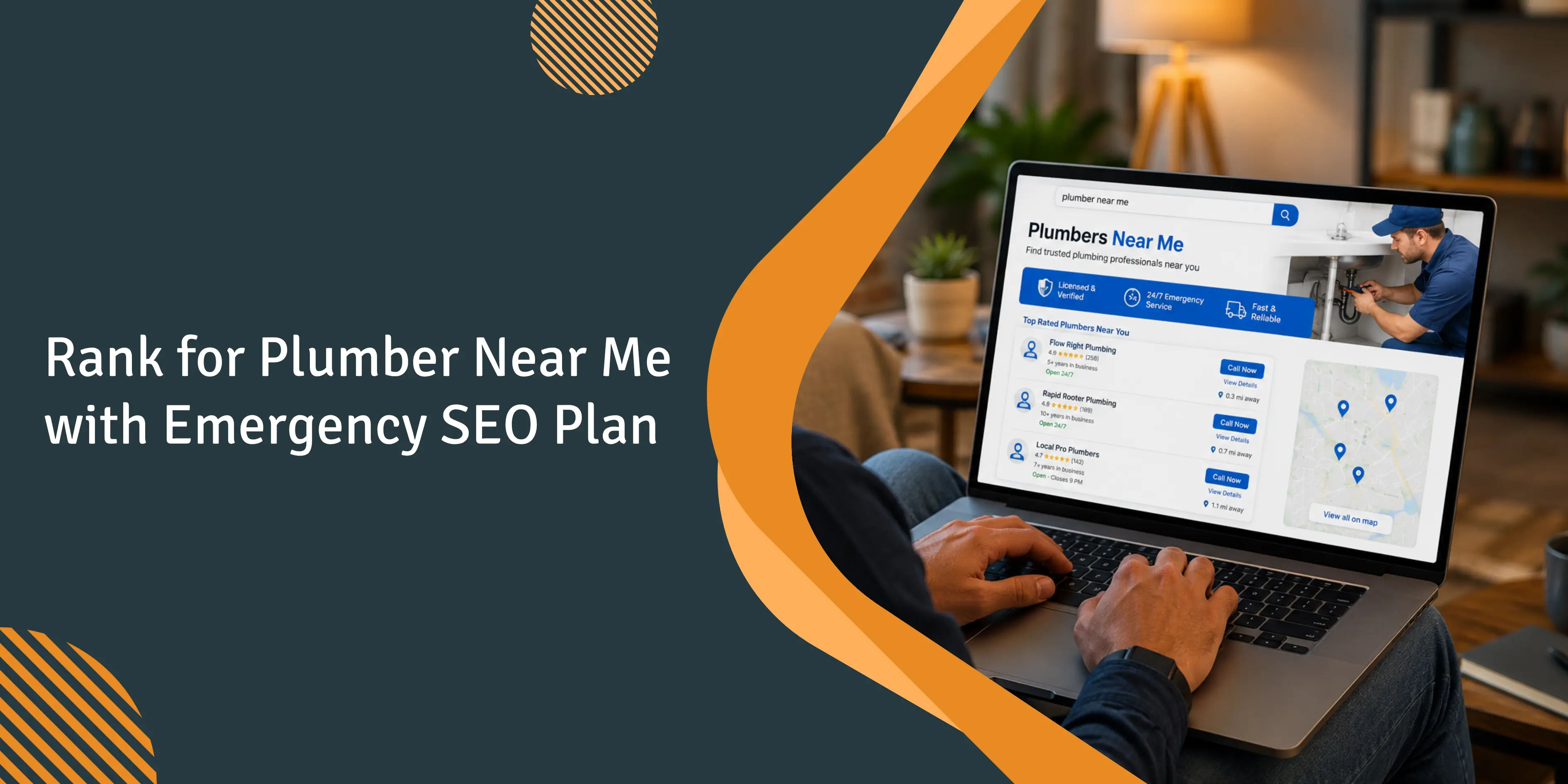
In the early hours of 2:30 a.m. in an average-sized Sun Belt metro, the owner of an emergency plumbing shop watches a homeowner across multiple zip codes type “plumber near me” into a phone. Water is leaking through the ceiling. At the moment the call is placed, the homeowner clicks the first listing that loads with a call button. Most of the time, it isn’t this local shop, it's a national franchise with a more polished Google Business Profile and hundreds more recent reviews.
In Quora threads where owners discuss this issue, it's a common pattern: the website looks professional, the technicians are skilled, and trucks are on the road within minutes - yet the calls still don't come in. The problem is almost never the quality of the work.
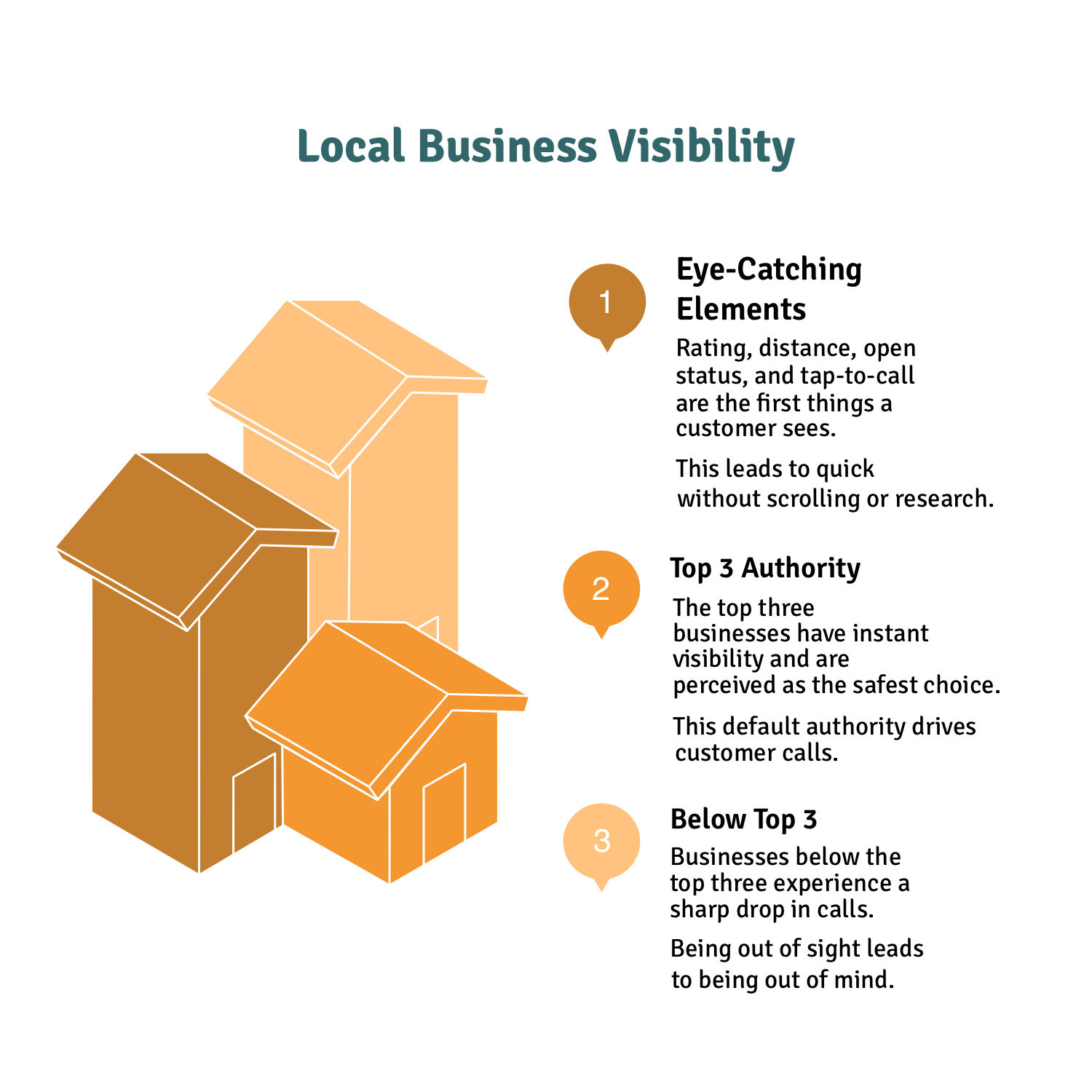
Nearly 46% of all Google searches carry local intent. For emergency plumbing the share is much higher, and most of that traffic never reaches a traditional website ranking - it lives in the map pack. Google's local 3-pack pulls a click-through rate above 48% on local service searches. For a typical 5-20 tech shop without a claimed, review-rich Google Business Profile, nearly half of that nearby intent traffic routes to the three competitors who did claim theirs.
U.S. Plumbing Industry - Market Snapshot (2026)
| Metric | Figure | Source |
| Total industry revenue (2026) | $191.4 billion | IBISWorld, Feb 2026 |
| Number of plumbing businesses (USA) | ~129,000 | IBISWorld, Feb 2026 |
| Revenue CAGR (2021-2026) | 3.1% | IBISWorld, Feb 2026 |
| Share of plumbing searches with local intent | 46%+ of all Google searches | Google / BrightLocal 2026 |
| Local 3-pack CTR (local service searches) | 48%+ | BrightLocal Local Consumer Review Survey 2026 |
| Emergency/urgent nature of plumbing calls | 70-80% of services qualify as urgent | RevenueMemo / IBISWorld analysis |
| Plumber labor shortage forecast (USA, 2026) | 550,000 shortage | Linxup / trade association data |
OUR STANCE: Most "plumber near me" SEO content tells you to publish more blog posts and build more citations. That's backwards. The actual bottleneck for a 5-10 tech shop is operational - review requests that never get sent, GBP photos that never get uploaded, and leads that fall into a dispatch gap between job close and invoice. Fix the workflow first. The ranking follows.
Why do "near me" searches convert almost on the spot?
“Near me” searches come from people dealing with urgent problems - damp floors or no hot water at 6 a.m. They aren’t comparing ten service providers. They’re hiring whoever shows up first. In most cases, the first business to appear in the local pack wins the call.
Deloitte's Milliseconds Make Millions study measured a 0.1-second mobile speed improvement increasing lead-generation performance by 8.3%. In our customer base, plumbing shops that fix mobile speed first usually see emergency call volume climb before any other SEO work pays off. If the phone doesn't ring within three minutes of the search, the customer is already on a competitor's line.
One plumbing owner on Reddit’s r/smallbusiness forum put it simply: “I lost a $4,000 main line job because my website took six minutes to load on mobile. The customer told me this when I ran into them at Home Depot. They went with whoever they found first”. That's the actual cost of a slow website - not a rankings dip, but a $4,000 job that drove away before your truck left the lot.
How does Google actually decide which plumbers show up?
Google's local search documentation is explicit: results are decided by relevance, distance, and prominence. Distance is the one nobody can change. Relevance and prominence are the levers.
Proximity: how close is close enough?
A homeowner in one area can receive different map pack results compared to the same home just three miles away. You can’t override geography. However, you can ensure Google clearly understands the service areas you cover. For service-area businesses, defining your coverage zones in your Google Business Profile is the closest thing to adjusting a proximity dial.
Relevance: does your profile match what people type?
If someone searches “emergency drainage cleaning” and your business category is listed as something generic like “Construction company” with broad service descriptions, Google has nothing specific to evaluate. A complete Business Profile - including selecting “Plumber” as the primary category and clearly listing all emergency services - helps close that gap. Your website should also reflect the same services and use consistent language.
Prominence: why does trust outweigh distance for some queries?
Prominence is the trust signal: reviews, citations, backlinks, age, completeness. Whitespark's 2026 Local Search Ranking Factors survey weighted review signals at 20% of map pack ranking influence, well above citation signals at 6%. From 14 years of customer conversations, the shops that actively work prominence - fresh reviews, complete profile, occasional posts - consistently outrank larger franchises that haven't touched their listing in six months.

A pattern across emergency plumbing operators we've worked with
In the 30-50 plumbing emergency shops with fewer than 10 technicians that we’ve observed over the past few years, the same operational mismatch consistently appears. The most common version is an owner-operator running around six technicians out of a small office in a Sun Belt metro.
Since 2018, what we’ve consistently seen in shops of this size is that late-night phone-quote practices have become a thing of the past. The person answering a 1 a.m. call is focused on securing the job before the customer moves on to the next provider. This shift is driven by code-mandated add-ons - such as expansion tanks, pressure-regulating valves, drain pans, and related components - which are often not fully understood or mentioned during the initial call.
The shop was not appearing in the local pack for after-hours searches in two of the three zip codes it served, so a significant portion of emergency calls were going to national franchises. When calls did come in directly, the initial phone estimate often fell short of the final written estimate once code-required items were added. The difference was either absorbed by technicians or led to job disputes on arrival, and the owner was unable to determine which outcome was more common.
The owner built a one-page emergency pricing template, including diagnostic fees, Good-Better-Best ranges, and line items for potential code-required add-ons, and sent it to the customer before dispatching the truck. Google Business posts and the website were also updated over the weekend with location-specific messaging. The initial SMS template was too dense, so it was revised several times until it became clear enough not to cause confusion - even in 2 a.m. emergency situations.
At the end of two summers, after-hours calls had increased significantly while on-site quotation disputes had almost disappeared. The tradeoff became clear quickly, as price-sensitive callers began to drop off when the SMS was delivered - particularly on weekends and overnight. The owner also added a “callback from the owner” option for leads that did not respond within 10 minutes. Two senior technicians adopted the format immediately, while new hires initially reverted to phone quoting until their pay structure was adjusted to support the new process.
This is a composite case reflecting the most common version of the pattern, not a single named customer.
U.S. Plumbing Industry Revenue Growth (Year-by-Year)
| Year | Estimated Industry Revenue (USA) | Key Driver | Source |
| 2021 | ~$155 billion | Post-pandemic renovation surge, supply chain disruption | IBISWorld / RevenueMemo |
| 2022 | ~$160 billion | Housing market boom, emergency call volume spike | IBISWorld / Linxup |
| 2023 | ~$164 billion | Aging infrastructure replacements, smart fixture demand | IBISWorld / FieldCamp |
| 2024 | ~$168 billion | Cost pass-through on fixture inflation (+28.4% since 2021) | IBISWorld Feb 2026 |
| 2025 | ~$169.8 billion | Steady emergency repair demand, labor shortage pressure | IBISWorld / Linxup 2025 |
| 2026 | $191.4 billion (est.) | Infrastructure investment, price-driven growth | IBISWorld, Feb 2026 |
What does a Google Business Profile that earns calls look like?
Your Google Business Profile is the single highest-leverage asset for "plumber near me" ranking. Completion isn't a one-time setup task; it's a maintenance habit. Profiles touched weekly outperform abandoned ones by margins that make on-page SEO look small.
Are your category and services specific enough?
Select “Plumber” as your primary category. Next, list each emergency-specific service, such as burst pipe repair, sewer backup, sump pump failure, slab leak detection, and gas line leaks. The more detailed your list, the more search variations Google can match you with. Vague listings reduce visibility in search results.
Are your service areas and emergency hours doing the work?
Be sure to clearly define each neighborhood and city you serve. If your hours list “Mon-Fri 8-5,” but your website claims 24/7 emergency service, Google will prioritize the listed hours as the source of truth. As a result, you may not appear for “open now” searches until your stated hours reflect availability. If you offer true emergency service, make sure your Google Business Profile reflects 24-hour availability and that holiday hours are updated accurately. For many businesses, this single correction can improve after-hours visibility within a week.
Why do photos and weekly posts move the needle?
Photographs of technicians working on real jobs, branded trucks, and completed work build trust more quickly than stock photos. Profiles with regular photo uploads receive more direction requests and website clicks. Weekly Google Posts signal that the business is active, not a stale website.
A plumbing shop reviewing Field Promax on the QuickBooks App Store described the compounding effect: automated SMS follow-ups after every service call drive customers to reply and schedule the next job within minutes.
How should your business description read?
Use natural sentences. Make sure to mention emergency plumbing, the cities you serve, and the specialties you offer - without keyword stuffing. If a sentence reads like it was written by a machine, Google’s systems are likely to interpret it the same way.
GBP Optimization - Ranking Signal Weight (Whitespark 2026)
| Factor | Map Pack Weight | Organic Local Weight | Notes |
| Review signals (volume, velocity, recency) | 20% | 16% | Single highest-leverage factor after proximity |
| Google Business Profile signals | 17% | 7% | Completeness, category accuracy, photo activity |
| On-page signals | 6% | 19% | City/service keywords in titles, H1s, meta |
| Citation signals (NAP consistency) | 6% | 5% | Yelp, Angi, BBB, Thumbtack, HomeAdvisor |
| Behavioral signals (clicks, calls, check-ins) | 9% | 7% | Click-to-call from GBP drives this signal |
| Link signals | 5% | 22% | Local backlinks outweigh quantity by far |
Source: Whitespark 2026 Local Search Ranking Factors survey
How do reviews turn into ranking signals?
BrightLocal's Local Consumer Review Survey found 92% of consumers read reviews of local businesses before their first visit. For a typical 5-20 tech plumbing shop sitting on stale 4-star ratings, nearly every prospect is comparing you against competitors actively collecting fresh reviews after every job. Shops we work with that automate the post-job review ask report a steady lift in booked calls within a quarter.
It’s also important to consider timing. A similar survey found that 27% of customers expect reviews to be no older than two weeks. Older reviews aren’t necessarily considered invalid, but they carry less influence and don’t contribute as much to ongoing momentum. The best time to request a review is immediately after the job is completed, when customer satisfaction is at its highest.
Should review requests be automated, and how?
Sending the review link by SMS the moment the tech marks the job complete is the highest-conversion timing we've seen. Most small shops on Field Promax use the Google review management tool to fire the request automatically when job status changes. No dispatcher remembering, no day-after lull.
A shop that receives five fresh reviews every week can outrank a shop generating 15 reviews per quarter, since Google also considers the recency and quality of reviews. Encourage customers to mention the specific service or city. For example, “Fixed an issue with a slab leak in Chandler” provides valuable local context to Google, whereas “great customer service!” does not.
For the wider workflow, see our guide on how to grow a plumbing business.
"Once we set up the automatic review text the second a job closes, reviews started coming in faster than we'd ever gotten them manually. Three months later we were in the top 3 for our main zip code." - Verified G2 reviewer, Field Promax, 5-tech plumbing shop, Texas
Which emergency keywords are worth chasing?
Google Keyword Planner is free and accurate enough. Search "plumber near me" and "emergency drain cleaning" and filter for buyer-intent modifiers: "repair", "emergency", "24/7", "cost", "tonight".
Long-tail combinations of service and location - such as “emergency plumber Plano” or “slab leak Frisco” - are typically less competitive and convert better than broader searches like “plumber near me”. Major franchises focus heavily on the high-volume head terms. This leaves an opportunity to win traffic through long-tail search terms.
Look at what local competitors rank for that you don't. See finding top service keywords for field service businesses for a worked example.
Emergency Plumbing Keyword Clusters - Intent & Value
| Keyword Type | Example | Typical Monthly Volume | Competition | Conversion Intent |
| Head term (local) | plumber near me | High (10k-100k national) | High - dominated by franchises | Very high |
| Service + emergency modifier | emergency plumber open now | Medium | Medium | Extremely high (crisis intent) |
| Service + city (long-tail) | burst pipe repair Plano TX | Low-medium (100-1k) | Low - opportunity for independents | Very high |
| Problem + location | slab leak Frisco TX | Low (50-500) | Very low | High (homeowner already diagnosed issue) |
| Time-sensitive modifier | 24/7 plumber [city] | Low-medium | Low-medium | Extremely high |
| Cost query | emergency plumber cost tonight | Low | Low | High (price-checker pre-call) |
Volume ranges approximate. Use Google Keyword Planner or Ahrefs for exact local figures in your metro.
What does an emergency landing page that converts look like?
A website designed specifically for emergency plumbing signals to Google the exact intent you want to rank for. Include the primary keyword and city in the H1. Your emergency service list should clearly cover issues such as gas line leaks, water heater failure, and sump pump breakdowns.
Three things you can fix on most emergency service pages:
- Make sure mobile call buttons are prominent and visible without scrolling.
- Place a trust block at the top of the page that includes license numbers, insurance details, years in business, and certifications.
- Ensure the page loads in under three seconds on an average Android device over 4G.
A short FAQ section at the bottom can also capture additional long-tail search traffic.
Do you need a separate page for every city you serve?
If a six-tech shop covers three zip codes and ranks in two of them but not the third, the issue is usually the service-area page. Each neighborhood or city should have its own page with genuinely unique content - including local landmarks, common plumbing issues in the area (such as old galvanized pipes or slab leaks in clay-heavy soil), and region-specific pricing patterns.
Avoid duplication or spun content. Google’s duplicate content filters can remove thin pages from search visibility, which is more damaging than having no page at all. For a small shop with around six technicians, starting with three to seven well-built city pages is generally the right approach.
Why do focused service pages outrank one big homepage?
Google tends to prioritize focused service pages over a single homepage that tries to cover everything. Separate pages should be created for each service - such as drain cleaning, water heater repair, burst pipe repair, sewer backup repair, and sump pump replacement - and each page should clearly reference the specific service area. City pages should link to individual service pages, and those service pages should link back to the relevant locations. This internal structure signals to Google that the site has depth, not just surface-level coverage.
Which FAQs capture extra "near me" traffic?
FAQ blocks contain question-style search queries that homepage or head pages typically do not capture. For example:
- How fast can an emergency plumber arrive?
- What does emergency plumbing cost at night?
- Do plumbers charge extra for weekend service?
- Are you truly open 24/7, or is it just marketing?
Add FAQ schema markup so Google can render answers as rich snippets.
How do local citations build map-pack trust?
Citations come from directories such as Yelp, Angi, BBB, HomeAdvisor, Thumbtack, Nextdoor, and other industry-specific platforms. Whitespark’s ranking factors survey for 2026 indicates that citations account for around 6% of local search ranking factors - significant, but not dominant.
Your business name, address, and phone number must match exactly across every listing. "St." vs "Street" matters. "Inc." vs "LLC" matters. Use Whitespark, Moz Local, or BrightLocal to audit and fix inconsistencies in one pass. For a six-tech shop, the foundational 15 citations matter more than the long tail of 80.
Is your mobile speed costing you emergency calls?
Portent's site speed analysis found pages loading in 1 second convert at 3x the rate of pages loading in 5 seconds. In our customer base, plumbing shops that fix Core Web Vitals first usually see the emergency line ring more often before they touch anything else.
Run your site through Google PageSpeed Insights. The usual culprits are oversized images, slow server response times, and bloated theme code. Compress images, lazy-load below-the-fold media, remove unused plugins.
Click-to-call is an essential feature for mobile users. Forms should be limited to no more than three fields; anything beyond that becomes a friction point in a 2 a.m. phone call scenario.
More than 60% of Google searches happen on mobile, and for emergency services, that percentage is even higher. A homeowner standing in a flooded kitchen isn’t using a laptop - they’re searching with wet hands on a phone. If your website doesn’t load cleanly on a 4-year-old Android device within three seconds, you’ve likely already lost the call.
Where do local backlinks for plumbers actually come from?
For a plumbing business in your area, the only backlinks that truly matter are local and relevant.
- Community sponsorships - such as school teams, Little League programs, and church fundraising drives - often provide sponsor backlinks.
- Chamber of Commerce membership is another valuable source of local authority links.
- Contractor partnerships. Cross-link with the HVAC company, the electrician, and general contractors you refer work to.
- Local news coverage. Offer a winter-pipe-prevention tip column to a neighborhood blog.
One local link is superior to 50 generic directories. Don't purchase link packages.
Does publishing content still help your local rankings?
Content is less important in local plumbing SEO than many agencies claim, but it is not irrelevant. Seasonal posts - such as winter pipe protection tips, summer water heater maintenance, and pre-holiday garbage disposal advice - help establish authority in the field and capture informational traffic that can eventually convert.
One to two posts a month is plenty. Each post should target one specific question and link to your service pages. For ideas, see 5 proven plumbing marketing ideas.
Common mistakes small plumbing shops make with local SEO
Most of these aren't beginner errors. They’re issues that shops correct once, and then allow to slip again. Does this sound familiar?
- Claiming GBP once and never touching it again. Google’s ranking factor for Business Profiles is activity, not just completeness. A business that hasn’t published images, updated its profile, or responded to reviews in the past six months may appear dormant to the algorithm - regardless of how strong the initial setup was.
- Using a keyword-stuffed business name in GBP. “Joe’s Best 24/7 Emergency Plumbing Services Chandler AZ” can trigger a suspension. Your GBP name must match your legally registered or commonly used business name - full stop.
- Listing only one service area zip code. If you serve six areas but have only listed one in Google, you’re effectively limiting your visibility across the other markets. Service-area businesses can list up to 20 service areas, which helps expand local reach when used correctly.
- Building city pages with spun or duplicated content. Simply adding a city name to a template page won’t trick Google’s duplicate content filters - it’s just a waste of effort and budget. Real local content, such as specific service areas, soil conditions, and common regional plumbing issues, is what actually helps pages get indexed and ranked.
- Ignoring negative reviews instead of responding. A plumbing shop owner on Reddit’s r/contractors commented: “We had a 4.1 rating with 60 reviews, while our competitor had a 4.3 with only 30. We were losing out until I realized it was their response rate - they replied to every review, both good and bad, while we didn’t respond to any”. This highlights how Google rewards owner engagement, not just ratings.
- Treating mobile speed as an optional upgrade. Every additional second of load time beyond the first significantly reduces conversion rates. During an early-morning emergency call, when a customer is already overwhelmed, even three seconds can feel like a long delay. Yet many businesses invest heavily in SEO while running websites that take 7-8 seconds to load on mobile devices.
- Asking for reviews only on slow days. Review requests sent immediately after job completion convert at a higher rate than those sent later. Customer urgency and recency strongly influence whether they take the time to leave feedback. The closer the request is to the service experience, the more likely it is to get a response.
Regional considerations for U.S. emergency plumbing shops
Local SEO isn't one-size-fits-all across the country. What wins in Phoenix is different from what wins in Minneapolis or Atlanta.
- Sun Belt metros (Phoenix, Dallas, Atlanta, Houston). Slab foundation construction is common. Slab leak detection and repair is a high-volume, high-ticket keyword cluster. Emergency plumbing shops in these markets must create dedicated slab leak service pages with city-level targeting.
- Frost-belt markets (Minneapolis, Chicago, Detroit, Denver). Burst pipe and freeze-protection content increases from November to February. Seasonal blog posts and GBP posts about winterization generate review and call volume prior to the start of the freeze season. Shops that publish freeze-prep content in October will be ranked by these terms as demand is highest in January.
- Coastal markets (Los Angeles, Seattle, Miami). Older housing stock and higher water table create sewer backup and root intrusion demand. These markets also have stricter water conservation compliance requirements - shops that mention code-compliant fixtures and low-flow improvements within their GBP descriptions gain relevance for renovation-related queries.
- Licensing requirements vary by state. Some states do not require the same plumbing license tiers. Displaying your state license number on your GBP and landing page builds trust signals that unlicensed competitors aren't able to duplicate. States such as California and Texas have public license lookup tools - an explicit license number in your profile can be a powerful conversion lever.
- Rural and exurban markets. Smaller population bases mean lower review volumes overall. In a marketplace in which the top-ranked shop has 40 reviews, an online shop that builds to 60 reviews with recent recency can dominate. The bar to a map-pack position is lower; however, lower population density also means fewer total searches - this makes the conversion rate per search more crucial.
Where "plumber near me" SEO is heading
The ranking game for emergency trades is shifting. Here's what's already moving and what's coming.
- AI search and voice queries. "Hey Google, find a plumber near me open now"can be a large portion of the after-hours search volume. Conversational queries require natural-language FAQ content and accurate GBP hours to be included in AI-generated responses. AI platforms like ChatGPT and Perplexity are starting to influence the way that customers find local services - shops that appear in third-party reviews and local directories appear in those answers more frequently than shops that have an online presence.
- Google Local Services Ads (LSAs) pressure. LSAs are now displayed above the standard map pack in many markets. They require a Google Guaranteed badge, which involves background checks and licensing verification. For emergency plumbing, LSAs are becoming the first call button that people taps at 2 a.m. Ignoring LSAs while focusing only on organic map-pack ranking means ceding the top positions to competitors who've completed the badge process.
- Review velocity becoming a stronger signal. Google's algorithmic update for local search over the last two years has consistently increased the weight of review recency versus total volume. Shops with 80 older reviews are being outranked by shops that has 35 reviews in the last six months. Automating post-job reviews has shifted from being a nice to have to a necessity for survival.
- Smart fixture and water management integration. Smart water sensors and leak detection installs are generating a new category of service calls. Shops that add smart plumbing installation to their GBP services list and build a landing page for it now are positioning for search intent that's still early but growing.
- Geo-grid visibility tools going mainstream. Tools such as Local Falcon and BrightLocal Grid Tracker were considered specialist tools a few years ago. They're now a standard procedure for shops that are serious about ensuring coverage of their map packs.Shops that don't check their geo-grid coverage won't be able to spot the dead zones where they're losing to competitors.
How do you know which marketing channels actually pay?
Google Search Console shows impressions and clicks for local terms. Google Analytics ties traffic to form fills. CallRail tags phone calls by source, whether Google Ads, GBP click-to-call, organic search, or referral.
A customer review on G2 described what changed when lead-capture forms started feeding directly into the dispatch board: technicians got assigned same-day when a homeowner inquired about an AC install, and the shop booked roughly 30% more jobs without adding office staff. The same workflow applies to plumbing. Speed-to-dispatch is the conversion lever most "plumber near me" SEO content never addresses.
The Standard wisdom on "plumber near me" rank is to create more blog posts, get more citations and fine tune your schema. Based on 14 years of customer conversations, the actual bottleneck is operational. The typical plumbing shop trying to rank is still operating using spreadsheets, paper, or QuickBooks alone, which is why review-request automation, GBP photo uploads, and lead-to-dispatch often slip out of the way, regardless of how effective the SEO on the page is. The most common feature request we hear from plumbing owners is improved dispatch-to-invoice automation. That's not just a coincidence. The period between job completion and the review-request prompt is where Google review speed is actually earned, and most shops are losing that window to manual handoffs.
How does Field Promax help you track lead sources?
In Field Promax, every work order can be tagged with its lead source: Google, Yelp, referral, repeat customer, paid ad campaign. Pivot that against monthly revenue and you know which channels actually pay. Shops that stop spending on channels with a $0 close rate usually free up 10-20% of marketing budget within the first quarter. See tips to manage your plumbing company.
Emergency Plumbing Shop - Local SEO KPI Benchmarks
| KPI | Baseline (below average) | Competitive | Top-pack performer | Source / Notes |
| GBP review count (active shop) | <25 reviews | 25-75 reviews | 75+ reviews, recent activity | BrightLocal 2026 survey |
| Reviews received per month | <2 | 4-6 | 8-15+ | FPM customer base observation |
| Review recency (most recent review) | More than 90 days ago | Within 30 days | Within 7 days | BrightLocal: 27% expect reviews within 2 weeks |
| GBP profile completeness | <70% | 85-90% | 100% + weekly post activity | Google Best Practices / Whitespark 2026 |
| Mobile page load time | More than 5 seconds | 2-3 seconds | <1.5 seconds | Portent site speed analysis; Deloitte Milliseconds study |
| NAP citation consistency | Multiple mismatches | Top 15 directories consistent | 50+ directories consistent | Whitespark citation audit standards |
| Local landing pages (city-level) | 0-1 | 2-4 | 5-10 (one per service area) | Industry best practice for 5-20 tech shops |
| Speed-to-review-request (after job close) | More than 24 hours (manual) | Same day | <1 hour automated (job-close trigger) | FPM customer base; highest conversion at job close |
What advanced moves separate the top map-pack plumbers?
LocalBusiness or Plumber schema hands Google your hours, service area, services, and contact details in machine-readable form. It doesn't directly rank your website, however it does improve how the listings appear: cleaner rich snippets, effective answer boxes, occasional schema-driven local features. Development time is generally less than an hour.
Are you set up for "open now" searches?
If you provide 24/7 support, your GBP hours have to reflect it. "Open now" search results are the most frequent type of late-night emergency intent, and an inaccurate hours block will immediately disqualify you.
How does geo-grid tracking show your blind spots?
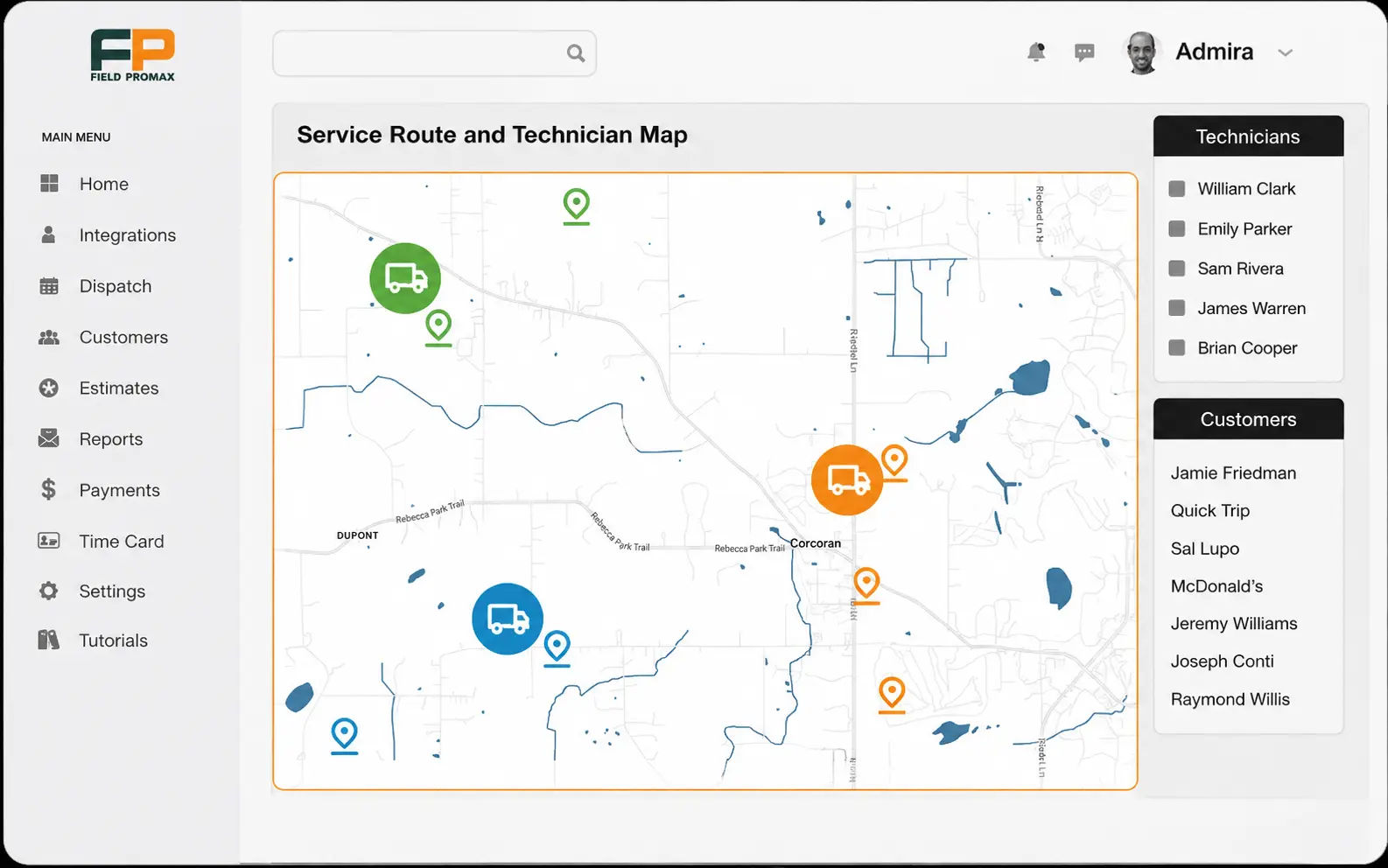
Google shows different map pack results from different physical locations within your service area. A search from one neighborhood might rank you as third; while the same search from five miles to the north might rank you ninth. Tools such as Local Falcon or BrightLocal Grid Tracker map your visibility across a grid so that you know the areas where coverage decreases.
For the six-tech shop, geo-grid typically shows one or two dead zones that need the creation of a separate city page, more reviews about that location, or proximity-signal repairs.
What does a "plumber near me" SEO checklist look like?
Work the list below in order:
Complete every section of the Google Business Profile. Include 15+ real-life photos. Post every week.
- Check the hours of operation and identify areas of service clearly.
- Create a dedicated emergency plumbing landing page with sticky call buttons, a trust block, and load time under 3 seconds.
- Automate the post-job review request inside whatever field service software you use.
- Create a service-area page for each city you provide.
- Review the citations on Yelp, Angi, BBB, HomeAdvisor, Thumbtack. Make corrections to NAP issues in one sweep.
- Run PageSpeed Insights. Mobile load should be under 3 seconds.
- Earn up to 3-5 backlinks from sponsorships, partnerships, or Chamber listings.
- Track lead source on every job in your reports dashboard.
Turning local searches into emergency calls
Ranking for "plumber near me" isn't a content problem or a schema issue. It's an operational problem with SEO consequences. The shop with six techs in the opening which improved its visibility after hours didn't beat its competitors. It streamlined the workflow between phone call, text quote, on-site arrival, and review request, and the ranking signals followed.
Start this week with Google Business Profile completeness and automated review requests. Track lead sources from day one. Field Promax handles scheduling, dispatch, invoicing, review automation, and lead-source reporting in one place.
FPM STANCE: The six-tech shop that's losing calls to national franchises doesn't have a content gap - it has an operations gap. The franchise has an automated review request firing 45 minutes after job close. It has photos hitting the GBP every week because techs are prompted in-app. It has lead sources tagged on every work order. You can match all of that without matching their marketing budget. You just need the right workflow tools.
Deep dives in this Marketing & Leads guide
Reviews, reputation & referrals
- Google Review Management for Field Service Businesses - the post-job ask workflow that drives review velocity.
- Responding to Bad Reviews: A Field-Service Playbook - reply templates and operational fixes by complaint type.
- Ways to Manage Negative Online Reviews - 5-step recovery process for service-trade owners.
- Review Management: Control, Grow, and Protect Your Online Reputation - multi-platform monitoring strategy.
- The Best Ways to Earn Referrals from Your Customers - zero-budget referral playbook.
- 15 Referral Program Ideas Based on Market Best Practices - tiered rewards, loyalty systems, and examples.
- Word-of-Mouth Marketing: Smart Strategy for Small Businesses - turning service quality into organic promotion.
Lead capture, conversion & landing pages
- 9 Tips for a High-Converting Plumbing Landing Page - emergency-page essentials for plumbing shops.
- Lead Tracking Software: Complete Guide for Field Business Owners - capture, assign, and follow up without losing jobs.
- 7 Steps to Re-engage Cold Leads for Field Service Businesses - reviving dormant prospects.
- How to Get Your First 25 Clients for Your Cleaning Business - customer acquisition fundamentals.
- 7 Ways to Generate High-Quality Leads for Your Locksmith Business - local lead-gen tactics for emergency trades.
SEO, content & website
- Content Optimization for Field Service Businesses - keyword clustering, service pages, and link-building.
- 15 Best HVAC Websites: Design Examples & Tips - high-converting design patterns for trade sites.
Industry-specific marketing plays
- HVAC Marketing & Operations in 2025 - pairing demand-gen with delivery for HVAC growth.
- Top 5 HVAC Marketing Strategies for 2026 - website, SEO, LSAs, reviews, and mobile.
- ChatGPT Hacks for HVAC Marketing & Customer Communication - AI prompts for ads, blogs, and replies.
- Digital Marketing for Electricians: Complete Guide - SEO, PPC, email, and reviews for electrical contractors.
- Complete Guide to Home Services Digital Marketing - multi-channel marketing for HVAC, plumbing, electrical.
- 7 Proven Plumbing Marketing Ideas to Increase Sales - directory, GBP, paid ads, and SEO basics.
- 9 Amazing Tips to Boost Sales in Plumbing and Heating Businesses - competitive sales strategy for small trades.
- 10 Ideas for Marketing Your Appliance Repair Business on a Limited Budget - cost-effective digital marketing tactics.
- Garage Door Services: Using Video Marketing to Build Trust - testimonial and demo video plays.
Channels & touchpoints
- Secrets of Creating an Attractive Design for Email Newsletters in Plumbing - design and deliverability for service-trade emails.
- Vehicle Branding for Field Service Businesses - wraps, magnets, and signage that generate impressions.
- How to Market a Service Business - fundamentals across website, booking, ads, and reviews.
- Top 6 Local Marketing Strategies to Improve Customer Retention - staying visible to existing customers.
Conclusion
Ranking for 'plumber near me' is an operational issue with SEO consequences. With Field Promax managing the flow between customer inquiries, estimates, technician arrivals, and review requests, operational efficiency and local SEO signals improve together.
Frequently Asked Questions

Founder and CEO
Joy Gomez is an engineer, process automation expert, and the Founder of Field Promax. Known for his technical expertise and commitment to field service innovation, Joy writes about transforming traditional business models into paperless, efficient operations. He is a Lean Six Sigma Black Belt based in Rochester, MN, dedicated to helping field professionals work smarter through better technology.
Reviewed by

Content Creator
Bhargavi Halthore is a content writer at Field Promax, a field service management platform serving trades businesses across the USA and Canada. With over a decade of experience writing for business owners, she brings detailed, ground-level insight to every topic she covers. Her research goes beyond search results - she digs into LinkedIn groups, Facebook communities, and Reddit forums to understand what field service business owners are actually dealing with on the ground. She speaks directly with industry professionals, understands their day-to-day challenges, and translates that into content that is practical and actionable. What you read in her articles reflects real industry patterns, not theory.