Word-of-Mouth Marketing for Field Service Businesses: The Owner's Playbook

According to Nielsen's 2021 Global Trust in Advertising report, 88% of consumers trust recommendations from people they know more than any paid channel. For a typical 5-20 tech shop in HVAC, plumbing, or electrical, that number describes almost every job on the schedule: referrals, repeat customers, and neighbors who saw your truck out front.
After years of working with field service shops, a common operational gap keeps appearing. The shop does excellent work, but the referral loop breaks because no one asks for a review while the technician is still in the driveway. A neighbor's estimate sits in an inbox for four days, and the invoice arrives a week later, long after the customer's enthusiasm has faded. Word of mouth stops functioning as a reliable growth channel and instead becomes a missed opportunity. This playbook is about closing that gap.
A pattern across small residential service contractors we've worked with
In small residential service businesses we've worked with since the beginning of 2019, the same pattern continues to appear among shops with fewer than 10 technicians. Consider an owner-operator managing six technicians from one shop, handling estimates and bookkeeping personally, with one part-time admin. The QuickBooks-only setup looks nearly identical from shop to shop. Estimates are rebuilt line by line every time because no one saved previous estimates as templates, and the referral source field is left blank for most new customers because it isn't required.
By the second half of the busy spring season, the owner spent two evenings each week rebuilding estimates that were nearly identical to those sent the previous month. When trying to determine whether Google Ads were worth renewing, the owner couldn't separate ad-generated jobs from word-of-mouth referrals in the customer database. The owner suspected that a local referrer was driving significant revenue, but there was no reliable way to confirm it.
Over the course of a weekend, the owner created six estimate templates based on job type and saved them as recurring estimates in QuickBooks. Referral source tagging became a firm rule for the office admin. No estimate could be sent until the customer's record included a referral source, even if the value was "Unknown." The original dropdown contained 15 options, but it was reduced to seven after two weeks because the longer list was rarely used.
By the end of the first month, estimated turnaround time had been reduced by about 50%. The referral tagging process was inconsistent during the first eight weeks until the owner began returning incomplete records for correction. Existing customer records were never fully backfilled. Many accounts created before the new process still have empty referral source fields because the owner chose not to guess the missing information.
This is a composite case based on the most common version of the pattern we've seen among smaller contractors.
What word-of-mouth marketing actually is
Word-of-mouth marketing happens when an existing customer recommends your business to someone else. There are no paid placements, ad copy, or algorithms involved. Someone who has already paid for your services uses their own reputation to recommend your business.
Marketers generally divide word of mouth into two types. Organic word of mouth happens naturally, such as a neighbor recommending you at a barbecue. Amplified word of mouth is intentional, such as a referral program that offers a $75 reward for a booked installation. Both can fail in predictable ways if the business isn't set up to capture referrals when customer satisfaction is highest. In contractor discussions on Quora, one of the most common marketing complaints is not knowing which lead sources actually generated paying customers, making it difficult to decide where next month's marketing budget should be invested.
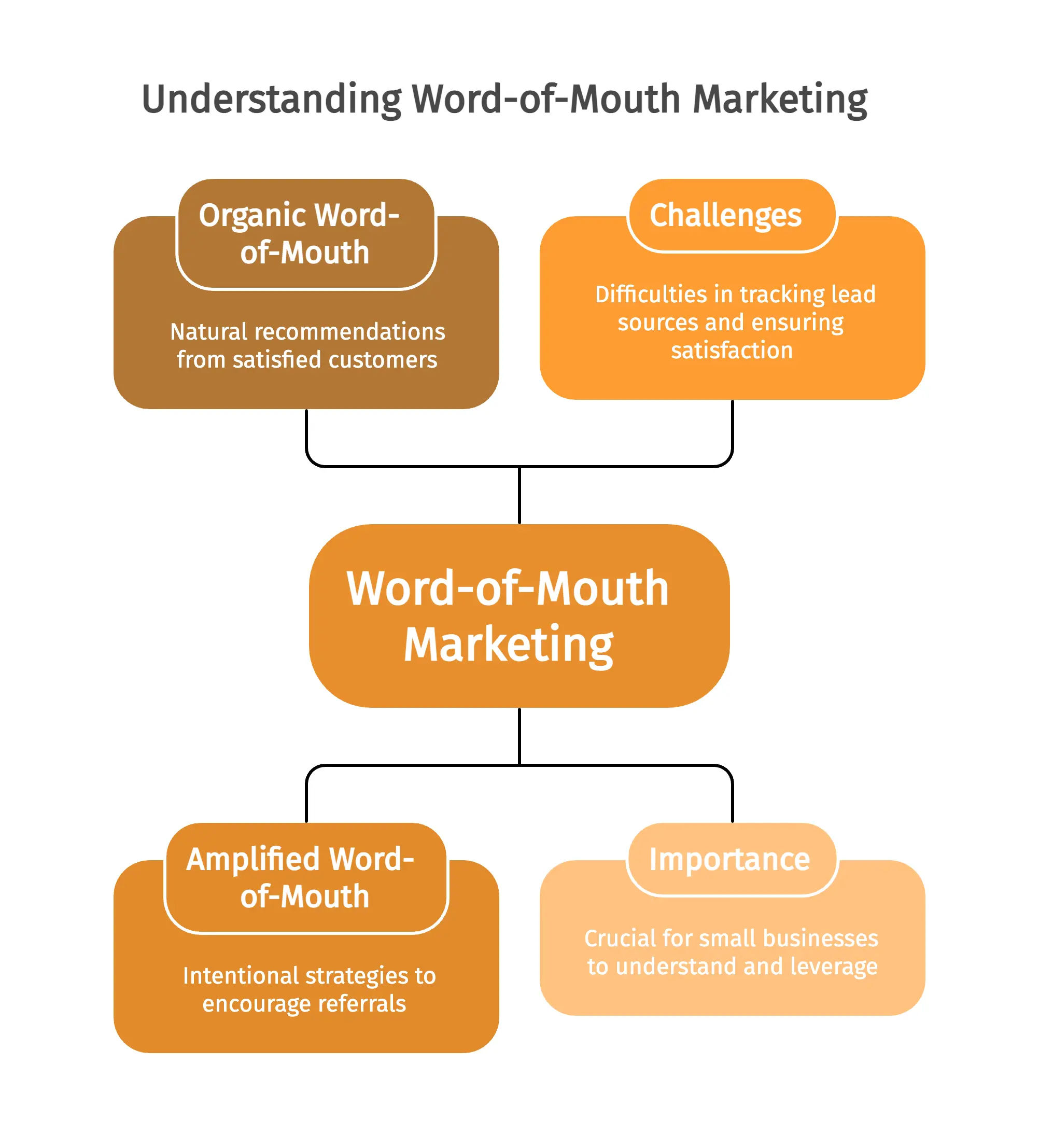
How effective is word-of-mouth for a small field service shop?
BrightLocal's 2024 Local Consumer Review Survey found 92% of consumers read reviews of local businesses before their first visit. For a typical 5-20 tech shop relying on a handful of stale 4-star ratings, nearly every prospect is comparing you against competitors actively collecting fresh reviews after every job. Shops we work with that automate the post-job review ask consistently report a steady lift in booked calls within a quarter.
Industry benchmarks show that referral leads for home service contractors convert at around 45%, while paid Google Ads leads convert at approximately 18%, and shared marketplace leads (Angi and HomeAdvisor) convert at around 12%. Referral leads are about three times more likely to turn into booked jobs.
Google's local 3-pack pulls a click-through rate above 48% on local service searches. For a shop without a claimed, review-rich Google Business Profile, nearly half of nearby intent traffic routes straight to the three competitors who did claim theirs. Analyses of contractor CAC put paid CAC in the $250-$350 range for residential HVAC versus $20-$50 per booked job through structured referral programs.
Examples of word-of-mouth in field service
Word-of-mouth marketing for a small field service business is personal, local, and most effective when it happens immediately after a customer has had a positive experience solving their problem.
Customer referrals
A homeowner whose water heater fails on a Sunday calls the plumber recommended by a neighbor. The neighbor's recommendation is more persuasive than any advertisement because trust has already been established before the phone ever rings. Referral leads convert at around 45% because the trust barrier has already been overcome.
Online reviews
Yelp, Google, Nextdoor, and Facebook are where the neighbor-to-neighbor conversation gets archived and made searchable. A fresh 5-star review two weeks after a job tells the next prospect searching your ZIP code that you have momentum. A cluster of positive reviews inside the last 60 days is one of the strongest local ranking signals Google uses, according to BrightLocal's local algorithm research. In our customer base, shops that automate the review ask (a text three hours after job completion) collect roughly 4-6x more reviews than the ones that leave it to the tech's memory.
Social media engagement
A landscaping team photographs a newly installed paver project and uploads the photos before leaving the driveway. Comments from neighbors on the same street often turn into estimate requests within a week. For field service businesses, social media isn't just a broadcasting channel; it's a way to provide proof of completed work. Owners frequently report that Facebook Groups and Nextdoor generate more booked jobs than Instagram in suburban service areas.
Community events and in-person testimonials
A small electrical contractor that sponsors a Little League team gains brand recognition every Saturday, but most referrals come from families discussing who to call for a panel upgrade. A roofing crew that completes a clean, professional job in a quiet cul-de-sac often becomes the topic of neighborhood conversations within days. In-person recommendations still carry more weight than any digital signal, especially in smaller suburban communities where one trusted recommendation can generate a steady stream of new leads.
Referral programs and professional networks
A structured referral program formalizes what's already happening. Name the reward, name the trigger (a completed job, not just a lead), name the payout timeline. Benchmarks from contractor referral program research suggest $100-$300 tiered rewards for HVAC and $75-$200 flat for plumbing, keeping total incentives below 5% of referred revenue. Shops that pay rewards inside 14 days of the referred job closing see the strongest program uptake. Professional networks work on a longer clock: The pest control owner who attends the same chamber breakfast as a property manager builds trust over months, but the eventual referred commercial contract is often the largest recurring account on the books.

Why word-of-mouth compounds for field service
Referrals cost less than any paid channel
The person who referred you has already endorsed your business. The customer isn't evaluating your marketing claims; they're relying on a friend's recommendation. Owners say referral calls are shorter, easier to close, and less likely to involve price shopping.
Brand advocates defend your reputation
A customer who is happy and has spoken to three people about your business doesn't just suggest new jobs; they safeguard your reputation whenever a random one-star review appears. In highly competitive local markets, a vocal advocate can be more effective than two anonymous complaints. Field service shops we collaborate with regard their top 20 referral sources as accounts, not customers, noting them in the CRM, making frequent check-in calls, and prioritizing urgent requests in the schedule.
Retention and organic compounding
A customer who has referred once is far more likely to do so again, and repeat customers are almost free to acquire the second time. Home service benchmarks indicate that referred customers provide roughly 16-25% more lifetime value than customers acquired through paid channels. Each job that is well done can seed the next three jobs. Paid acquisition ends when you shut off the campaign. Referrals continue to work years later, as long as the quality of service is maintained.
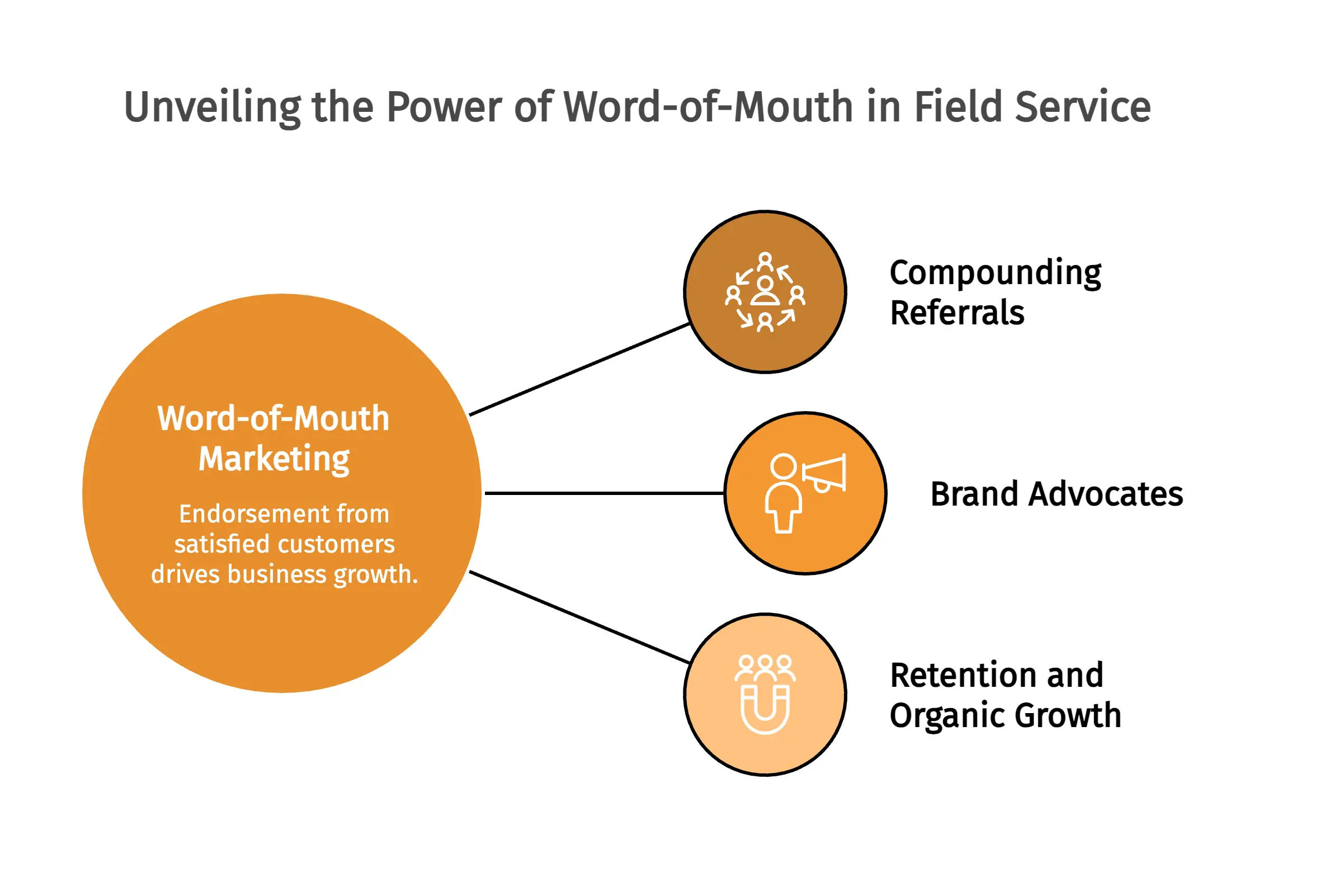
Why word-of-mouth matters more for a field service shop
The shop that installs a homeowner's AC condenser effectively becomes part of that homeowner's home network. When a neighbor's furnace starts making strange noises in October, the recommended contractor is just a text away. That's the nature of word-of-mouth in the field service industry - it is hyperlocal, clustered by ZIP code, and amplified by a branded service truck parked on the street, often generating estimates from three nearby homes within six weeks.
Across our customer base, this pattern shows up in HVAC, plumbing, and electrical shops nearly identically. The difference between shops that ride this compounding effect and ones that don't isn't service quality; it's whether operational systems capture the referral, review, and follow-up before the customer's memory fades.
I've watched this pattern for years, and the piece owners keep underestimating is timing. A review request that goes out three hours after the technician leaves converts at a different rate than one that goes out three days later, and neither converts at all if the tech forgot to mark the job complete on the driveway. The truth is, mobile-app adoption by field techs is the single biggest predictor of whether the downstream referral and review automations actually fire.
When operators ask me why their review count isn't growing, I usually don't ask about the marketing plan. I ask when the last job on Tuesday's schedule got closed out. Half the time the answer is Wednesday morning, and that gap is where the word-of-mouth loop dies.
- Joy Gomez, Founder of Field Promax
How to build a word-of-mouth engine that actually fires
Every word-of-mouth strategy starts with service the customer wants to talk about. That's a boring operational discipline: show up in the appointment window, communicate honestly when something's delayed, price transparently, clean up before leaving. The operational feature that most reliably lifts positive reviews isn't a shiny tech add-on; it's tight scheduling and dispatch that keeps technicians on-time. When a shop moves its on-time arrival rate from 70% to 90%, review sentiment shifts noticeably inside a quarter.
Automate the review ask on every completed job
Every completed job should trigger an automatic ask. A short SMS with a direct Google review link, sent while the invoice is still in the customer's inbox, is the single highest-yield lift you can add. Automated Google review management turns a one-off ask into a repeatable motion. An HVAC contractor on the QuickBooks App Store described switching to Field Promax and having lead-capture forms route directly into the dispatch board, so a homeowner inquiring about an AC install gets a technician assigned the same day. That shop reports roughly 30% more jobs booked without adding office staff, because the loop from inquiry to closed job stays tight enough for customers to volunteer a review.
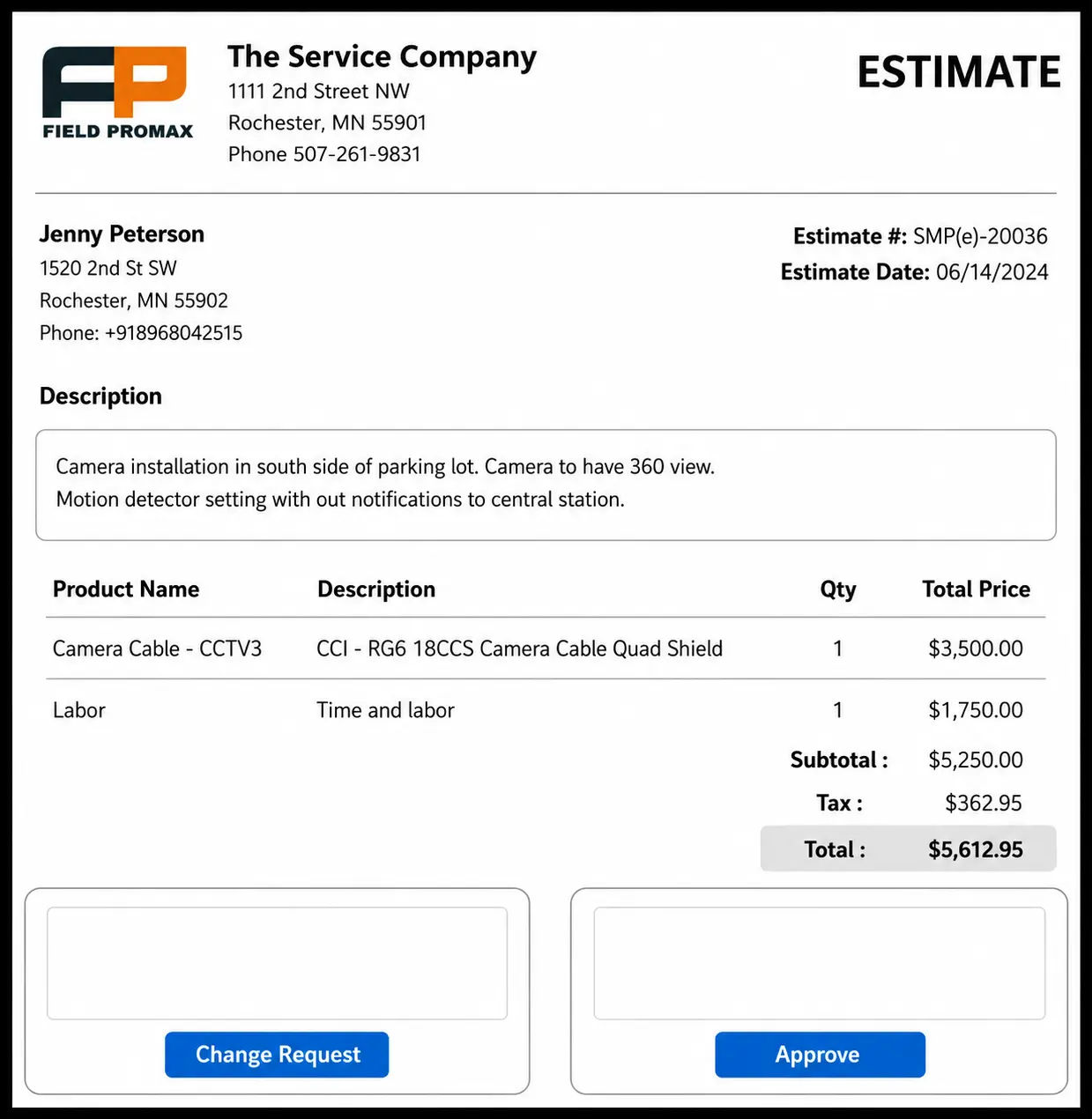
Use social where your customers already ask for recommendations
Upload the finalized job on the same day. Tag your neighborhood if the platform allows it. Respond to comments within a couple of hours. Owners often ask which social network actually drives inquiries for a small trade shop, and the real answer is that it's the platforms your customers are already using to ask their friends for contractor recommendations. In most suburban areas, that's Nextdoor or local Facebook groups, not Instagram.
Run a structured referral program, not a vague ask
A referral program that pays actual money for actual booked jobs beats a vague 'tell your friends about us' every time. Structure it: name the reward, name the trigger, name the payout timeline. Independent contractor referral ROI analyses put the cost per referred booked job well below $50 for shops that automate the ask, versus $280-$450 CAC on paid channels. Shops that tag every new customer with a referral source in the CRM are the ones who can tell you six months later which specific customer is worth the extra thank-you card.
Network locally and close the feedback loop

Show up at chamber of commerce meetings, sponsor a youth sports team, join a BNI chapter if there's one that fits. The payoff shows up in referred commercial accounts and property-manager relationships that stay with you for years. Feedback closes the loop the other direction. A 48-hour post-service check-in text catches problems while they're still fixable, and surfaces customers most likely to refer if you ask them directly. Automated customer notifications make this a system rather than a habit dependent on someone remembering.
Digital word-of-mouth: the online channels that carry the offline conversation
The word-of-mouth exchange that once happened offline now leaves a digital record. What your neighbor used to say over the mailbox is now a Google review, a Nextdoor thread, or a Facebook post in a local moms' group. This digital layer amplifies and preserves what would otherwise be a one-time recommendation, allowing potential customers who have never met the original customer to see that endorsement months later.
The question is which platforms are most effective at converting interest into booked jobs for small local service businesses. The following list is arranged in approximate order of ROI for the smaller trade shops in our customer base.
Google reviews and other online review platforms
Focus on Google reviews first, followed by Yelp, and then Nextdoor. All other review platforms are optional. For a residential service shop, your Google Business Profile is the most valuable digital asset you own. A verified profile with a strong collection of positive reviews can help you appear in the top three local results when a homeowner searches for "plumber near me" at 11 p.m. on a Sunday. Automate your review requests, respond to every review - both positive and negative - and update your photos every month.
Social media advocacy
Nextdoor threads and neighborhood Facebook groups are powerful tools for helping local businesses. One customer's post asking, "Who do you recommend for HVAC?" with your shop's name appearing in the replies is far more valuable than a month's worth of organic Instagram posts. Encourage happy customers to tag you whenever they share before-and-after photos.
Local micro-influencers and community forums
A full-scale influencer marketing campaign is not always feasible for the budget of a small trade shop. What works better is partnering with local home improvement bloggers, real estate agents who publish neighborhood newsletters, or earning an authentic mention on a local subreddit. These are micro-endorsements rather than paid campaigns, and their impact compounds over time. Members of r/HVACAdvice often mention that a single endorsement from a trusted local voice is more effective than paid posts from a larger account.
Email and SMS to your existing customer list
Compiled email marketing benchmarks put email ROI in the range of $36 per $1 spent. Small plumbing and HVAC shops that actually send seasonal tune-up reminders and post-service follow-ups tell us email is the cheapest repeat-revenue channel they run, well ahead of paid search. SMS carries higher open rates (90-98% for service reminders) and works especially well for appointment confirmations, weather-driven rescheduling, and post-job review asks. Plumbing shops we work with have noted that automated SMS follow-ups after every service call trigger same-day rebookings within minutes, saving the dispatcher hours a week. The list you already own is almost always underused.
Content marketing that answers real homeowner questions
A five-minute video explaining how to prepare before the HVAC technician arrives. A blog post about when a heater should be repaired versus replaced. A printable seasonal maintenance checklist. This type of content attracts organic search traffic from people with genuine intent while also giving satisfied customers something valuable to share with friends who ask for recommendations. It is the slowest-compounding marketing channel on this list, but it also continues generating results for three years after it is published.

Turning word-of-mouth into a repeatable channel
Word-of-mouth marketing isn't a tactic you can promote. It's the result of a business that operates efficiently, maintains a professional appearance, completes jobs on time, asks for a review while the customer's phone is still in hand, and follows up in a way that feels personal rather than like a standard form letter.
What field service management software adds is the operational spine: tight scheduling, mobile-app job closeout, automated review requests, referral-source tagging in every customer record, and reporting that tells you which channels pay off. Most Field Promax customers come from spreadsheets, paper, or QuickBooks-only setups, so their review, referral, and follow-up motions are almost entirely manual before automation. The lift isn't from a new marketing plan. It's from making the existing word-of-mouth motion actually fire every time.
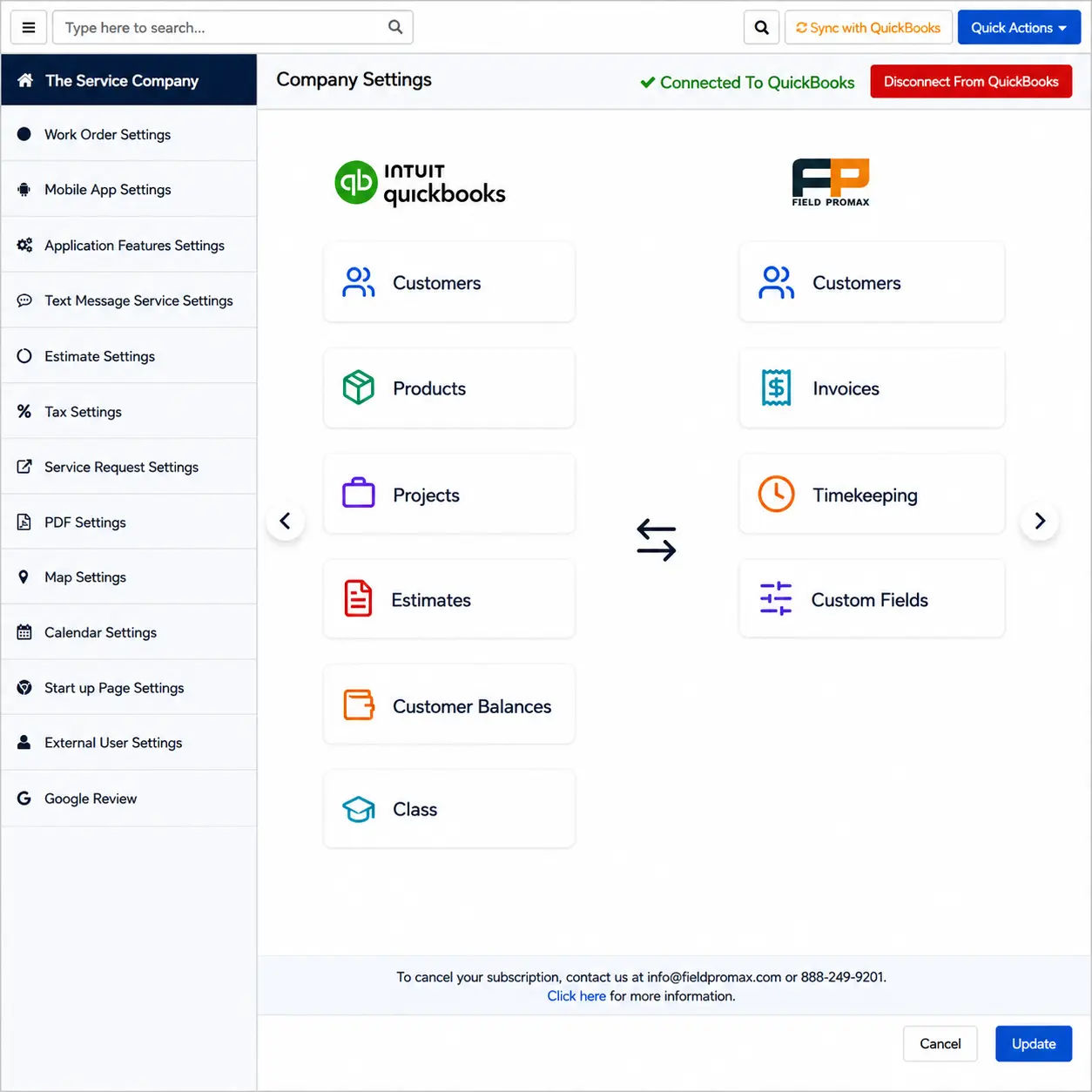
Turn word-of-mouth into a system
Conclusion
Word of mouth isn't a marketing strategy by itself. It's the natural result of a shop that runs well: prompt calls, on-time jobs, a review request while the customer's phone is still in hand, and personal follow-up.
Frequently Asked Questions

Content Creator
Bhargavi Halthore is a content writer at Field Promax, a field service management platform serving trades businesses across the USA and Canada. With over a decade of experience writing for business owners, she brings detailed, ground-level insight to every topic she covers. Her research goes beyond search results - she digs into LinkedIn groups, Facebook communities, and Reddit forums to understand what field service business owners are actually dealing with on the ground. She speaks directly with industry professionals, understands their day-to-day challenges, and translates that into content that is practical and actionable. What you read in her articles reflects real industry patterns, not theory.