HVAC Marketing for Small and Mid-Sized Shops: What Actually Books Jobs in 2026
Why do HVAC marketing dollars leak before the phone rings?
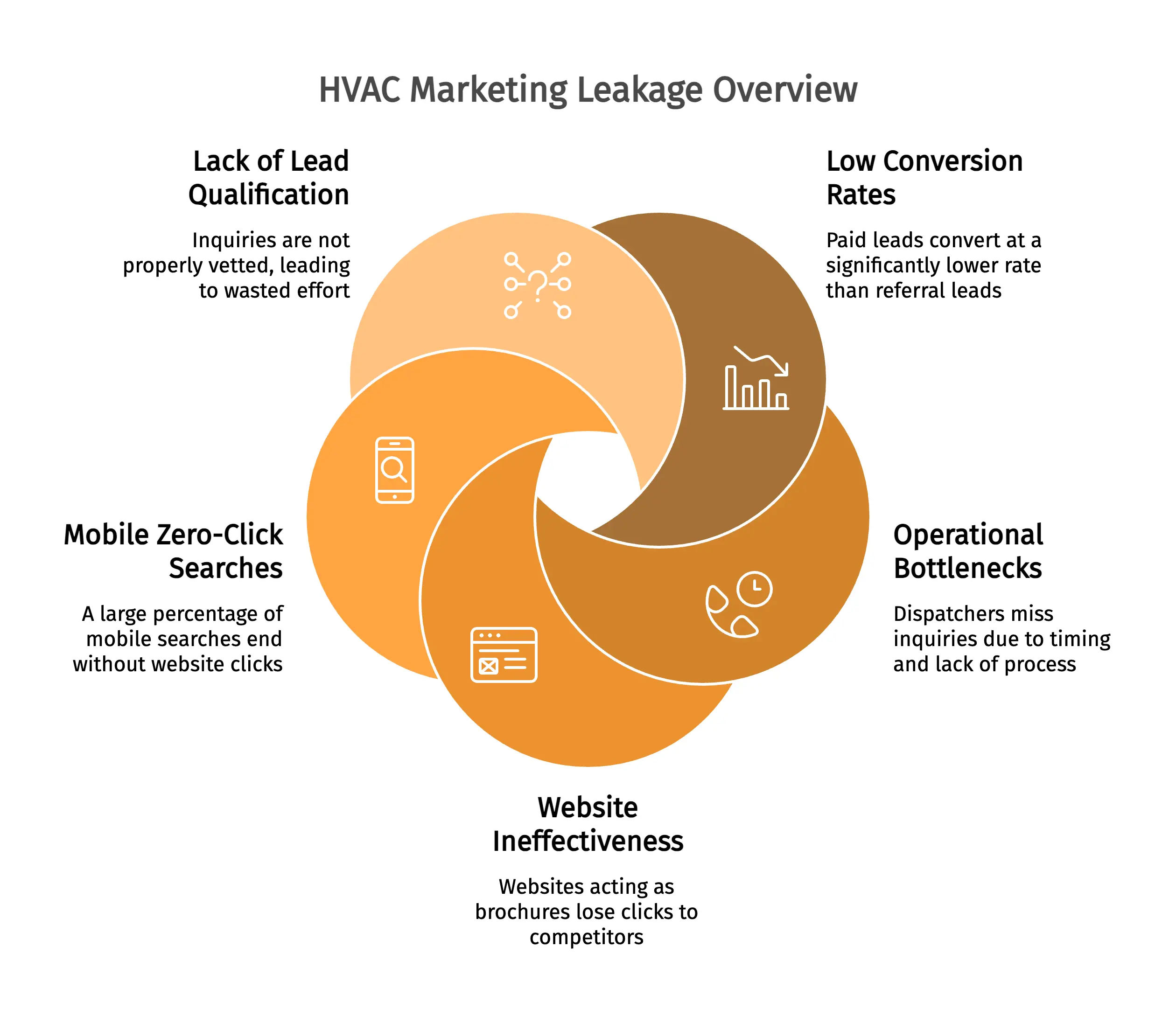
Industry benchmarks indicate that referral leads are around 45% for contractors who provide home services, while paid Google Ads leads close at around 18%, and shared marketplace leads (Angi/HomeAdvisor) close at around 12% - a pattern that has been repeated over the past 14 years of discussions with plumbing, HVAC, and electrical businesses using Field Promax. The biggest issue HVAC owners express most frequently in 2025 isn't that the phone doesn't ring. The issue is that the leads they're paying for close at less than a quarter of the rate of the leads they can earn at no cost.
Owner discussions on Quora and Reddit during the last 12 months show a similar pattern: traffic with no enquiries, inquiries that don't qualify, and form fills with no one upstream to decide whether they are real leads. Visitors arrive on the website, and the dispatcher sees an inquiry form sometime between the last call on Friday and Monday's first dispatch, by which time the homeowner may have hired someone else. The marketing report looks good. Booked-job rates don't move.
This article focuses on the gap between a visit and an inquiry. Foursets' 2026 synthesis of SparkToro data puts around 60% of searches as ending without a click to any website, with mobile zero-click rates near 77%. In our customer base, the shops still treating their website as a brochure are the ones losing those clicks to the three competitors visible in the local 3-pack on a phone screen.
What is an HVAC marketing strategy actually solving in 2026?
The U.S. HVAC contractor industry sits at roughly $156 billion in annual revenue, with Grand View Research putting the global HVAC systems market at $258.96 billion in 2025 and forecasting 7.0% compound growth through 2033. The BLS Occupational Outlook Handbook projects HVAC technician employment growing 8% from 2024 to 2034, with about 40,100 openings a year. In our customer base, the shops growing into that demand aren't the ones running the biggest ad budgets. They're the ones that close the loop between a lead landing and a tech in the truck.
For a 5-20 tech residential or commercial HVAC shop, the best marketing approach does four things at the same time:
- Search results that appear in the searches a homeowner actually performs (Local 3-Pack, organic results, and paid Local Services Ads).
- Establishing trustworthiness (review volume, response speed, real images, and showcasing technician profiles) so that the homeowner chooses your company over two obvious alternatives.
- Routing the lead into the scheduling and dispatch board without retyping an address into three systems
- Securing the next visit (maintenance plan or seasonal reminder and referral) without having to pay again to acquire the same customer.
If one of these four fails, the other three can't make up for it. Spending more on ads to fix slow callbacks is the most expensive way to solve the wrong problem.
Which lead channels actually close, and which ones look busy but don't book?
The math behind each channel challenges most general HVAC marketing tips. As noted above, referral leads close at around 45%, paid Google Ads leads at around 18%, and shared marketplace leads (Angi/HomeAdvisor) at around 12%. That means a referral is three times more likely to convert into a booking. That doesn't mean abandoning paid channels. It's a way of ranking channels according to the economics of booked jobs rather than lead count.
Google Local Services Ads. SearchLight's 2026 benchmark across 888 contractors and 126,650 LSA leads puts HVAC at $51 cost per lead with a 44% book rate, a meaningful step up from standard Google Ads where home-services CPL averages closer to $90. Across our customer base, LSAs perform hardest for shops that have already invested in a review-rich Google Business Profile. The green Google Verified badge stacks on top of social proof; without reviews behind it, click-through softens.
Google Business Profile and the local 3-pack. Google's local 3-pack pulls a click-through rate above 48% on local service searches, meaning for a typical 5-20 tech shop without a claimed, review-rich Google Business Profile, nearly half of nearby intent traffic is routing straight to the three competitors who did claim theirs. Shops we work with close that gap fastest by pairing a complete profile with automated post-job Google review management so the review base keeps growing instead of decaying.
Reviews as a conversion lever, not a vanity number. BrightLocal's 2024 Local Consumer Review Survey reports 75% of consumers always or regularly read local-business reviews; for HVAC specifically, Clear Seas Research with ACHR News found 91% of homeowners rate online reviews as important when choosing a contractor. What we see in our customer base: moving from a 4.2 to a 4.7 average roughly doubles call volume for shops in competitive metros, often within a quarter of starting an automated post-job review request flow. An HVAC contractor reviewing Field Promax on the QuickBooks App Store described what tightens the loop when the lead lands: lead-capture forms feed the dispatch board the same day a homeowner inquires, and the shop is booking roughly 30% more jobs without adding office staff.
Referrals (the cheapest channel, the one most shops underbuild). The power of word-of-mouth remains the top influence in homeowner surveys reported by the trade press. The pattern we observe within our clientele is the same: companies that use an actual referral system ($50 credit, branded cards handed out at the end of the job, and a follow-up message two weeks after installation) book a significant share of jobs through referrals. Referrals assumed to happen naturally rarely do.
Paid social and direct mail. These channels pay off when the math is right. Geo-targeted Facebook ads aimed at homeowners in specific ZIP codes are more effective for installations than for emergency repairs (homeowners in the middle of an outage are searching for information rather than scrolling). Direct mail continues to be effective for businesses that mail to addresses they have previously serviced, but not as much for blasts to cold lists.
How should a 5-20 tech HVAC shop set up lead capture so traffic actually converts?
HVAC website owners on Quora asking questions about website performance often mention the same problem: visitors arrive, but very few fill out forms, and there's no way to see where the funnel splits between a visit and an inquiry. The website appears to be in good shape. The Google Business Profile is verified. Paid traffic is increasing. The inquiry queue is thin. The diagnosis is usually made by looking at the form and the response time behind it.
We have seen a few patterns throughout our customer base to determine what is driving the conversion rate:
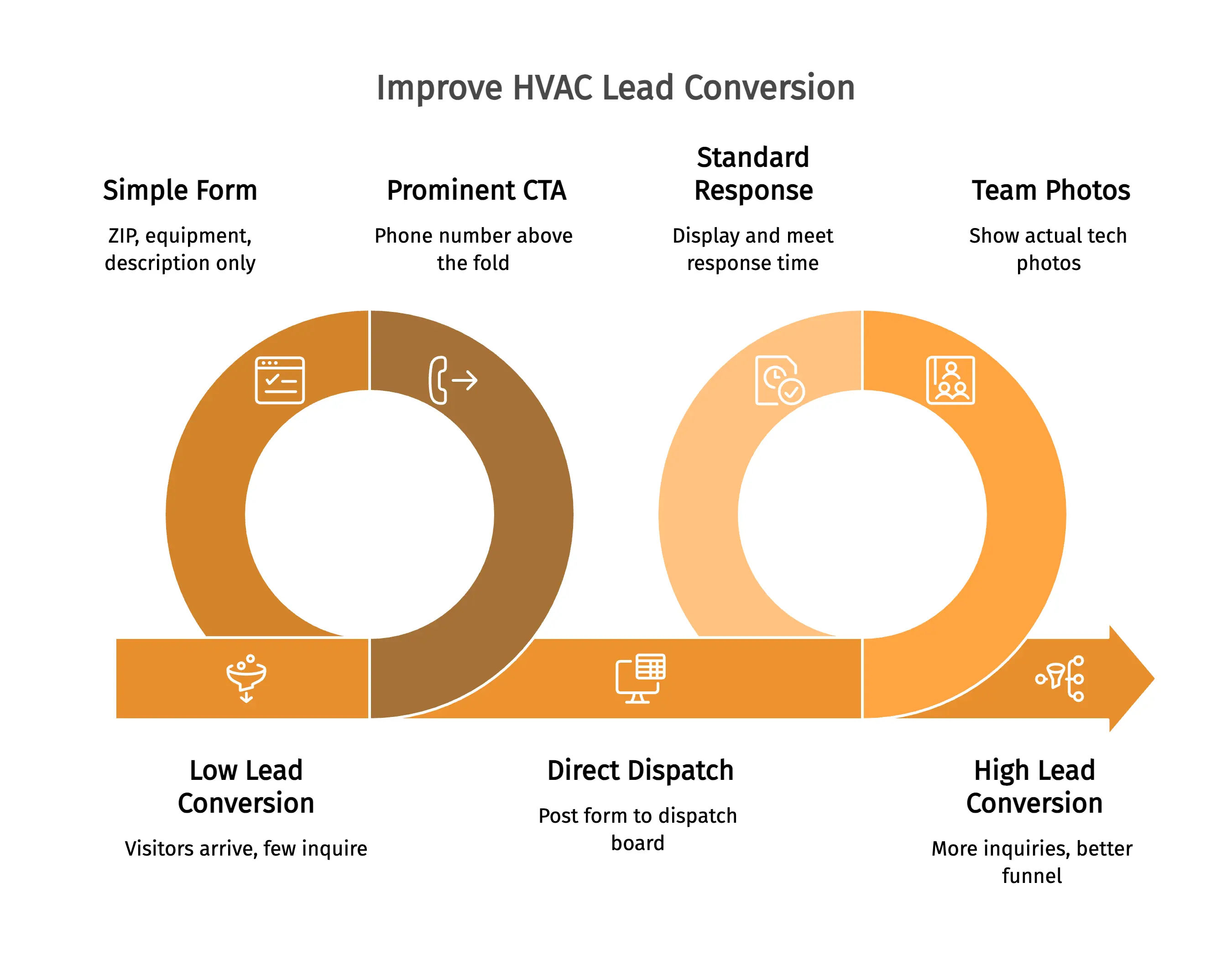
- A CTA is above the fold, typically with a phone number and one "Request Service" button. Two equally sized CTAs reduce conversion.
- The form requests the ZIP code, equipment type, and a single-line description. It is not an intake form with nine fields. The qualifying questions will be answered during the callback.
- The form is posted directly to your dispatch board, not to an email address. Email inboxes lose leads. Dispatch boards do not.
- Photos and names of techs are on the team page, not stock images. Trust is heightened when a homeowner knows who's showing up at their doorstep.
- A standard response time is displayed on the website ("We respond in 15 mins during normal business hours") and is actually met. Businesses that make promises and do not meet them receive one-star reviews that can cost five jobs to recover from.
The issues that users write about in Quora threads aren't always that they require more advanced marketing. The issue is that the visit-to-inquiry funnel isn't measured, and there's no common definition between marketing and sales of what qualifies as an actual lead. Form fills that go to a shared email inbox, where three people have read them but no one responds, are the most commonly encountered failure mode that does not show up on any dashboard.
A pattern across HVAC operators we've worked with
Across the HVAC companies we’ve worked with since 2019, the 10-50 employee tier has shown a common pattern, especially around the shoulder season. The example below comes from a pattern we’ve seen repeated multiple times: one owner-operator running a residential HVAC shop with about 18 technicians in a Midwestern metro. When call volume decreases and schedules become lighter, owners suddenly notice that Facebook hasn’t been updated for six weeks. The most recent email blast was sent before pricing changes were implemented, and three different staff members have come up with three different variations of the maintenance plan pitch.
In this instance, the website and Google Business Profile were producing steady leads. However, the owner was spending between five and eight hours a week creating social media posts and emails in between dispatch emergencies. As she delegated the work (first to an office manager, then to a part-time admin who wrote well, and finally to a bookkeeper taking on additional hours), the brand voice changed each time. What kept surfacing was that clients were beginning to ask whether the business had been sold because the tone on Facebook did not align with the tone of the invoices. Brand consistency was slowly becoming a marketing issue that no one was actively tracking.
In the second half of the year, the owner set aside time and created a small library of ChatGPT prompts. There was one for maintenance reminders, another for seasonal promotions, and one for tech-spotlight blog posts. Each prompt included examples of copy she had previously written, along with detailed notes on what to avoid (no urgency bait, no all-caps, and no exaggerated furnace-related sales language). One office employee became the sole writer, while the owner reviewed and edited each piece before it was sent out.
By the second quarter of using this new process, output had nearly tripled while maintaining a consistent tone across all channels. The challenges were noticeable in the beginning. During the first few months, the drafts sounded like every other contractor’s blog because the staff member was simply copying instructions and delivering a basic first draft. It took roughly four rounds of prompt revisions, along with the owner personally rewriting two posts line by line, to clearly define what “sounds like us” actually meant before the drafts began improving. A senior comfort tech remained the final skeptic; he claimed that the article written about him sounded more like a LinkedIn bio.
This is a blended example. The details are tied to a common variation of a pattern we’ve repeatedly observed across a wide range of HVAC operators.
What breaks when marketing wins but operations can't catch up?
This is the point where the loop either works or breaks down. Booking an AC service call in July but being unable to dispatch within 24 hours can lead to negative reviews that hurt future lead generation. We often run a back-of-the-envelope calculation with business owners: if you pay $250 for each booked lead and 30% of appointments are rescheduled because of dispatch confusion, your customer acquisition cost rises to about $357 for every completed job. Marketing did not become more expensive - operations increased the cost.
The technical fixes are not glamorous, but they are well-known.
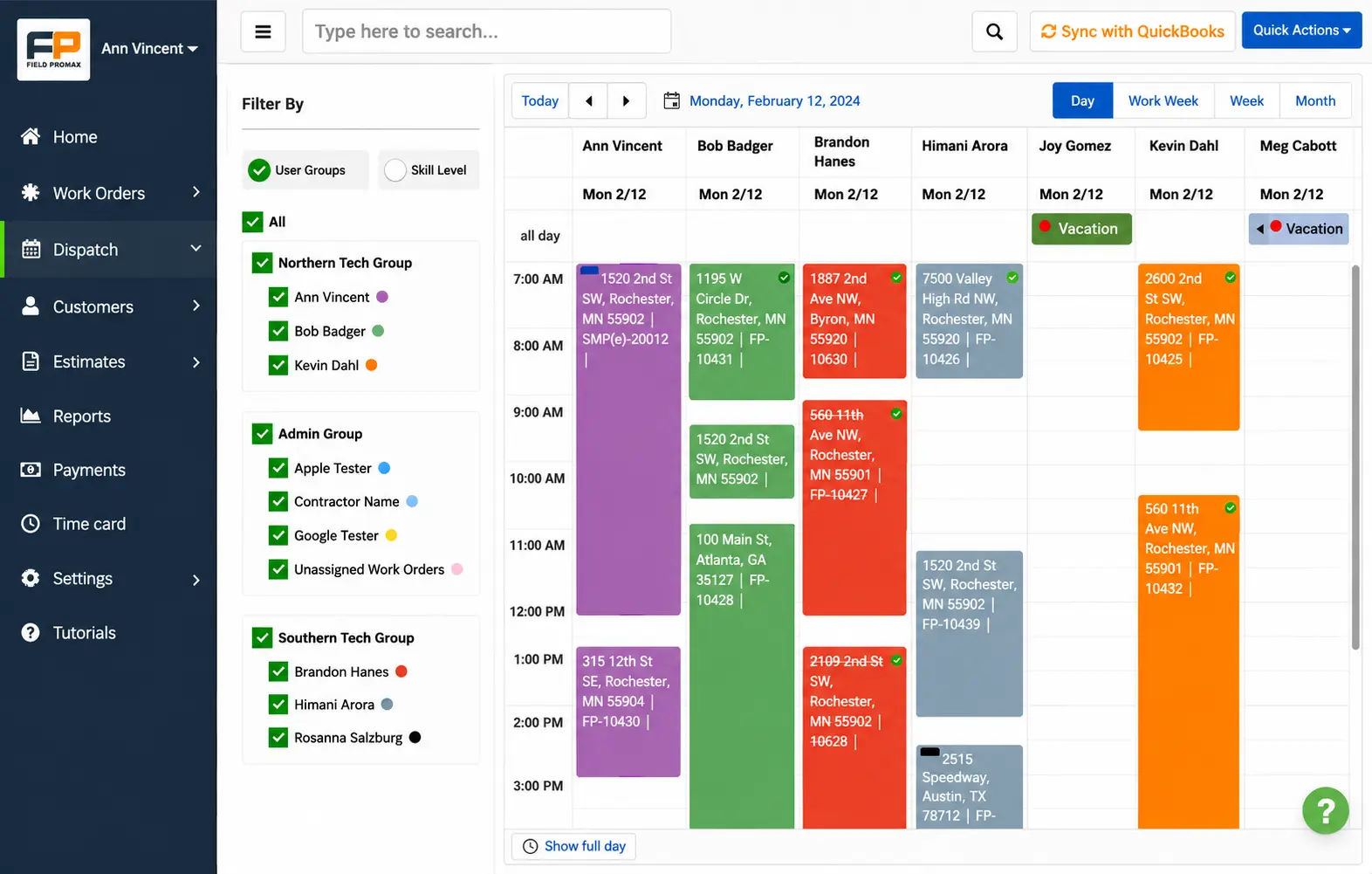
One of the most important fixes is having a dispatch view that displays the entire week instead of only a single day. This allows the office to identify capacity gaps before they turn into same-day scheduling emergencies. Most 5-20 tech shops we work with still operate using daily scheduling boards, only to realize on Tuesday that Wednesday evening is completely open while Friday morning has been triple-booked, forcing last-minute adjustments to the schedule.
Lead-to-invoice flow that lives in one system, not three. The single most-requested feature from owners moving onto Field Promax is better dispatch-to-invoice automation. The reason is consistent: the lead came in through the website, the dispatch happened in a spreadsheet, the work order got written on paper in the truck, and the invoice was retyped into QuickBooks on Friday. Every handoff was a place to lose information, miss a billable line item, or delay collection by a week.
Mobile-app adoption by the techs. This is the single biggest predictor of a successful rollout we see. Office training is necessary; tech adoption is decisive. If the techs don't open the mobile app at the truck, the dispatch board lies, the photos don't get attached, and the post-job customer notifications to the homeowner don't fire.
What I keep hearing from HVAC owners is the same thing: the website gets traffic, the Google profile is claimed, Local Services Ads are running, and the office is still scrambling to call back leads two days later. That gap, between the lead landing and someone actually booking, is where most of the marketing budget evaporates. I'll push back on the standard advice to spend more on ads when results soften.
From 14 years of customer conversations, the shops booking the most consistently aren't outspending competitors. They're catching the lead in under ten minutes and slotting it onto the dispatch board within the hour. Marketing software shows you the lead. The fix is the workflow that picks the lead up before the homeowner texts the next contractor on their list.
- Joy Gomez, Founder of Field Promax
.webp?updatedAt=1758264667779)
How do you turn one job into the next three?
The easiest job to make profitable is one you’ve already completed. In our client base, the shops with the best margins aren’t the ones spending the most on advertising. They’re the ones with the most disciplined follow-up process after every job.
Three structural shifts compound results over time:
Automated post-service follow-up. The pain points owners discuss in field service Quora threads often come back to the same issue: consistent customer outreach and ongoing nurturing through one system instead of three separate tools. Shops that do this well send an SMS within a few hours after job completion, including review requests, photo summaries, and recommended next service dates, while also allowing the customer to reopen the conversation easily. As a result, the dispatcher’s calendar stays full instead of constantly chasing new bookings.
Seasonal reminders by email. Smart Insights' 2024 compilation of Mailchimp data places home and building services at a 39.3% average open rate, well above the cross-industry average of about 21%. From 14 years of customer conversations, the small HVAC and plumbing shops that actually send pre-season tune-up reminders and post-service follow-ups to their existing list tell us email is the cheapest repeat-revenue channel they run, well ahead of paid search. Litmus and DMA put email ROI at roughly $36 per $1 spent across most industries.
A referral structure, not a vague "we appreciate referrals." Shops generating the most revenue from referrals treat it as an automated workflow. After a successful installation, the technician issues a $50 account credit. A second text message sent two weeks later asks whether neighbors might need similar services before the season begins. Credit is automatically applied when a new customer mentions the referral source. This structure handles the work that goodwill alone cannot accomplish.
Great customer service is what makes all three of these compound. A pre-arrival phone call, a technician arriving in a clean uniform with the homeowner’s information already entered into the app, and a follow-up text message later that evening - these aren’t just soft skills. They are the reason every review earns the same five-star rating, the next referral lands successfully, and the next maintenance email gets opened. Poor service makes every dollar spent on customer acquisition significantly more expensive.
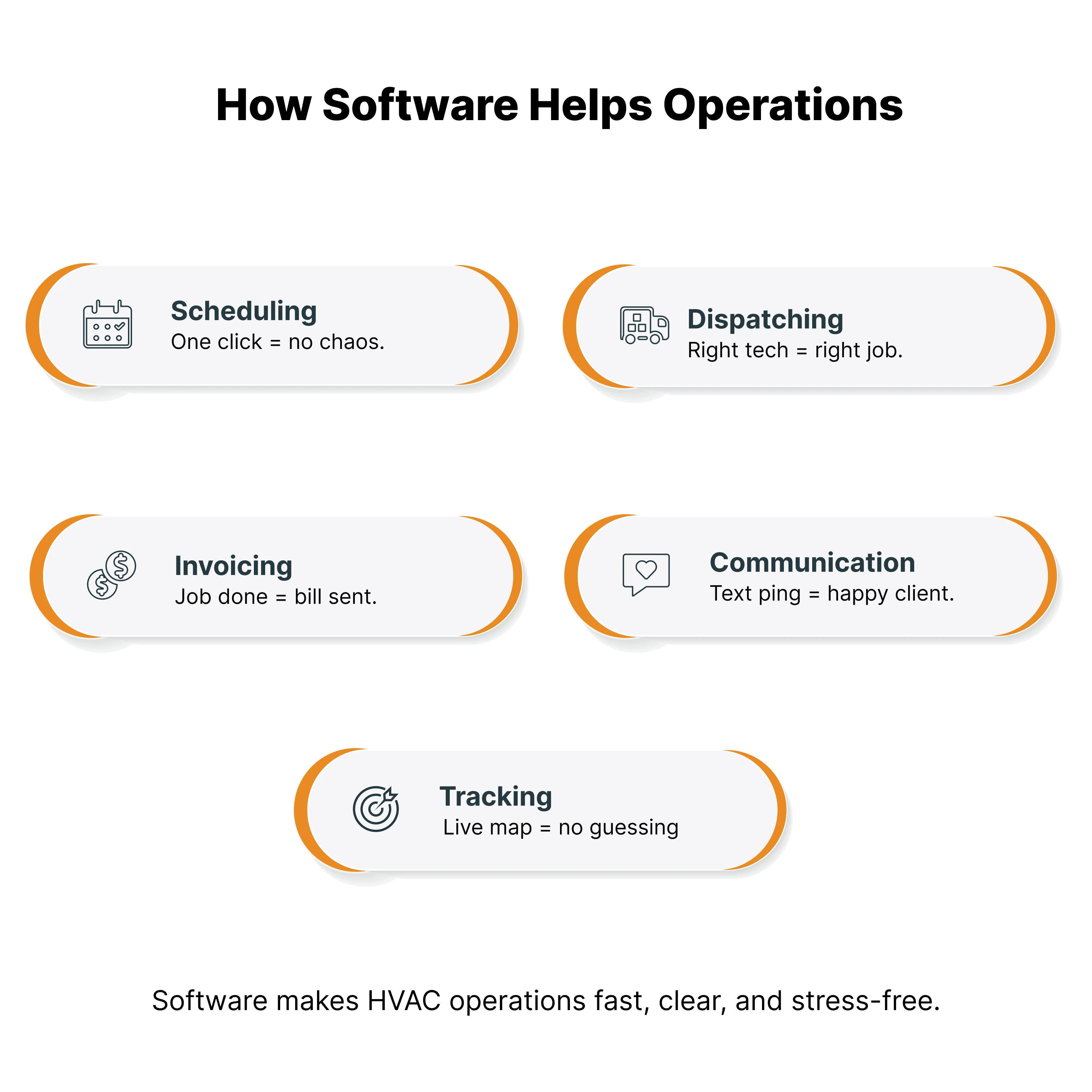
What does the working playbook look like assembled?
For a residential HVAC service business with 5-20 technicians in 2026, the blueprint is not built around 16 different strategies. It comes down to three connected layers:
- Visibility. A claimed and review-rich Google Business Profile. A website that loads quickly on mobile devices, clearly displays the phone number, and has a contact form that feeds directly into the dispatch board. Local Services Ads can be layered on top once the review foundation is strong enough.
- Conversion. A response-time standard that the office consistently follows. Simple intake forms that dispatchers actually use instead of a 9-field barrier. Real technician photos and names displayed on the team page to build trust.
- Repeat. Automated SMS follow-ups after service. Seasonal email campaigns sent to existing customers. A referral system with meaningful incentives and a clear workflow behind it.
A long-time Field Promax customer in the plumbing industry noted that automated SMS follow-ups after each service call often prompt customers to book their next service within minutes, saving dispatchers the time and effort of chasing repeat work. The same process can be applied directly to HVAC businesses. A spring tune-up can easily turn into a duct-cleaning sale in June, all without spending additional money to acquire a new customer.
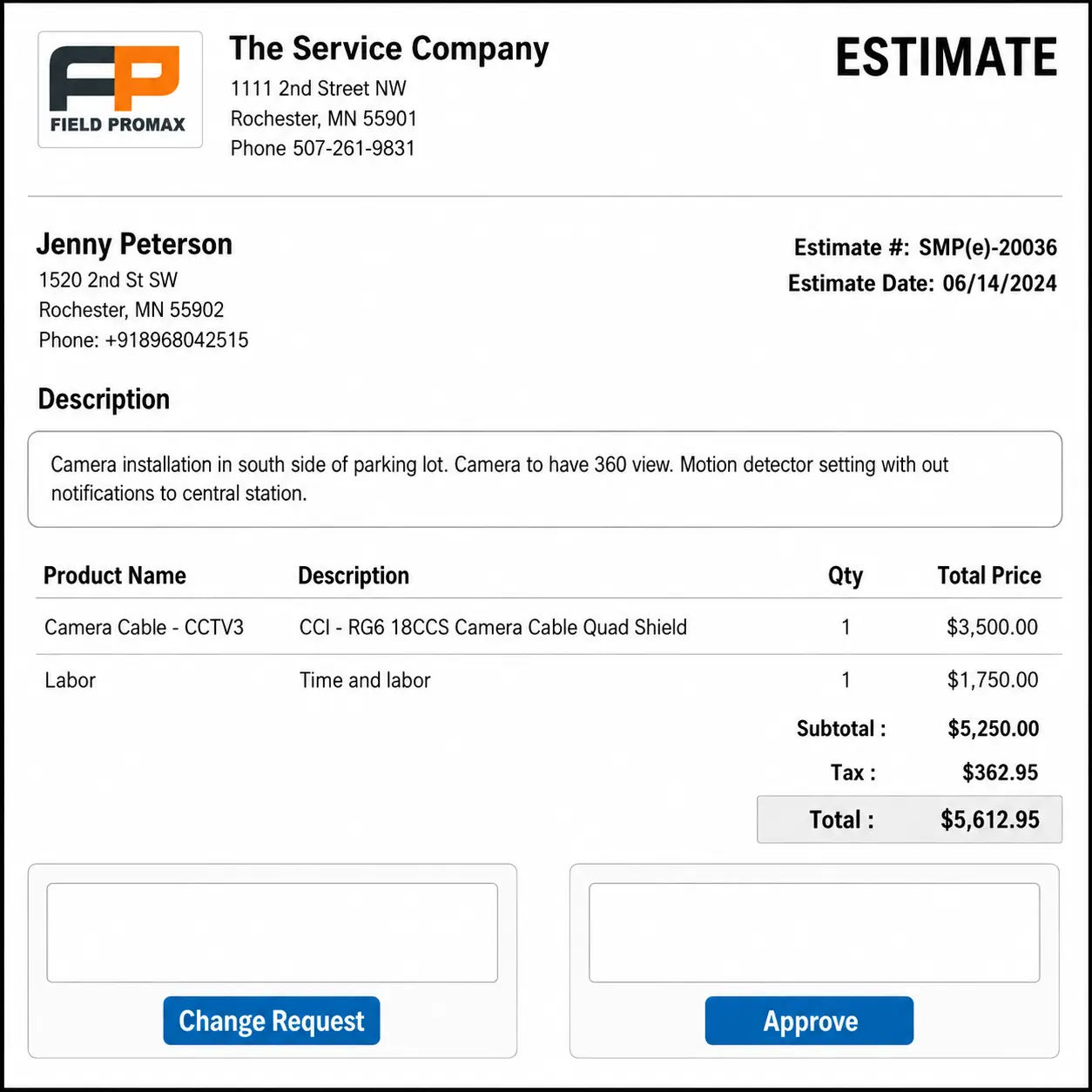
The platform underneath does the unglamorous work of connecting these layers. Field Promax pulls scheduling, dispatch, invoicing, customer records, and reports and dashboards onto one screen so the lead the website captured on Tuesday morning lands as a dispatched job by Tuesday afternoon and an invoice by Tuesday night. That's the HVAC field service software gap most shops are trying to close in 2026, and the operational shape of the answer is the same whether you arrived from a spreadsheet, a paper schedule, or a QuickBooks-only setup.
Marketing is the ignition. Operations provide the fuel. The system underneath keeps both running at the right pace.
Conclusion
Marketing fills the pipeline. Operations determine whether that pipeline actually turns into revenue. The HVAC businesses with 5-20 technicians growing the fastest in 2026 will be those that treat lead capture, dispatch, and post-service follow-up as one integrated workflow, rather than three separate functions.
Frequently Asked Questions

Content Creator
Bhargavi Halthore is a content writer at Field Promax, a field service management platform serving trades businesses across the USA and Canada. With over a decade of experience writing for business owners, she brings detailed, ground-level insight to every topic she covers. Her research goes beyond search results - she digs into LinkedIn groups, Facebook communities, and Reddit forums to understand what field service business owners are actually dealing with on the ground. She speaks directly with industry professionals, understands their day-to-day challenges, and translates that into content that is practical and actionable. What you read in her articles reflects real industry patterns, not theory.