Plumbing Email Marketing: Templates, Strategy, and Newsletter Tactics That Book Jobs
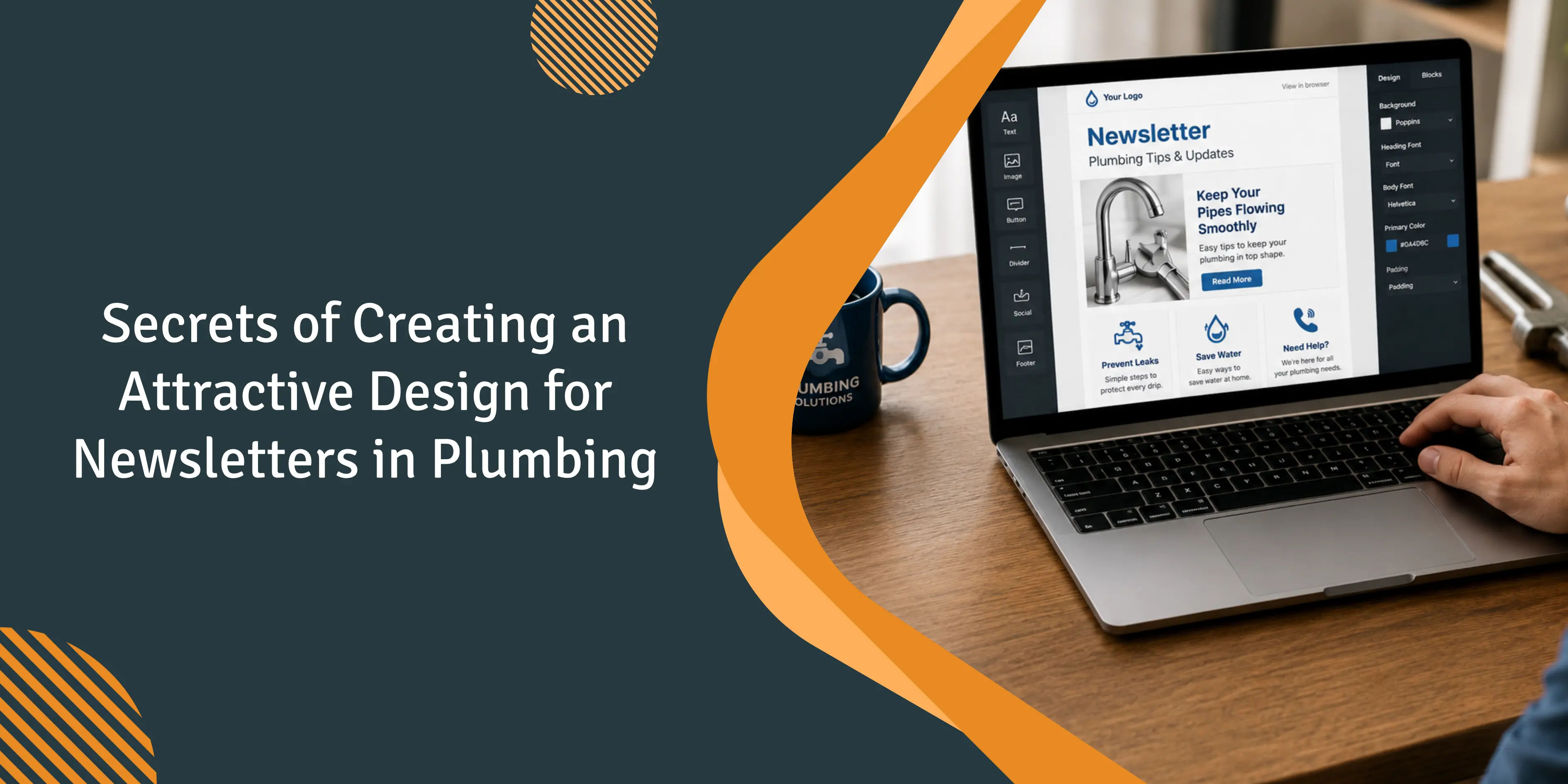
The majority of plumbing businesses are sitting on the edge of a goldmine and don’t realize they’re already in it. They have a customer list and service history going back several years, along with seasonal patterns you can set your clock to. Yet they continue paying for new leads every month instead of working through the leads they already have. That's the plumbing email marketing gap. This guide closes it.
A pattern we keep watching across plumbing operators
Across the roughly 30-40 plumbing operators we’ve worked with since 2018, the same issue consistently appears in shops with fewer than 10 techs. Consider an emergency plumbing operator with six techs in a single location in an average-sized Sun Belt metro. They may have decent local SEO and a simple monthly newsletter, but they still lack a reliable revenue engine built around 1 a.m. emergency demand. The instinct is understandable: the person answering the call is trying to lock in the job before the customer dials the next number. It’s a reasonable intuition - but often incorrect execution.
This habit of quoting by phone after hours often overlaps with code-required add-ons that are rarely mentioned during the initial call - such as expansion tanks, PRVs, and drain pans. The shop was ranking below local competitors for after-hours search queries in two of the three zip codes it served, meaning a large share of emergency calls was going to national franchises instead. When calls did come through, the verbal estimate was often lower than the written estimate produced on-site after required code items were added. The difference was either being absorbed by technicians or resulting in immediate disciplinary action. The owner couldn’t clearly determine which was happening more often.
The remedy wasn’t a more attractive newsletter. The owner instead designed a one-page emergency-rate template that included diagnostic and call-out fees, Good-Better-Best pricing ranges, and a line item noting potential code-related add-ons. It was sent via text to the customer before the truck even started rolling. The newsletter itself was later redesigned using the same offer structure. The initial layout was too crowded. It took two revisions before it stopped confusing customers calling at 2 a.m.
In the second summer, the volume of after-hours calls had increased significantly, and on-site quote disputes had almost disappeared. The downside was that price-sensitive callers dropped off after receiving the nighttime weekend text. The owner also added a “call back from the owner” option for customers who did not respond within ten minutes. Senior technicians quickly adopted the template. However, the most recent hire continued to revert to phone quotations until pay structures were adjusted.
The generalization of the pattern is this: the plumbing email marketing programs that work are those where every call-to-action leads directly into a booking flow, segmentation mirrors real job delivery, and design is built for the phone in the customer’s hand at the moment of need.
Why plumbing email pays back when the rest of the marketing stack feels expensive
Owners on Quora often face the same issue: they know email should be the primary lead-nurture channel, but struggle to balance deliverability, list quality, and tools that don’t integrate with dispatch systems. The challenge isn’t generating content ideas. It’s choosing the right platform that balances cost with usable automation - especially when there’s no dedicated marketing staff.
Litmus benchmarks put email ROI around $36 per $1 spent. From 14 years of customer conversations, the small plumbing and HVAC shops that actually send seasonal tune-up reminders and post-service follow-ups consistently tell us email is their cheapest repeat-revenue channel - well ahead of paid search. The catch is routing. A newsletter that ends in a contact form nobody monitors until Monday kills the ROI before the homeowner finishes their coffee.
The plumbing industry generated around $169.8 billion in revenue in 2025 and has been growing at approximately 3.2% over the past five years (IBISWorld 2026). Over 132,000 plumbing companies are competing for that work. According to Invoca research, phone calls generate up to 15 times more revenue than web leads. Email’s role is to drive phone calls from customers who already know you - at a fraction of the cost of paid search clicks.
OUR STANCE: Most plumbing businesses treat email like a last resort when the phone goes quiet. The ones filling their schedules in February treat it like infrastructure - built in advance, running quietly, doing its job whether the owner checks it or not.
Six things every plumbing newsletter needs before you worry about design
The order of content is more important than color selection. Check every email against these six standards before you even choose a font:
- A subject line that names the job, not the season. “How to keep your water heater from failing in the next cold snap” beats “Winter Newsletter” every time.
- A layout that works on a phone first. Litmus client mix data shows mobile accounts for around 41.6% of opens, with webmail accounting for another 40%. A majority of your contacts are not seeing desktop versions.
- Photos of your actual work and techs. Stock images read as mass email. Before-and-after images from last week’s job, however, read as work from a local business that actually completed the task.
- One primary CTA. “Schedule a flush” and “Book a water-heater inspection” split attention when used together and reduce conversions.
- Consistent branding. Consistent logo placement, color blocks, and sign-off increase recognition over time.
- Authenticated sending. SPF, DKIM, and DMARC are essential. Without proper authentication, Gmail and Yahoo’s 2024 sender requirements can route bulk emails to spam before a single subscriber sees them.
Design decisions that move the click rate, not the compliment count
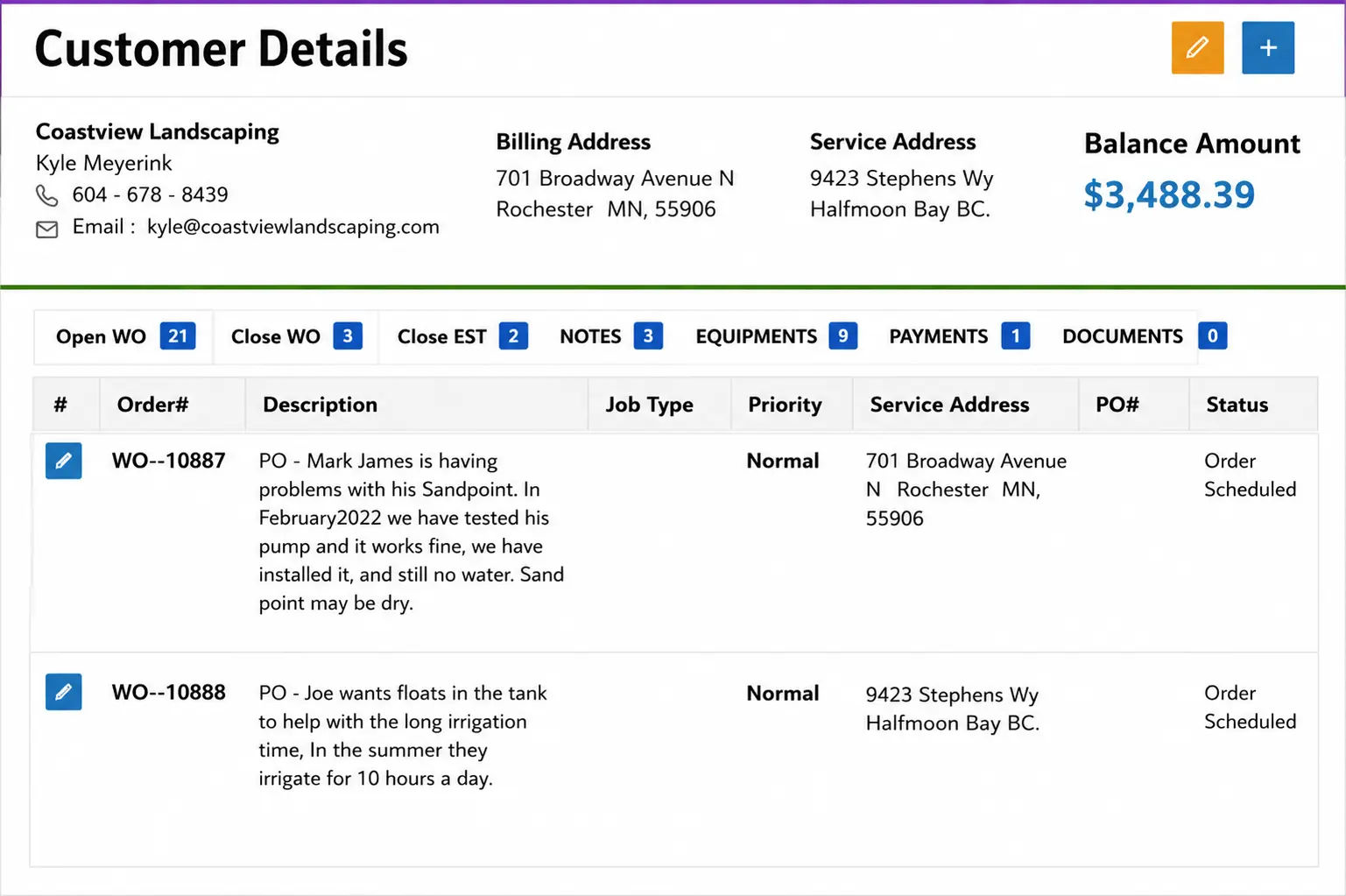
A well-designed newsletter guides readers toward one clear action. Keep the layout simple: one column with whitespace, clear headlines, body text, images, and a single CTA. Subheads should be bold and guide the reader’s scroll. Do not try to squeeze three offers into one message. Always preview it on a real iPhone before sending anything.
Use images that demonstrate the quality of your work. A photo of your branded truck parked in a customer’s driveway will build more trust than any generic wrench image ever could. CTA buttons should be at least 44px tall - Apple’s recommended minimum tap target size - with high contrast and clear action words. “Book a tune-up” consistently outperforms “Learn more.”
Avoid justified text and multi-column layouts for mobile devices. They often break on small screens and make emails look like spam. Stick to a single-column layout, left-aligned text, and short paragraphs. The simpler the design, the higher the chance it will be read by homeowners scrolling on their phones at 9 p.m.
Templates beat custom design for shops without a marketing team
The smallest plumbing shops shouldn’t be building HTML emails from scratch. Platforms like Mailchimp, Constant Contact, Brevo, and the email modules inside field service tools already provide drag-and-drop templates that are tested for mobile performance. Use them.
What do templates really cost you? Not much - just a few hours saved each month and a consistent brand identity across every email. They ensure proper mobile rendering, eliminate the need to build from scratch, and remove technical debt when the person who designed the layout leaves the business.
Create eight reusable templates and rotate them across key sequences: greetings, seasonal maintenance reminders, post-service follow-ups, re-engagement campaigns, promotional offers, review requests, emergency service announcements, and membership renewals. Once these templates are in place, monthly send preparation can be reduced to about an hour.
The shops that get the most from their email programs aren’t the ones building custom HTML. They’re the ones that set up eight core templates once, then consistently reuse and update them each month without wasting time on layout.
Segmentation is where the engagement actually comes from
Personalized emails outperform batch-and-blast campaigns, and the difference comes from meaningful segmentation rather than simply adding a customer’s name to the message. For a 5-20 technician shop, the most important segments are those that reflect real service behavior and job history.
- New homeowners under six months in the home - Water heater age and a full audit of fixture inspections show whether a property is being properly maintained.
- Water-heater customers approaching the 8-12 year replacement window - Service history tells you exactly when follow-ups, renewals, or maintenance reminders should be triggered.
- Annual maintenance plan members - Use this data to drive: renewal reminders, perk usage notifications, and relationship-building content.
- Recently completed service customers - Post-service engagement should include review requests and referral prompts.
- Quoted-but-not-booked in the last 90 days - Revenue expansion opportunities come from price adjustments, financing options, and targeted callback offers.
Industry benchmarks indicate that referral leads account for close to 45% of home service contractor revenue, compared to an average of around 18% from Google Ads and roughly 12% from marketplace leads. Within our customer base, businesses that include a referral request in post-service emails see referral pipelines grow faster than through any other paid advertising channel. The numbers alone make the email program worth it.
Segmented campaigns achieve 14% higher open rates and 28% higher click-through rates compared to non-segmented campaigns (Increv, 2025). If you have a list of 500 people, these improvements directly translate into more booked jobs - not just higher engagement metrics.
Subject lines and CTAs are where most plumbers underinvest
The subject line is the one that earns open. The CTA will earns the booking. Both of these elements receive less attention than they deserve from most plumbing shops, and that's where most email programs lose money.
Write subject lines that focus on a specific outcome and include a time window or cost implication. For example: “3 ways to spot a slab leak before it ruins your floor,” “Free water-heater health check this October,” or “Your annual flush is due - here’s a 15-minute booking link.” Personalized subject lines are 26% more likely to be opened (Campaign Monitor). Avoid all caps, excessive exclamation marks, or stacking “FREE” with dollar signs, as these can trigger spam filters and reduce trust.
For CTAs, aim for a one-tap path to booking. Do not send users to a contact form or a generic homepage. Instead, direct them to a dedicated booking page that feeds directly into your calendar and dispatch system. A newsletter that converts clicks into scheduled jobs is far more effective than one that simply drops leads into a Gmail inbox. By Tuesday, the homeowner has often already contacted someone else.
Send for the phone, send mid-week
Mobile first means single-column layouts, short body blocks, 44px tap targets, no side-scrolling. The CTA should be readable without zooming. If you're trying to test an email with a computer, and calling it finished, then you're using the incorrect device.
On cadence, monthly is the base and weekly can be considered the top of the line for shops with 5-20 techs. Bi-weekly with clear segmentation hits the right spot. Go quiet for a quarter and your sender reputation declines. Overload the list, and the number of unsubscribers increase. The list is hard to win back.
Omnisend's send-time benchmarks (26 billion emails) put Tuesday at the top for opens, with 9-11 AM local as the most reliable window. In our customer base, shops usually find a similar mid-week morning peak - with one consistent exception: emergency-service announcements perform better Friday afternoon, when homeowners are bracing for a weekend without their go-to plumber.
Newsletters work better when they live next to dispatch
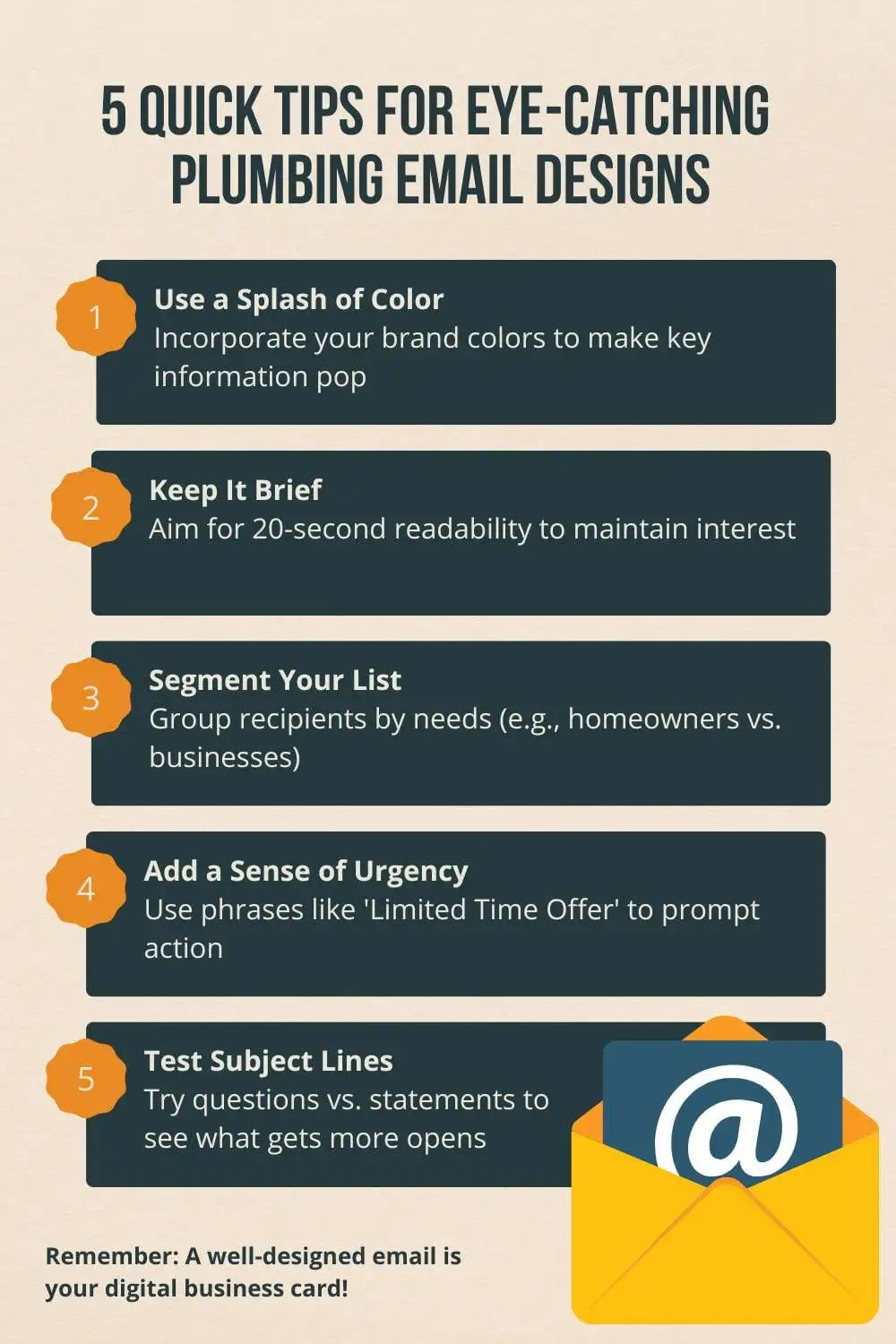
The most reliable indicator of the extent to which a plumbing-related email program generates revenue will be whether the CTA is placed on the dispatch board or in a separate inbox. Shops that incorporate newsletters and web queries directly into the schedule - without an office handoff between them - always outperform those that don't. This is a factor that many email marketing guides skip completely.
A plumbing contractor's QuickBooks App Store review described the SMS version of this: automated text follow-ups brought customers back to schedule within minutes, and the dispatcher reclaimed hours every week. The newsletter version is the same loop - post-service email triggers, segmented re-engagement, and a CTA that opens a real booking window. Pair that with a connected customer management record (service history, last-job date, water-heater install year, plan status) and segmentation sharpens every quarter without manual work.
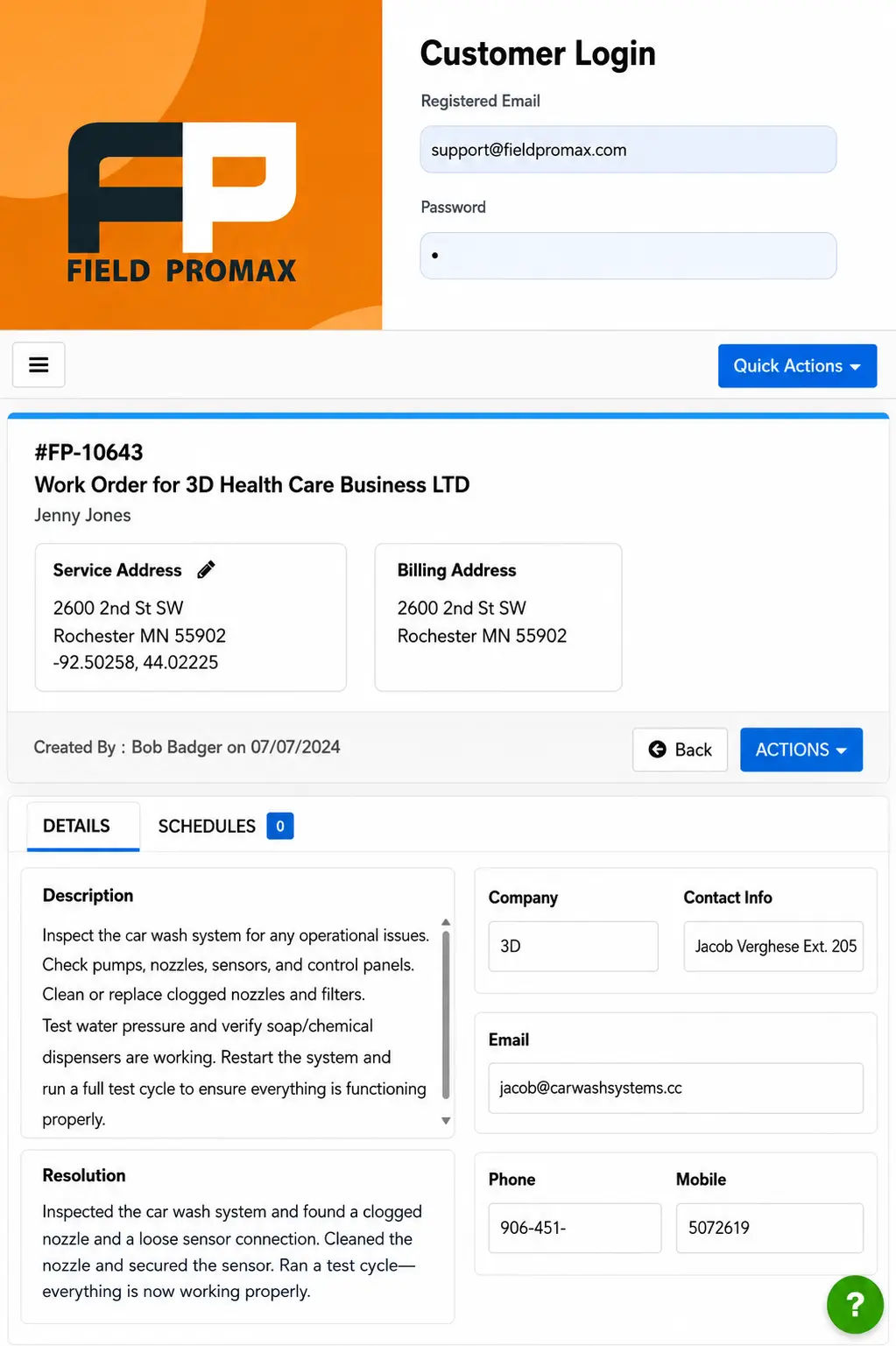
The other half is the estimated flow. When the CTA opens a process that produces a written estimate the homeowner can approve from their phone, the gap between interest and booked work collapses. That's where Field Promax's estimating workflow and scheduling and dispatch earn their keep: tap the CTA, pick a window, and the job is in dispatch before anyone touches a keyboard.
Our STANCE: What we hear from plumbing shops most often isn't "I need a prettier newsletter." It's "I send the thing and nothing happens, and I don't know if it's the list, the subject line, or the booking page." From 15 years of customer conversations, the gap is almost always between the email and what happens after the click. The newsletter drives a tap, the tap opens a contact form, the form emails an inbox nobody checks until Monday, and the homeowner has already called someone else by Tuesday. The fix isn't redesigning the newsletter - it's collapsing the gap, so a tap on "Schedule a flush" lands in the dispatch board as a real job with a window the homeowner picked. That's the workflow most small plumbing shops still don't have, and it's where almost every email ROI gain we see comes from.
Email benchmarks and seasonal campaign data every plumbing operator should have
Good email programs are based on numbers, not guesses. Here's the benchmark data for a plumbing operation - what is healthy, and what can be fixed when you find it's not.
1. KPI benchmarks
| KPI | Benchmark | What It Measures | Source |
| Average email ROI | $36 per $1 spent | Revenue return on email investment | Litmus, 2025 |
| Open rate (segmented home service list) | 30-45% | Subject line + list engagement quality | Designmodo / ZeroBounce, 2025 |
| Newsletter CTR (home services) | 2-3% | Content relevance + CTA effectiveness | GetResponse |
| Welcome email open rate | Up to 69% | New subscriber engagement | Litmus |
| Post-service follow-up open rate | 45-60% | Customer relationship strength | Litmus, 2025 |
| Bounce rate (acceptable) | Under 2% | List hygiene and deliverability | GetResponse |
| Unsubscribe rate (per send) | Under 0.5% | Frequency management + content relevance | GetResponse |
| Revenue lift from automated sequences | 320% vs. manual sends | Automation effectiveness | Omnisend / Litmus |
When a metric lands below benchmark, the cause is usually specific: a low open rate points to a weak subject line or a stale list, a CTR under 2% points to a buried CTA, and a bounce or unsubscribe rate above the line is a list-hygiene problem.
2. Seasonal email calendar for US and Canada
| Month | Primary Email Focus | Why It Works |
| January | Slow season promo + post-freeze follow-up | Schedules are light; bundled deals move; December freeze damage is appearing now |
| February | Re-engagement for dormant customers | Low inbox competition; customers haven't booked in months; slow season creates openness |
| March | Spring inspection reminder | Outdoor spigots, sump pumps, water lines need checking post-winter |
| April | Outdoor plumbing prep | Irrigation startup, outdoor faucet inspections, spring renovation projects |
| May-June | Maintenance reminders + referral push | Peak season approaching; customers active; referral conversion rates peak |
| July-August | Emergency availability + water pressure tips | High water usage from irrigation and heat; summer construction creates questions |
| September | Back-to-school home prep | Families resetting routines; strong window for water heater flush reminders |
| October | Pre-winter inspection campaign | Freeze prevention is top of mind; homeowners more receptive now than in December |
| November | Freeze warning emails + holiday plumbing tips | Thanksgiving is the busiest plumbing holiday; guests + disposal + grease = calls |
| December | Holiday emergency availability notice | Short, direct - remind customers you're available if the holiday dinner goes sideways |
Businesses in Canada including Ontario, Alberta, and the Prairie provinces particularly - the freeze season begins about 4-6 weeks earlier than the rest of the northern US. The freeze warning for October will be sent out around the middle of September. For Gulf Coast and Florida markets, the seasonal hooks include preparation for hurricanes, summer irrigation overuse, and fall storm recovery. Plan your calendar around where you work, not an outline written by someone for Ohio.
3. Subject line formulas by email type
| Email Type | Formula | Example |
| Seasonal reminder | [Specific risk] + [timeframe] | "Frozen pipes hit [city] hard last Feb - check this now" |
| Post-job follow-up | Personal opener + service reference | "[Name], quick note about your water heater fix" |
| Slow season promo | Specific offer + deadline | "$50 off drain inspection - offer ends Friday" |
| Win-back | Time reference + value hook | "It's been a year - one thing to check before spring" |
| Newsletter | Specific outcome + curiosity gap | "5 signs your water pressure is too high (most homeowners miss #3)" |
| Estimate follow-up | Soft reference + easy next step | "[Name], still thinking about that pipe repair?" |
| Emergency alert | Location + urgent specific action | "[City] freeze warning tonight - protect your pipes now" |
7 Email Templates Worth Keeping in Your Rotation
Knowing what to write is where plumbers often get stuck. Here are seven templates - adapt them to your style and target market, and then send.
1. Seasonal pipe freeze warning (November - Northern US/Canada)
Subject: [Name], one thing to check before the freeze hits [city]
Hi [Name],
Winter comes fast in [city]. Frozen pipes are one of the most expensive emergencies we see all year - they cause over $500 in damage on average before a homeowner even notices the problem.
Two things worth checking this week:
1. Insulate any exposed pipes in your basement, garage, or crawl space
2. Know where your main shutoff valve is (a 30-second check that saves hours of damage later)
If you'd like us to take a look before the first hard freeze, we have a few inspection slots open in November.
[Book a Winter Prep Inspection - link]
Stay warm,
[Your name] - [Company Name]
2. Post-job follow-up (send within 24-48 hours)
Subject: Quick note from [Company Name] about your service yesterday
Hi [Name],
Thanks for having us out yesterday for your [service type]. Everything is good to go.
One thing to remember: [specific care tip for the service].
If you're happy with the work, a quick Google review means a lot to a small business like ours: [direct review link].
And if you know anyone who needs a plumber, send them our way - we'll give you both a $25 credit on your next service.
Thanks again,
[Your name]
3. Water heater anniversary reminder (11-12 months post-install)
Subject: [Name], your water heater is due for its annual flush
Hi [Name],
It's been about a year since we installed your water heater. An annual flush clears sediment buildup and extends the life of your unit by years - most homeowners skip this step entirely. The ones who don't save themselves an early replacement.
It takes us about 30 minutes. We have openings this week.
[Schedule My Flush - link]
[Your name]
4. Win-back email (customers inactive 12-18 months)
Subject: It's been a while - one quick thing to check before spring
Hi [Name],
We haven't heard from you in a while. Hope everything is running well over there.
One thing worth checking as we head into spring: your outdoor spigots. If any froze this winter without you noticing, there's a good chance a hairline crack is waiting to become a bigger problem once water pressure picks back up.
It takes about 5 minutes to check. If something looks off, we'd be happy to come take a look - and we're offering [10% off] any spring plumbing inspection booked this month.
[Book a Spring Check - link]
Good to hear from you again,
[Your name]
5. Estimate follow-up (48 hours after quote sent)
Subject: [Name], still thinking about that [service] quote?
Hi [Name],
Just following up on the estimate I sent you for [service type]. Happy to answer any questions before you decide.
If you're ready to move forward, I can have someone out this week.
[Confirm My Booking - link]
[Your name]
6. Slow-season promo (January or October)
Subject: January special: drain + inspection bundle - save $75
Hi [Name],
January is our quiet month, so we're running one offer this week: full drain cleaning plus a whole-home plumbing inspection for $[price] - saving you $75 off our standard rates. Good for existing customers only. Appointments fill fast when we run these.
[Book My January Slot - link]
[Your name]
7. Emergency weather alert (real-time, before a freeze or storm)
Subject: [City] freeze warning tonight - protect your pipes now
Hi [Name],
[City] is expecting temperatures to drop to [X degrees] tonight. That's pipe-freezing territory.
One thing to do right now: let a thin stream of water run from any faucet on an exterior wall overnight. Takes 2 minutes. Prevents a very expensive morning.
If you wake up to no water pressure or a wet ceiling tomorrow, call us at [phone]. We'll have someone out same day.
Stay warm tonight,
[Your name]
What to take into your next send
Five things to act on before the next email goes out:
- Choose one segment - water-heater age-outs, recent service customers, plan members - and compose a single sequence before transferring it to the master list.
- Install SPF, DKIM, and DMARC on the sending domain. Table stakes are needed for the placement of inboxes in 2026.
- Build mobile-first. Test it on a smartphone before you send it. Each time.
- Route every CTA into a genuine booking flow that lands in dispatch - not just a contact form, not a generic homepage.
- Send your list Tuesday through Thursday, 9-11 AM local, then test. Let open-rate data tell you when your specific list reads.
The shops that do their emails right aren't necessarily those with the prettiest templates. They're those who connected the newsletter to the calendar.
Conclusion
Email is the most affordable repeat-revenue channel that a small plumbing shop can have. The shops that earn real revenue from it stop treating the newsletter as a design project and start treating it as the front entrance to a booking workflow that concludes with dispatch. Select a segment, write one sequence, insert it through the CTA into the schedule, then measure the changes.
Frequently Asked Questions

Content Creator
Bhargavi Halthore is a content writer at Field Promax, a field service management platform serving trades businesses across the USA and Canada. With over a decade of experience writing for business owners, she brings detailed, ground-level insight to every topic she covers. Her research goes beyond search results - she digs into LinkedIn groups, Facebook communities, and Reddit forums to understand what field service business owners are actually dealing with on the ground. She speaks directly with industry professionals, understands their day-to-day challenges, and translates that into content that is practical and actionable. What you read in her articles reflects real industry patterns, not theory.