Time Tracking for Field Service: Where It Meets JSAs, OSHA, and the Daily Timecard
Why does time tracking fall apart the moment OSHA walks through the door?
For a multi-trade contractor running 20-40 techs across Texas jobsites, time tracking stops being about billable hours and starts being about whether you can produce training records inside an audit window. Picture the shop mid-morning Tuesday. Twenty-two techs spread across HVAC swaps, plumbing service calls, and electrical rough-ins. An OSHA compliance officer shows up on an active jobsite after an eye-injury near-miss and asks for two things: the JSA for the task, and proof the tech was trained on the hazards.
If your timecard system, JSA binder, and training log live in different places, that request is the beginning of an expensive week.
Across owner conversations on Reddit and Quora over the last twelve months, the most-described audit failure for small and mid-sized trade shops is not the safety violation itself. It's the documentation gap. Forms exist somewhere; nobody can produce them fast enough. Under OSHA 1926.21(b)(2), you're required to instruct each employee on hazard recognition and keep records that prove it. In our customer base, shops that pass cleanly run training completion, timecards, and JSA sign-offs in the same mobile workflow. Shops that struggle treat time tracking as a payroll utility and safety as a separate binder.
What actually breaks when JSAs live on paper and timecards live on a screen?
Contractors on Quora consistently describe the JSA as the backbone of new-hire orientation, requiring the supervisor, worker, and safety lead to walk each task step by step. The pain: JSAs get built ad hoc on paper, re-walked for every new hire, and no one owns updating them across crews.
Ownership is a second recurring theme. Owners running small field-service businesses without a dedicated safety officer routinely ask who owns compliance. The honest answer in most 20-40 tech shops is "everyone and no one," which means tasks fall through until an incident forces attention.
That ambiguity has a labor cost. In an 8-tech operation, owners consistently report each tech burns roughly 5 hours a week on JSAs, toolbox-talk sign-offs, incident logs, and certification check-ins. That's a technician's worth of labor a week disappearing into paperwork that half the time isn't legible. Shops we work with that move those forms into a mobile compliance workflow typically claw that back to under 1 hour per tech per week, because the form auto-fills, timestamps, and files itself on submit.
Completion rate on paper is worse than most owners think. For a typical 5-20 tech shop running paper JSAs, only about 60% of pre-task safety forms come back fully completed and legible by end of week. Shops that flip to a digital JSA module with required fields and missed-form alerts routinely push completion above 95%, because the tech can't close the work order (or stop the clock) without it.
That last mechanic is the point. Time tracking and JSAs aren't two problems. They're one problem with two forms.
A pattern across mid-sized multi-trade contractors in Texas
Across multi-trade contractors we've worked with in Texas, one pattern comes up repeatedly. The shape below is composited from the most common version, not a single named account.
A mid-sized multi-trade contractor operating across Texas with field crews subject to OSHA regulations. Roughly 30 techs across residential and light commercial, four crew leads, a dispatcher, and an office manager who also handles safety paperwork. Timecards in a QuickBooks payroll module. JSAs and PPE hazard assessments in paper binders in each truck plus a shared drive only the office manager knew how to update. Training records were a spreadsheet.
Then came the review. An OSHA officer arrived on an active jobsite, requested safety training records for the specific crew, and the contractor could not produce them inside the audit window. The paperwork existed. Nobody could put their hands on the current version. The documentation gap triggered a penalty in the tens of thousands, consistent with what the National Safety Council reports as a roughly $43,000 average cost per medically consulted injury before penalties. A single documentation-driven penalty in a 20-40 tech shop routinely wipes out a quarter of the annual safety-program budget once indirect costs stack on at the typical 3-5x multiplier.
The intervention was structural. Leadership moved safety training records out of paper binders and the shared drive into a centralized digital system where completion dates, signatures, and certifications were logged per technician and retrievable on demand. The same mobile app techs used for clock-in surfaced the current JSA for the assigned task and blocked clock-start until it was signed.
The outcome was not clean. Subsequent audits went smoothly, with records pulled in minutes rather than days. But crews initially resisted the added sign-off steps, and office staff spent weeks back-filling historical training data. Two crew leads left during the transition; the owner attributed part of that to the change and part to broader labor-market pressure.
What changes when the timecard, the JSA, and the dispatch board share one system?
The mistake I see mid-sized contractors make on time tracking is treating it as a payroll problem. It isn't. In a shop with real OSHA exposure, the timecard is the fastest audit trail you have for who was on which site, who signed which JSA, and whether the toolbox talk happened before work started. From 14 years of customer conversations, the owners who survive a compliance review without a five-figure hit are the ones whose techs can't clock in on a job until the JSA is signed on the phone in their hand. The industry line says buy safety software, buy time-tracking software, integrate later. The truth is those two forms have to share a workflow from day one, or the field will route around both.
Skilled trades sit at a brutal 73% annual technician turnover rate per 2026 Bridgit workforce benchmarks, while mechanical contractors with formal safety-first training programs run roughly 20% lower turnover. In our customer base, shops with documented JSAs, toolbox talks, and ongoing safety training are the same ones whose senior techs stick past the three-year mark.
When a tech clocks in on a job, three things should happen in the same click: the timecard records the start, the JSA for that work type surfaces on the phone and requires a signature, and the dispatcher sees the tech on-site and started. That's one workflow, not three integrations. It handles OSHA's 1926.21(b)(2) training-instruction requirement, the 1910.132(d) hazard-assessment certification for PPE, and the internal question of "did the tech actually start when they said they did" in the same log.
Customization matters because no two multi-trade shops have the same crew mix. An HVAC-heavy shop needs refrigerant-handling checkpoints tied to EPA 608. A plumbing-heavy shop needs cross-connection control on backflow work. An electrical-heavy shop needs NFPA 70E arc-flash PPE tied to the incident-energy assessment. A rigid single-industry timecard schema can't hold all of that.
What should the software actually do for a safety-first shop?
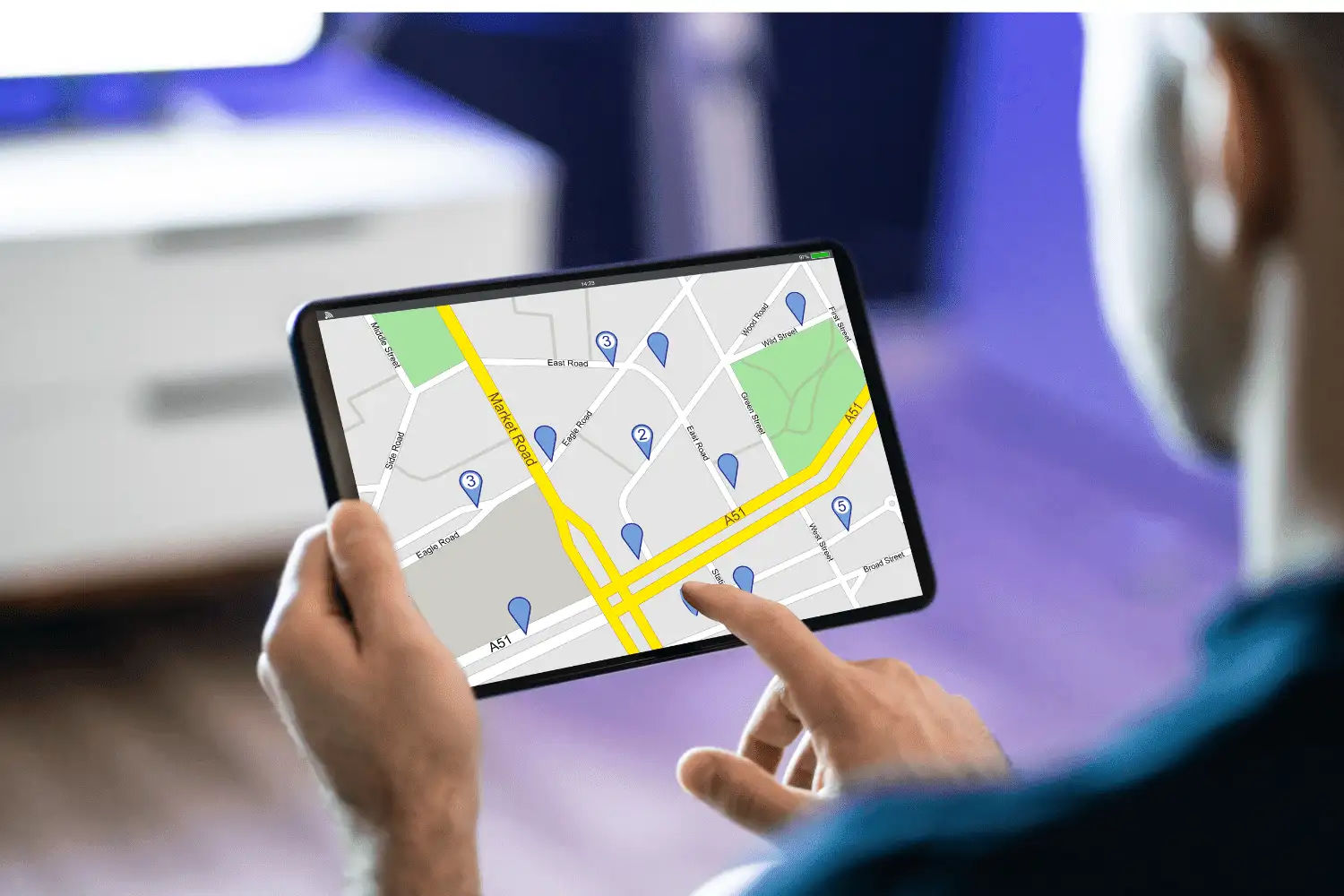
The requirements list is shorter than most vendors make it sound. For a 20-40 tech shop, integrated timecard and GPS tracking is the spine. Techs clock in from the field service mobile app at the truck. Clock-in surfaces the JSA for the assigned work type. Signature and required-field completion are non-optional to start the work order.
.webp?updatedAt=1747733769120)
From there, everything downstream cleans up:
- Payroll pulls verified hours by tech, by job, by day.
- Job costing sees actual labor on the work order, not estimated.
- Dispatchers see live crew locations and start/stop timestamps for disputed time-on-site claims.
- Compliance sees a per-technician log of every JSA signed, every toolbox talk acknowledged, every certification date, retrievable in minutes.
- Owners get one dashboard for who's where, what they're doing, and whether they signed off on safety controls before starting.
An enterprise reviewing Field Promax on the QuickBooks App Store described deploying the platform across four of its businesses, citing customer service that exceeded expectations plus customizations that other out-of-box products couldn't match. That's what customization does in a safety-driven shop: it lets JSA fields, certification checks, and timecard rules match the work type.
One caveat. Mobile-app adoption is the single biggest predictor of whether this works. Shops where techs clock in and out on the phone get accurate data. Shops that leave the app on the office desktop and let the dispatcher enter times don't get any compliance benefit, because the JSA sign-off never leaves the office. If the crew isn't on the phone, none of the rest matters. Team management is where the rollout plan lives.
What owners typically get wrong when shopping for this
Two things.
First, owners benchmark price against enterprise FSM tiers and either overspend or write off the whole category. What matters for a 20-40 tech operation is a price that fits the shop's actual revenue, not a per-seat rate designed for a national franchise. Most shops adopting a time-tracking app for the first time are coming off spreadsheets, paper timesheets, or a QuickBooks-only setup. The migration is not from another FSM platform. That changes what onboarding has to solve for.
Second, owners buy time tracking and safety separately and never integrate them. The dispatch-to-invoice pipeline gets built. The safety binder stays a safety binder. The OSHA audit finds them the same way it finds every shop running the two as parallel systems.
For construction contractors doing 1926-subpart work, this gets one layer harder because construction adds site-specific safety programs, frequent inspections, and incident reporting on top of general-industry hazard assessment. Tying JSA sign-offs to specific 1926 tasks (excavation, fall protection, lockout/tagout) at clock-in is the shape that holds up in an audit. That's where construction-specific field service software matters more than the payroll module.
Time tracking that doesn't tie to JSAs is a payroll tool. Time tracking that does is an audit shield.
Want a personalized demo?
See how Field Promax can transform your field operations
More tracking and compliance reading
Continue with:
Conclusion
Time tracking that lives next to the JSA and the work order is worth building for. Time tracking that lives in a payroll silo will fail you the first time an OSHA officer asks who signed what.
Frequently Asked Questions

Content Creator
Bhargavi Halthore is a content writer at Field Promax, a field service management platform serving trades businesses across the USA and Canada. With over a decade of experience writing for business owners, she brings detailed, ground-level insight to every topic she covers. Her research goes beyond search results - she digs into LinkedIn groups, Facebook communities, and Reddit forums to understand what field service business owners are actually dealing with on the ground. She speaks directly with industry professionals, understands their day-to-day challenges, and translates that into content that is practical and actionable. What you read in her articles reflects real industry patterns, not theory.