How to Start a Roofing Company: A Step-by-Step Guide
If you've been thinking about how to start a roofing company, you're looking at one of the strongest and most rewarding jobs in construction. Roofing is always in demand because homes and buildings constantly need repairs, replacements, and upkeep. That steady demand means a well-run roofing company can give you a stable and rewarding career. The numbers back this up: the U.S. roofing market is worth about $33.3 billion in 2026 and is expected to grow to around $44.7 billion by 2031.
But success takes more than knowing how to put shingles on a roof. Whether you're writing your roofing business plan, running daily jobs, or thinking about the future, you'll need smart planning and a solid understanding of the business side of things. The best roofers who know how to start a roofing company successfully also understand how to run a roofing business profitably from day one. This guide gives you a clear, step-by-step plan for starting a roofing company from scratch. It covers everything from building a business plan to getting licensed and insured, along with a realistic 12-month timeline to help you build a profitable roofing business. Whether you're asking how to start a roofing business or specifically how to open a roofing company as a legal entity, the path is the same, and we've mapped it out for you.
Is Starting a Roofing Business Right for You?
Before anything else, you need to understand your market. Whether you want to work alone or build a full crew, the steps in this guide apply to you. If you're wondering how to start a roofing business with no experience, the key is to combine strong technical skills with solid business knowledge, and that starts with being honest with yourself about where you are and where you want to go.
The Roofing Industry
The U.S. roofing industry is worth over $50 billion and is growing steadily. That growth is driven by older homes, more severe weather, and homeowners spending more on upkeep and upgrades. Skilled roofers are needed year-round, from repairs and replacements to new construction, including business roof repair for commercial properties. Even during tough economic times, roofing stays in demand, which makes it a solid business opportunity.
How Much Money Can You Make?
Roofing can be very profitable. Most roofing companies have net profit margins of 5-10%, and highly efficient businesses can hit 15% or more. Commercial roofing jobs (for businesses and large buildings) are often bigger and more profitable than residential jobs, but they take longer to close and are more complex. As you get better at how to run a roofing business, your profit margins will likely grow. Many people who learn how to become a roofer discover that the real wealth comes once they transition to owning and how to grow your roofing business strategically.
Real Challenges You'll Face
Roofing isn't easy. The work is hard on your body, and there are real safety risks. Business can slow down in winter, so managing your money carefully during slower months is a must. Competition is tough, so you need to stand out. And if you're moving from being a skilled roofer to being a business owner, there's a steep learning curve. You'll need to learn marketing for roofing companies, sales, money management, and operations not just how to roof.
The 12-Month Roadmap: Your Path to Launch
Starting a business can feel like too much at once. Breaking it into steps makes it much more manageable. Here's a plan to take you from idea to open for business, whether you're starting a roofing business on a shoestring budget or with solid savings behind you.
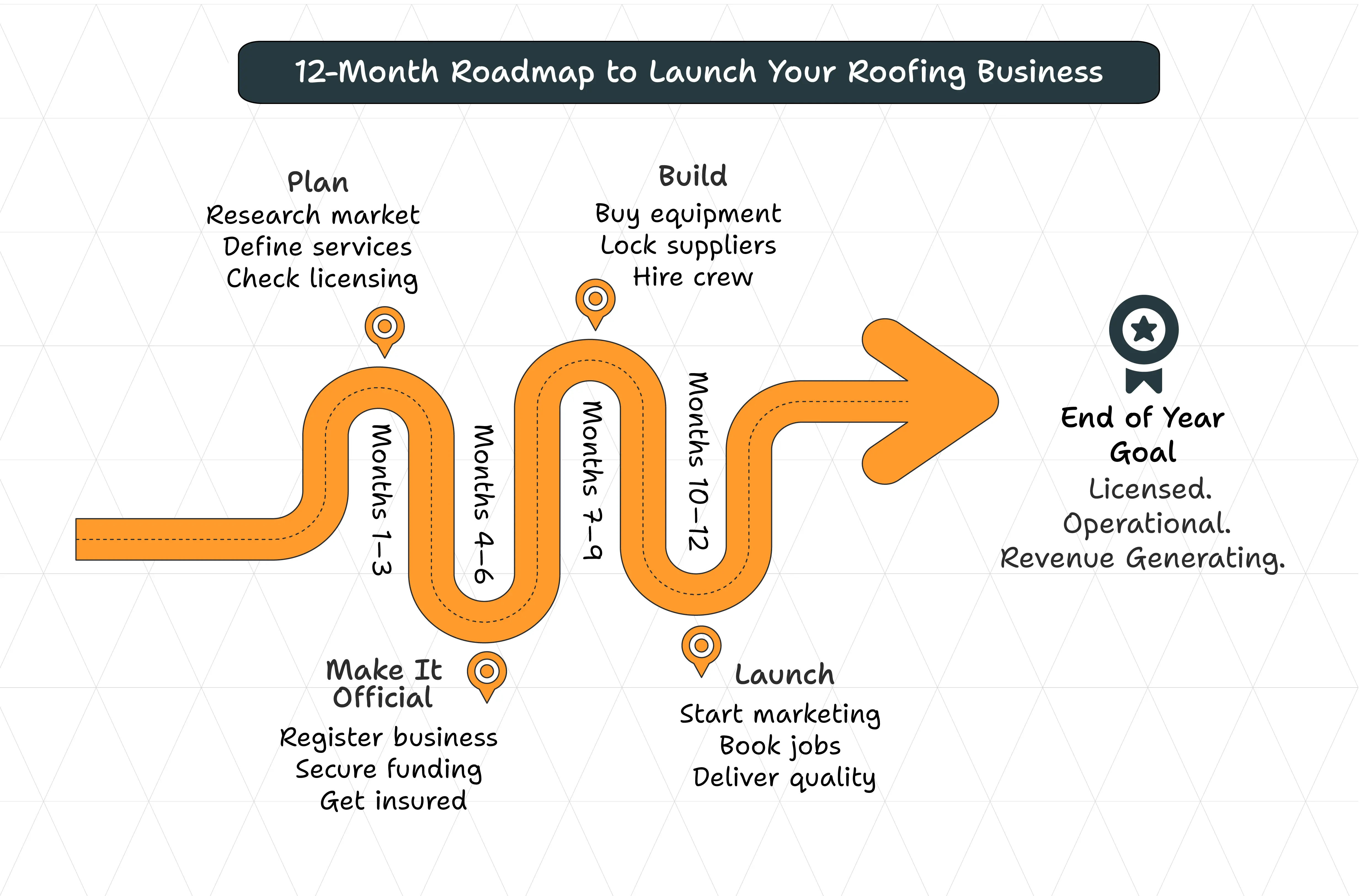
Phase 1 (Months 1-3): Research, Planning, and Foundation
In the first three months, focus on building your foundation. Research your local market and competitors. Write a first draft of your roofing business plan. Look at your personal finances. Find out what license you need to start a roofing company in your state and city. Start networking with others in the industry and begin thinking about how you'll market your business.
Phase 2 (Months 4-6): Legal Setup and Financial Infrastructure
This phase is all about making your business official. Register your business name, get a federal tax ID number (called an EIN), and secure any funding you need. Set up your business bank account and accounting system. Get your contractor's license and buy your first insurance policies. These steps are required to operate legally and professionally and are essential for anyone serious about how to open a roofing company.
Phase 3 (Months 7-9): Equipment, Suppliers, and Team
Now that your business is legally set up, it's time to build your ability to do the work. Buy or lease your tools and equipment. Build relationships with material suppliers. Hire and train your first crew members if needed. Set up your job management and day-to-day systems so everything runs smoothly. This is also a great time to start developing your marketing for roofing company outreach to build early brand awareness.
Phase 4 (Months 10-12): Marketing Launch and First Jobs
The last three months before launch are about getting the word out and landing your first customers. Launch your marketing campaigns, build your online presence, and start generating leads. Book your first jobs, do great work, and use real-world feedback to improve. Strong roofing company marketing strategies at this stage are what separate businesses that succeed from those that struggle. Every new roofing company that thrives in year one has one thing in common: they treated marketing as a non-negotiable priority from the start.
Step 1: Write a Strong Roofing Business Plan
A good roofing business plan is the foundation of your company. It acts as your roadmap, helps you stay focused, and is required if you want to get a loan from a bank or investor. Even after you launch, coming back to your plan regularly helps you stay on track.
Why Your Business Plan Matters
A business plan is more than a document you write to get a loan. It forces you to think through every part of your business your target customers, your pricing, your marketing, and your finances. This process helps you see your goals clearly, spot possible problems early, and plan how to handle them. It also gives you something to measure your progress against as you grow.
What to Include in Your Plan
Your roofing business plan should have these sections:
-
Executive Summary: A one-page overview of your business idea, target market, competitive advantage, and financial projections.
-
Company Description: Details about your business structure (sole proprietorship, LLC, etc.), location, ownership, and the services you'll offer.
-
Market Analysis: Research on your local market, including who your customers are, how big the market is, how it's growing, and who your main competitors are.
-
Services and Pricing: A detailed list of the roofing services you'll provide installations, repairs, inspections, maintenance contracts, and business roof repair along with your pricing strategy.
-
Marketing and Sales Strategy: Your plan for finding customers, including digital marketing, local SEO, referral programs, and direct sales.
-
Operations Plan: Details about your equipment, suppliers, staff, and how you'll run jobs from day to day.
-
Financial Projections: A three-year forecast of your cash flow, a break-even analysis, and projected profit and loss statements.
For more help and templates, check out the U.S. Small Business Administration (SBA) website they have great free resources for writing business plans.
Step 2: Handle the Legal Side Licensing and Registration
The legal requirements for starting a roofing company can feel complicated, but getting them right protects you and your company. Requirements are different in every state and city, so you'll need to do careful research. Many new business owners ask, "What license do you need to start a roofing company?" The answer depends on where you live and what type of work you plan to do. If you're researching how to start roofing business operations in a new state, always start with your state's contractor licensing board before anything else. Knowing how to open a roofing company the legal way from the start saves you from costly fines, shutdowns, or insurance denials later.
Choosing Your Business Structure
One of your first decisions is how to set up your business legally. The most common options are:
Sole Proprietorship: The simplest setup you and your business are one entity. Easy to create but offers no protection for your personal belongings if your business gets sued. Limited Liability Company (LLC): A popular choice for small businesses. An LLC keeps your personal assets separate from business debts, which protects you. It also gives you flexibility in how you pay taxes. Corporation: The most complex structure, offering the strongest protection but also the most rules and paperwork. It's strongly recommended that you talk with a business attorney or accountant to figure out what's best for your situation.
Contractor Licensing
Most states require roofing contractors to have a license, but the rules vary a lot. Understanding how to become a roofing contractor in your specific state is one of the most important early steps. Some states have a roofing-specific license; others require a general contractor's license. The process usually involves proving you have experience, passing a test, and showing proof of insurance. Check with your state's contractor licensing board to find out what's required where you live.
Business Registration and Tax ID
After you choose your business structure, register your business name with your state. You'll also need to get a federal Employer Identification Number (EIN) from the IRS this is like a Social Security number for your business. You'll need an EIN to open a business bank account and hire employees.
Step 3: Get Funding for Your Roofing Business
Starting a roofing business requires a big upfront investment in equipment, insurance, and marketing. Here's a breakdown of what it costs and how to pay for it.
Understanding Your Startup Costs
Your costs will vary based on the size of your business, your location, and whether you're starting alone or with a crew. Here's a general estimate:
Funding Options
Here are the most common ways to pay for your startup costs:
-
Personal Savings: Using your own money means no debt and full control of your business but you take on all the financial risk yourself.
-
SBA Loans: The U.S. Small Business Administration offers loan programs with good terms and lower interest rates than regular bank loans. The SBA 7(a) loan is a popular choice for startups.
-
Bank Loans and Lines of Credit: Traditional banks and credit unions also offer business loans, though they often have stricter requirements than SBA loans.
-
Equipment Financing: If you need expensive tools or vehicles, you can often finance them separately, which saves your working capital for other expenses.
| Category | Low | Mid | High |
|---|---|---|---|
| Equipment & Tools | $5,000 | $10,000 | $20,000 |
| Vehicle | $10,000 | $20,000 | $35,000 |
| Insurance (Initial Premium) | $2,000 | $4,000 | $8,000 |
| Licensing & Permits | $500 | $1,000 | $2,000 |
| Marketing & Website | $1,000 | $2,500 | $5,000 |
| Office & Software | $500 | $1,500 | $3,000 |
| Total | $19,000 | $39,000 | $73,000 |
Step 4: Get the Right Insurance and Prioritize Safety
Because roofing is a high-risk job, insurance is not optional. It protects your business, your workers, and your customers from the financial damage that can come from accidents and injuries.
Insurance Policies You Need
General Liability Insurance: Covers injuries and property damage claims from customers or other people. Most roofing businesses carry at least $1 million in coverage.
Workers' Compensation Insurance: Required by law in most states if you have employees. Covers medical bills and lost wages for workers who get hurt on the job.
Commercial Auto Insurance: Covers any vehicles you use for work, including your truck and crew vans.
Safety Training
Insurance isn't enough on its own. You also need to give your crew proper safety equipment and train them on OSHA safety standards. A strong safety record can also help you pay less for insurance. Whether you're a new roofing company just getting off the ground or a seasoned contractor, safe job site habits are just as important as technical skill.
Step 5: Get the Right Tools and Equipment
Your tools and equipment are a major investment but they're also what let you do the work. Here's what you'll need from day one.
Must-Have Equipment
-
Work Vehicle: A reliable truck that can carry ladders, tools, and materials.
-
Ladders and Safety Equipment: Multiple types of ladders, plus harnesses, ropes, and other fall protection gear.
-
Hand Tools: Hammers, pry bars, nail guns, measuring tapes, and other basic tools.
-
Power Tools: Drills, saws, and other power tools based on the types of roofing you'll do.
New vs. Used Equipment
When you're just starting out, buying used equipment especially for big items like your truck can save you a lot of money. The key is finding the right balance between saving money and having reliable gear. This is especially smart if you're figuring out how to start a roofing company on a tight budget.
Supplier Relationships
You'll also need to connect with roofing material suppliers. Reach out to several in your area to compare prices and service. Over time, a good relationship with a supplier can lead to better pricing and credit terms.

Step 6: Set Up Your Operations and Systems
To run your business efficiently and grow beyond just yourself, you need solid systems. Knowing how to run a roofing business not just how to do roofing work is what separates companies that grow from ones that get stuck.
Business Location
When you're starting out, running your business from home saves a lot of money. As you grow, you might want a small office or a warehouse to store equipment and materials. Starting lean gives you more room to grow.
Essential Business Systems
-
Job Management Software: Tools like Field Promax help you schedule jobs, manage crews, track work orders, and communicate with customers all in one place.
-
Accounting Software: Programs like QuickBooks and FreshBooks help you track income and expenses, send invoices, manage cash flow, and keep your finances organized.
-
Customer Relationship Management (CRM): A CRM system helps you manage leads, track your sales pipeline, follow up with customers, and build lasting relationships that bring in repeat and referral business.
Step 7: Price Your Services Strategically
Your pricing directly affects your profits and your ability to compete. You need to find a balance competitive enough to win jobs, but high enough to cover your costs and make money. This is a critical skill for anyone learning how to become a roofer turned business owner.
Know Your Costs First
Before setting prices, you need to understand all your costs direct costs like materials and labor, and indirect costs like overhead, insurance, and marketing. Once you know your true cost per job, you can add your desired profit margin to set your prices. This is a key part of running a profitable roofing business.
Pricing Models
-
Hourly Pricing: You charge a set rate per hour for labor. Simple to calculate, but customers often prefer knowing the total cost upfront.
-
Flat-Rate Pricing: The most common model in roofing. You give a fixed price for the whole job. This requires accurate estimates but is what most customers prefer.
Step 8: Market Your Roofing Business
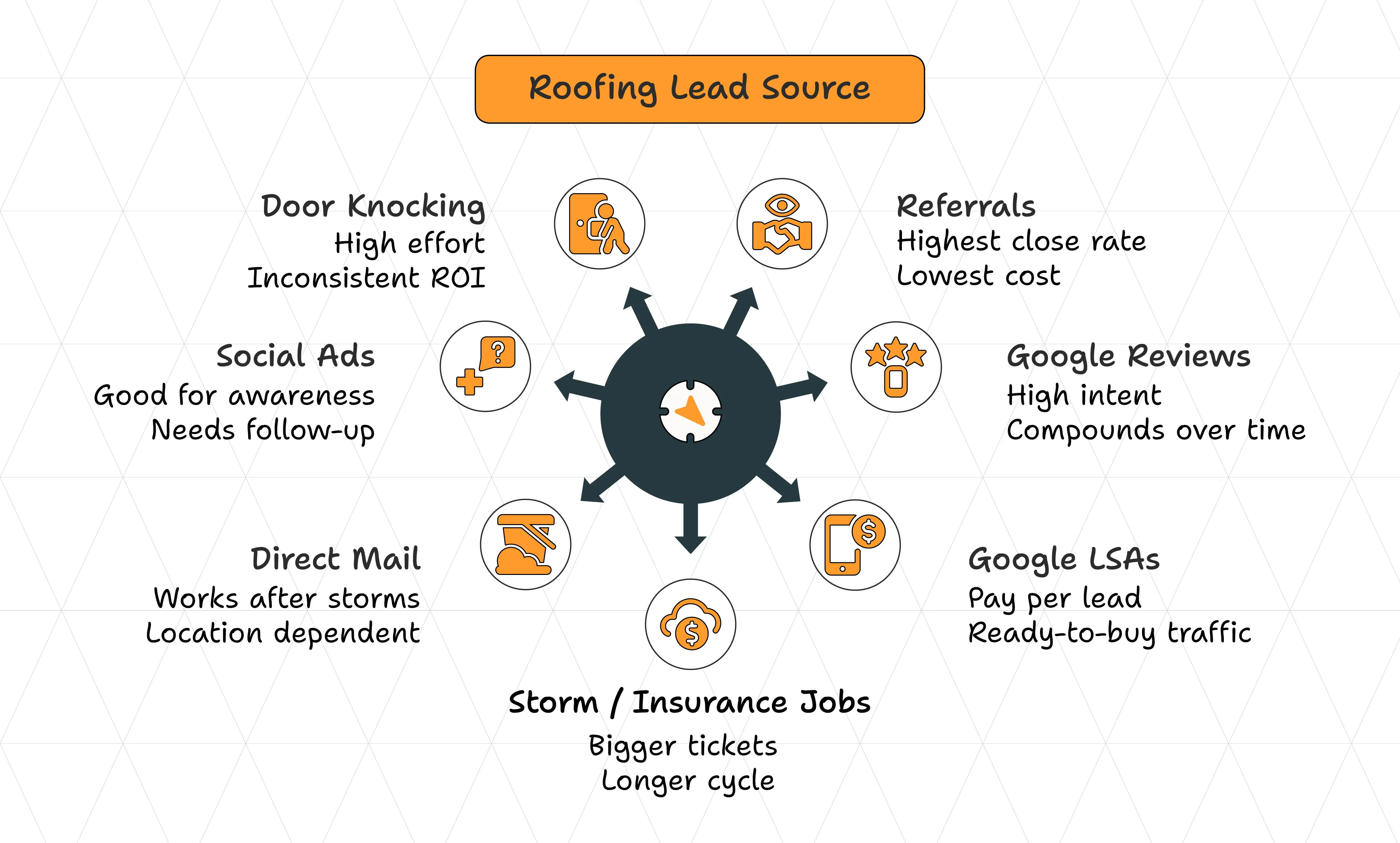
Once you're ready to take jobs, you need a plan for getting customers. Knowing how to market a roofing company is one of the most important and most overlooked parts of growing a roofing business.
Digital Marketing
Digital marketing is the backbone of modern roofing company marketing strategies. Focus on these key areas:
-
Google Local Services Ads: These ads appear at the very top of Google search results and are a great way to get high-quality leads from customers in your area.
-
Local SEO: Optimizing your Google Business Profile, building local listings, and collecting positive customer reviews helps you show up higher in local searches. This is one of the most powerful long-term marketing for roofing companies strategies available.
-
Facebook and Instagram Ads: These platforms let you target homeowners in your service area with visual ads that show off your work.
Traditional Marketing
Traditional methods still work alongside digital ones:
-
Referral Programs: Reward satisfied customers who send friends and family your way. Word-of-mouth is still one of the strongest ways to grow.
-
Direct Mail: Targeted postcards and door hangers can still reach homeowners in your area effectively.
-
Truck Signage: Your work truck is a moving billboard. Brand it with your company name, logo, and phone number.
Combining two or three of these marketing for roofing company methods at the same time gives you the fastest results when you're just starting out.
Step 9: Hire and Train Your First Crew
As business picks up, you'll need help. Hiring is a big step getting it right makes all the difference.
When to Hire
Hire when you're regularly turning down jobs because you don't have enough hands. Make sure you have enough steady work to keep a new employee busy before you bring them on.
Finding Good Roofers
Finding skilled, reliable roofers can be tough. Good places to look include local supplier stores, online job boards, and referrals from other contractors. People who are actively learning how to become a roofer through trade schools or apprenticeships can also be excellent hires for a growing team.
Training and Safety
Once you've hired someone, train them thoroughly both on your quality standards and your safety protocols. A well-trained crew works faster, does better work, and stays safer on the job. Tools like Field Promax can help you manage crew scheduling and job assignments as your team grows.
Step 10: Common Mistakes to Avoid
Learning from others' mistakes saves you time, money, and stress. Here are the biggest pitfalls when starting a roofing company or growing an existing one:
-
Underpricing Your Services: It's tempting to charge less to win jobs, but this hurts your profits and sets a standard you can't sustain.
-
Poor Cash Flow Management: Roofing slows down in winter. You need to manage your money carefully to make it through slow periods.
-
Skipping Insurance or Licensing: Operating without proper insurance and licenses puts you at huge risk fines, lawsuits, and even losing your business.
-
Growing Too Fast: Taking on too much work too quickly can lead to burnout and lower quality. Steady, sustainable growth is the goal.
Your First Year: What to Expect
Revenue and Profitability Timeline
-
Months 1-3: Low revenue ($5,000-$15,000), high expenses, negative cash flow. Focus: Build systems and reputation.
-
Months 4-6: Increasing revenue ($15,000-$30,000), steady expenses, may break even. Focus: Refine processes, collect reviews.
-
Months 7-9: Strong revenue ($30,000-$50,000), controlled expenses, positive cash flow. Focus: Consider hiring or adding services.
-
Months 10-12: Consistent revenue ($40,000-$60,000+), predictable expenses, healthy margins of 5-10%. Focus: Plan for Year 2.
Most businesses aren't consistently profitable until months 12-18. Plan your finances with that in mind.
Common Challenges in Year One
-
Lead Generation: Inconsistent leads and low close rates. Fix: Use multiple marketing channels.
-
Seasonal Slowdowns: Less work in winter. Fix: Save cash reserves and offer winter services.
-
Operational Learning Curve: Underestimating job costs or poor time management. Fix: Track everything and adjust.
-
Customer Service: Managing expectations, handling complaints, collecting payment. Fix: Communicate clearly from the start.
Next Steps: Growing Beyond Year One
Once you've made it through your first year, you can start thinking bigger. Understanding how to grow your roofing business takes a shift in mindset from doing the work to leading and scaling the operation.
Add More Services
Consider adding services like gutter installation, siding, or even solar panel installation. Adding business roof repair for commercial clients is another great way to grow. These additions can increase your revenue per customer and make your business more stable year-round. If you're wondering how to grow a roofing company beyond residential jobs, commercial work is one of the fastest paths. Understanding how to grow a roofing business through service diversification is one of the most underutilized strategies in the industry. And if you want to expand into larger commercial contracts, learning how to become a roofing contractor certified for specific commercial systems (TPO, EPDM, metal) can unlock much higher-value jobs.
Build Your Team
Growing means adding not just more roofers, but possibly office staff to handle scheduling, bookkeeping, and customer service. A dedicated marketing for roofing companies budget not just word-of-mouth is essential to keep your pipeline full as you scale. Effective marketing for roofing companies includes everything from Google Ads to local sponsorships and seasonal campaigns. The right systems, like Field Promax for field service management, become even more important as your business gets more complex. Ultimately, how to grow a roofing business sustainably comes down to people, processes, and consistent marketing and the same applies when thinking about how to grow a roofing company from a small crew into a full-scale regional operation.
Invest in Marketing to Scale
One of the clearest answers to how to grow a roofing business is doubling down on marketing. As your revenue grows, reinvest a portion into Google Ads, SEO, and social media. Implementing proven roofing company marketing strategies like review generation, email follow-up campaigns, and seasonal promotions can dramatically increase your close rate and revenue year over year. Learning how to market a roofing company at scale is what separates a $500K business from a $2M one. The roofers who master how to grow your roofing business through systematic marketing outpace their competition every single year.
Conclusion
Starting a roofing company is challenging, but it's absolutely doable with the right plan and commitment. Whether you're learning how to start roofing company operations from scratch, figuring out how to start roofing business finances for the first time, or an experienced tradesperson ready to go out on your own, success comes down to smart planning, strong systems, and steady marketing. The roofers who master how to start roofing company disciplines early, from licensing to lead generation, build businesses that last.
Writing a solid roofing business plan and knowing how to market a roofing company are just as important as technical skills. Anyone who has researched how to start roofing company operations quickly realizes that the business side is as demanding as the physical work. Use the right tools, like Field Promax, to keep operations running smoothly. Stay focused, keep learning, and build your business on a foundation of quality work.
Key Takeaways:
-
Write a solid business plan before you launch
-
Get properly licensed and know what your state requires
-
Understand your costs and price accordingly
-
Invest in marketing from day one
-
Build systems that can grow with you
-
Focus on quality and customer satisfaction
-
Plan for seasonal slow periods
-
Keep learning and improving