The Complete 12-Step Guide to Starting a Successful Plumbing Business

The plumbing industry is a cornerstone of our modern world. It's valued at over $126 billion and projected to grow steadily in the coming years. In the United States alone, the plumbers industry is estimated to reach $191.4 billion in revenue in 2026, according to IBISWorld.
For skilled technicians and savvy entrepreneurs, this represents a massive opportunity.
However, the path from being a great technician to running a plumbing business is filled with challenges that go far beyond fixing leaks and clearing drains. Many new owners are surprised to find that business acumen, not just technical skill, is the true key to success.
This guide provides a comprehensive, 12-step roadmap for anyone wondering how to launch a plumbing business, whether you're a seasoned master technician or an entrepreneur with no hands-on experience.
We will cover everything from:
-
Initial planning and strategy
-
Securing startup funding
-
Marketing your services
-
Scaling your operations
By the end, you'll have the knowledge to build a thriving and profitable company in 2026 and beyond.
Is This Industry Still Profitable in 2026?
Absolutely. The sector is not only massive but also remarkably resilient.
Unlike many industries susceptible to economic downturns, the need for these services is constant and predictable:
-
Pipes will always leak
-
Drains will always clog
-
Water heaters will always need replacing
This consistent demand provides a stable foundation for a profitable venture.
The State of the Industry The sector in the United States is valued at approximately $126.4 billion and is expected to continue its growth trajectory.
What's driving this expansion?
-
Aging housing stock requiring more frequent repairs and upgrades
-
A growing population increasing demand for new construction
-
Skilled labor shortage allowing well-run companies to command higher prices
Average Owner Salary
Income varies significantly based on location, experience, and company size. But the earning potential is substantial.
Year 1 (New Operation):
Realistic plumbing business owner salary: $50,000 to $75,000
Years 3-5 (Established Company):
Expected income: $100,000 to $150,000+
Top Earners (Specialized Services):
Commercial projects, emergency repairs: $200,000+ annually
Profit Margins:
Typical net profit margin: 10% to 20%
[Expert Corner]
"This industry gave me the freedom to build something of my own. In year three, I was making more than I ever did as a technician. The key is treating it like a real company, not just a side hustle."
- Marcus Chen, Owner of Chen's 24/7 Services
Step 1: Choose Your Path - The Licensed Plumber vs. The Business Owner
There are two primary paths to launching your operation, and the right one for you depends on your background, skills, and goals.
Path A: The Traditional Route (Licensed Plumber)
This is the classic path for those who have hands-on plumbing experience or are willing to invest the time to acquire it. The journey typically involves:
-
Education: A high school diploma or GED is the first step.
-
Apprenticeship: A 4-5 year paid apprenticeship under a master plumber is required in most states.
-
Experience: You'll need to accumulate 2,000 to 8,000 hours of supervised work experience.
-
Licensing: Passing a state licensing exam is mandatory to become a journeyman or master plumber.
-
Continuing Education: Most states require license renewal every 1-2 years, which includes ongoing education.
Advantage: You have deep technical knowledge, instant credibility, and the ability to perform the work yourself, which can save on labor costs in the early stages.
Disadvantage: This path requires a significant time investment of at least 4-5 years before you can start your own plumbing business.
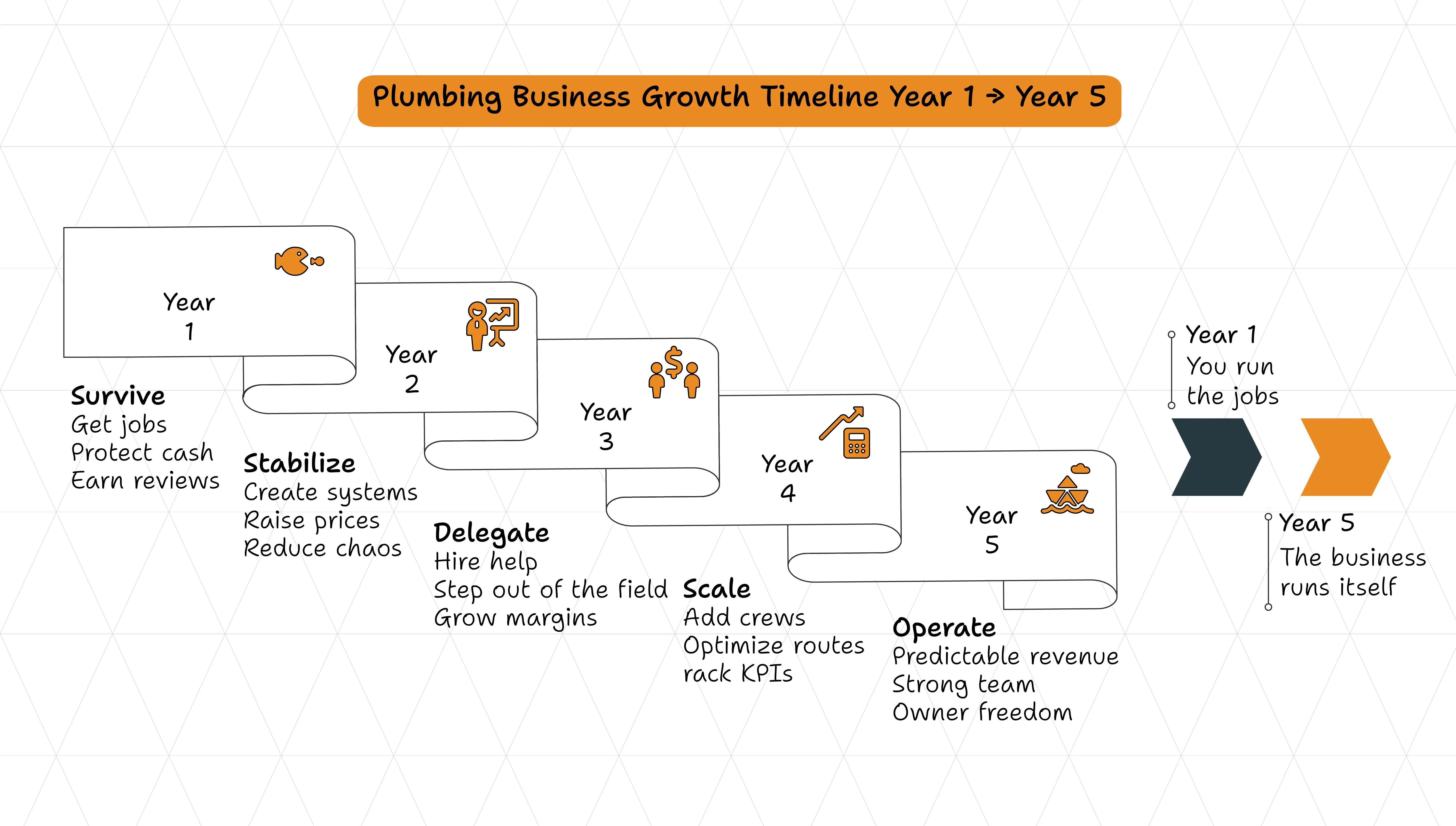
How to Start a Plumbing Business Without a License
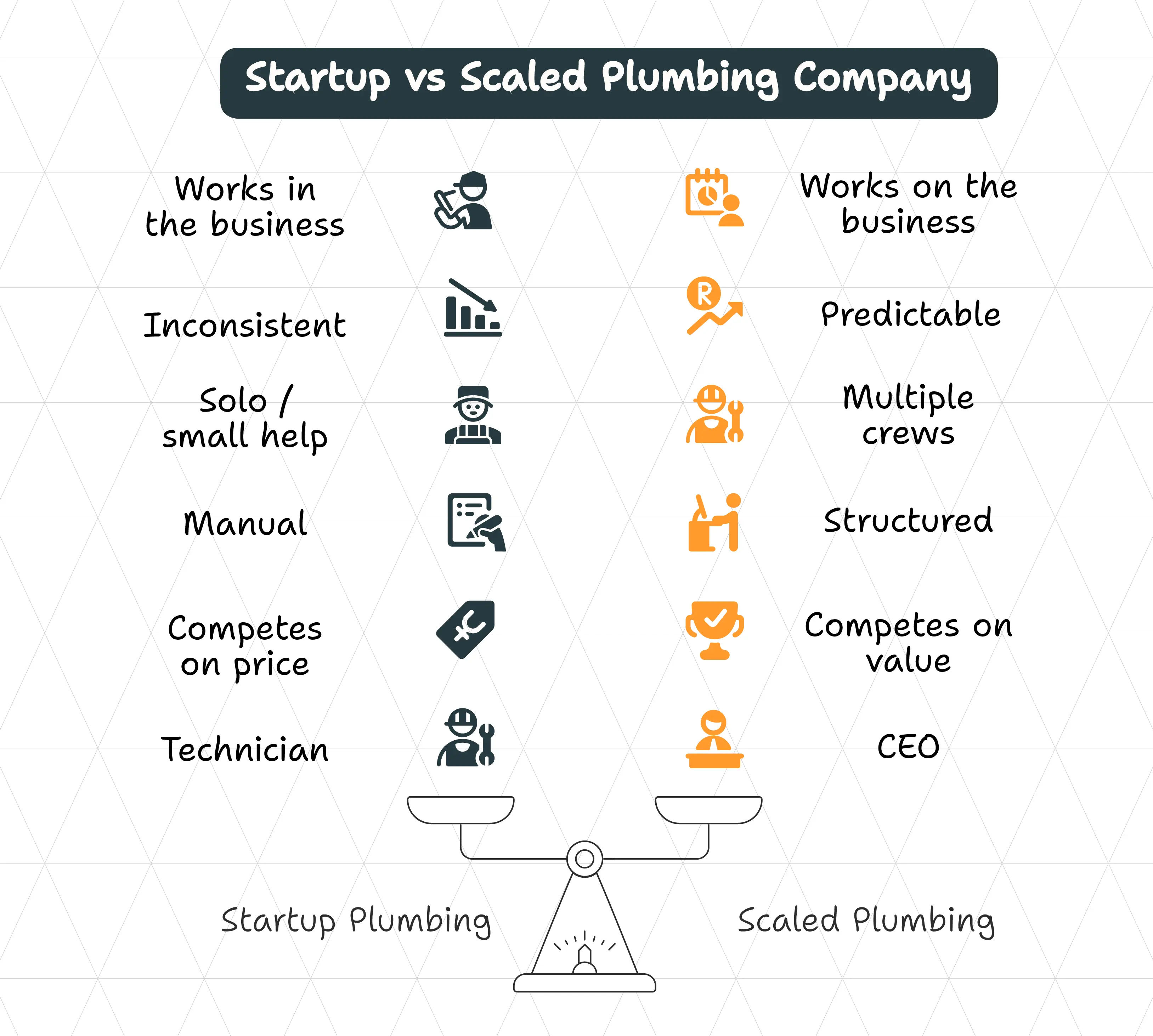
The model is simple: you are the business owner, and you hire licensed plumbers to perform the work. Your role is that of a CEO, focusing on strategy, marketing, customer service, and operations, rather than turning wrenches.
Advantages:
-
Faster Entry: You can start a plumbing business without spending years in an apprenticeship.
-
Focus on Growth: You can dedicate your time to scaling the business rather than being tied to service calls.
-
Scalability: It's often easier to scale this model because you are not the bottleneck for service delivery.
Disadvantages:
-
Dependence on Staff: Your business's success is entirely dependent on your ability to hire and retain high-quality, licensed plumbers.
-
Higher Initial Labor Costs: You will have payroll expenses from day one.
Legal and Operational Requirements for the Non-Plumber Model
It's crucial to understand the legal framework for this model, which varies by state. Generally, you will need to:
Hire a Master Plumber: Most states require a licensed master plumber to be on staff or act as a qualifying agent for the business.
Obtain a Contractor's License: Your business will likely need a contractor's license, which is separate from an individual plumber's license.
Secure the Right Insurance: Your insurance needs will be different, as you will be covering employees from the start.
Important: Always consult with your state and local licensing boards to ensure you are in full compliance with all regulations. This is essential knowledge for anyone researching how to start a plumbing business without being a plumber and wanting to stay compliant. Understanding the requirements is crucial for those exploring how to start a plumbing business without being a plumber.
Which Path Is Right for You?
Both paths can lead to a highly profitable operation.
Consider:
-
How quickly do you want to launch?
-
Do you have technical experience?
-
How much capital can you invest?
-
What are your long-term growth goals?
Step 2: Craft a Bulletproof Plumbing Business Plan
A business plan is not just a document for securing a loan; it's your strategic roadmap. Our simulated data shows that plumbing businesses with a formal business plan are 40% more likely to reach profitability within three years. Using a plumbing business plan template forces you to think through every aspect of your business, from marketing to financials, before you invest a single dollar.
The Essential Sections of Your Plumbing Business Plan
| Section | Purpose | Key Details |
|---|---|---|
| Executive Summary | Hook investors and clarify your vision | Business concept, target market, financial highlights |
| Company Description | Establish credibility and structure | Mission, vision, business structure (LLC, S-Corp, etc.) |
| Market Analysis | Prove there's demand for your services | Target market size, demographics, local competition |
| Services Offered | Define your initial offerings | Residential, commercial, emergency, specialized services |
| Marketing Strategy | Outline customer acquisition | Local SEO, paid ads, networking, online reputation |
| Financial Projections | Show path to profitability | 3-year revenue forecast, profit margins, break-even analysis |
| Risk Analysis | Demonstrate preparedness | Economic downturns, competition, operational risks |
| Management & Organization | Show you can execute | Your background, team structure, hiring plan |
Market Research: Know Your Competitors
Before you launch, you need to understand the competitive landscape. This is essential knowledge before you launch. Understanding your competition is essential when considering what to know before starting a plumbing business.
Use these simple methods:
-
Google Maps - Search your service area to identify local competitors
-
Yelp and Google Reviews - Read customer feedback to find gaps and complaints
-
Competitor Websites - Analyze their services, pricing, and brand positioning
Why does this matter?
This research helps you define your Unique Selling Proposition (USP) - what makes you different?
Examples of Strong USPs:
-
24/7 emergency service availability
-
Satisfaction guarantee on all work
-
Transparent flat-rate pricing (no surprises)
-
Specialization in tankless water heaters
-
Same-day service response
Step 3: Secure Your Startup Funding
One of the most common questions aspiring owners ask is, "how much does it cost to start a plumbing business?" The answer varies, but you can expect to invest between $25,500 and $59,500 to get started on the right foot. Starting a plumbing business requires significant capital planning.
Detailed Startup Cost Breakdown
| Category | Low Estimate | High Estimate | Notes |
|---|---|---|---|
| Tools & Equipment | $2,000 | $5,000 | Hand tools, diagnostic equipment, power tools |
| Vehicle (Van/Truck) | $15,000 | $35,000 | Used vs. new; outfitting costs |
| Insurance & Bonding | $1,500 | $3,000 | General liability, workers' comp, bonding |
| Business Registration & Licenses | $500 | $2,000 | Varies significantly by state |
| Marketing & Website | $1,000 | $3,000 | Website, business cards, initial ads |
| Software & Systems | $500 | $1,500 | Accounting, scheduling, CRM software |
| Working Capital (3 months) | $5,000 | $10,000 | Operating expenses before revenue |
| TOTAL | $25,500 | $59,500 | Average: ~$40,000 |
[Data Insight - Chart] A visual breakdown of startup costs shows that the vehicle and tools typically represent about 50% of the initial investment, with working capital being the next largest expense.
Funding Options
While about 75% of startups are funded through personal savings, there are several other options available when you're figuring out how much to start a plumbing business. Understanding how much to start a plumbing business helps you choose the right funding option. Early-stage entrepreneurs often create a fund raising website to validate their idea while simultaneously raising initial capital.
-
SBA Loans: The U.S. Small Business Administration offers loans with favorable terms.
-
Business Line of Credit: A flexible option for managing cash flow and unexpected expenses.
-
Friends & Family: A common source of initial capital, but be sure to have a formal agreement in place.
-
Equipment Financing: Loans specifically for purchasing tools and vehicles.
Pro Tip: Start lean. A reliable used van and a solid set of essential tools are all you need to get started. You can invest in brand-new equipment as your revenue grows.
Step 4: Handle the Paperwork - Registration & Licensing
This is a critical step that establishes your company as a legal entity and is vital when learning how to start your own plumbing business. The registration process for how to start your own plumbing business varies by state but follows similar principles.
Choosing Your Structure
The structure you choose impacts:
-
Your taxes
-
Your liability protection
-
Your administrative requirements
Most service companies choose an LLC. It offers the best balance of protection, simplicity, and tax flexibility.
| Structure | Pros | Cons | Best For |
|---|---|---|---|
| Sole Proprietorship | Simple, low cost, full control | Personal liability, harder to scale | Solo operators, minimal risk |
| LLC | Limited liability, tax flexibility, professional image | Slightly more complex, annual fees | Most service companies (recommended) |
| S-Corporation | Tax advantages, liability protection | More complex, higher costs | Profitable operations ($60k+ profit) |
| C-Corporation | Strong liability protection, easier to raise capital | Complex, double taxation | Scaling companies seeking investment |
Registering Your Business Name
Once you've chosen a name, you need to register it. The process typically involves:
1. Check Availability: Ensure the name is not already in use by checking your state's Secretary of State website.
2. Register with the State: Formally register your business name and structure.
3. Consider a Trademark: If you plan to build a large brand, consider a federal trademark for protection.
Getting the Right Licenses and Permits
In addition to your personal plumbing license (if applicable), your business will need:
-
A business license from your city or county.
-
A contractor's license in many states.
-
An Employer Identification Number (EIN) from the IRS if you plan to hire employees.
Plan for 2-4 weeks to complete all registrations.
Step 5: Get Insured and Bonded
Skipping insurance is one of the most dangerous mistakes a new business owner can make. It protects you, your employees, and your customers.
Types of Insurance You'll Need
-
General Liability Insurance: Covers property damage and injuries caused by your work. This is non-negotiable.
-
Workers' Compensation Insurance: Required if you have employees. It covers medical costs and lost wages for on-the-job injuries.
-
Commercial Auto Insurance: Your personal auto policy will not cover your work vehicle.
-
Errors & Omissions (E&O) Insurance: Protects you from lawsuits related to mistakes or faulty work.
Surety Bonds
A surety bond is a guarantee that you will complete your work as contracted. Some states and larger commercial clients require them. The cost is typically 1-3% of the contract value.
Step 6: Invest in the Right Tools and Vehicle
Your van and equipment are the heart of your mobile operation and essential for how to run a plumbing business effectively.
Your Mobile Office: The Service Vehicle
A reliable van is your most important asset.
What to Look For:
-
Type: Full-size cargo van (Ford Transit, Mercedes-Benz Sprinter)
-
Age: 2-5 years old (best value)
-
Condition: Reliable mechanics matter more than appearance
-
Budget: $15,000-$35,000 depending on age and condition
Outfitting Your Vehicle:
-
Shelving and storage systems: $2,000-$3,000
-
Ladder racks and roof racks: $500-$1,000
-
Professional branding (lettering, logo): $300-$800
-
Lighting and safety equipment: $200-$500
The Essential Toolkit
You don't need every tool on day one. Start with essentials and add as you grow.
Diagnostic Tools:
-
Inspection camera
-
Leak detector
-
Moisture meter
-
Pipe locator
Hand Tools:
-
Adjustable wrenches (various sizes)
-
Pipe wrenches (various sizes)
-
Plungers (cup and flange)
-
Hacksaw and reciprocating saw
-
Screwdrivers and hex keys
Power Tools:
-
Reciprocating saw (for cutting pipes)
-
Drill/driver
-
Impact driver
-
Angle grinder
Specialized Equipment:
-
Drain cleaning machine (motorized auger) Essential
-
Pressure tester
-
Soldering kit (for copper pipes)
-
PEX crimping tool
[Expert Corner] "New technicians often overspend on tools they don't need. Start with the basics and add specialized equipment as you take on more complex jobs. A quality drain auger and a good set of wrenches will handle 80% of your calls." - Jennifer Rodriguez, Master Technician & Business Coach
Step 7: Develop Your Pricing Strategy
Pricing your services correctly is essential for profitability and running a plumbing business successfully. Effective strategies for running a plumbing business include choosing the right pricing model.
There are three main models to choose from.
Hourly Billing
-
Cost: $75-$150/hour
-
Pros: Simple and transparent
-
Cons: Can incentivize slow work, creates customer anxiety about final cost
-
Best for: Simple, straightforward jobs
Flat-Rate Pricing
Industry Standard
-
Pros: Customers know cost upfront, rewards efficiency, higher profit potential
-
Cons: Requires accurate estimating, less flexible for complex jobs
-
Best for: Most service offerings
-
Industry trend: Flat-rate pricing is increasingly preferred
Time & Materials Pricing
Hourly Labor + Materials (20-50% markup)
-
Pros: Fair for complex jobs, covers unexpected issues
-
Cons: Customers may feel nickeled and dimed
-
Best for: Complex jobs with unknowns
Example Flat Rates:
-
Faucet repair: $150-$250
-
Toilet repair: $100-$200
-
Drain cleaning: $150-$300
-
Water heater repair: $200-$400
-
Emergency service premium: +50% after hours
How to Calculate Your Hourly Rate
Even if you use flat-rate pricing, you need to know your hourly cost.
Use this formula:
Hourly Rate = (Annual Operating Costs + Desired Profit) / Annual Billable Hours
Example:
-
Annual operating costs: $80,000
-
Desired profit: $40,000
-
Billable hours per year: 1,500 (40% of your time)
-
Hourly rate needed: $80/hour
Remember: Not all of your time is billable. A typical technician is only billable for about 40% of their time on the clock.
Creating a Price Book
A price book is a list of flat-rate prices for all of your common services.
Benefits:
-
Ensures consistency across your team
-
Speeds up quoting
-
Creates opportunities for upselling
-
Professional appearance
Sample Price Book Structure:
-
Drain cleaning: $150-$300 (depending on complexity)
-
Faucet repair: $150-$250
-
Toilet repair: $100-$200
-
Water heater repair: $200-$400
-
Emergency service premium: +50% after hours
Step 8: Build Your Brand and Marketing Plan
Marketing is not an expense; it's an investment in growth. You need a professional brand and a multi-channel marketing plan to attract a steady stream of customers. This is crucial for growing a plumbing business in today's competitive market.
The Modern Plumber's Marketing Mix for 2026
Dominate Local Search (Local SEO)
Since most customers search for "plumbers near me," local SEO is your most important marketing channel.
Google Business Profile: This is your new homepage. Optimize it with photos, services, hours, and, most importantly, reviews. A well-optimized plumbing business profile template should include all these elements. Using a professional plumbing business profile template ensures you don't miss any critical information.
-
Local Keywords: Your website content should be optimized for your city and neighborhood.
-
Reviews: Actively solicit and respond to reviews on Google, Yelp, and other platforms. Aim for at least 50 reviews in your first year.
Content Marketing for Plumbers
Create helpful blog content that answers common customer questions. This builds trust and improves your SEO.
-
"How to Prevent Frozen Pipes in [Your City]"
-
"5 Signs You Need a New Water Heater"
-
"DIY vs. Professional Drain Cleaning: What's the Difference?"-
Paid Advertising (Google Ads & Social Media)
-
Google Local Services Ads: These appear at the very top of Google and are a pay-per-lead model. They offer an excellent ROI for plumbers.
-
Google Search Ads: Target specific keywords like "emergency plumber" or "water heater repair."
-
Facebook & Instagram Ads: Target local homeowners with visual ads showcasing your work.
Old School Still Works
Don't forget traditional methods like networking with contractors, distributing flyers, and joining your local Chamber of Commerce.

Step 9: Get Your First Customers
Your first customers will likely come from your existing network when you're launching your own operation. The early days of starting your own plumbing business require leveraging every connection you have.
Leveraging Your Network
-
Reach out to: Friends, family, former colleagues
-
Offer: 10-15% referral discount to encourage word-of-mouth
-
Ask for: Reviews and referrals after each job
Online Lead Generation Platforms
Angi (formerly Angie's List)
-
Large customer base actively seeking services
-
Cost: 10-20% commission per job
-
Pros: Vetted customers, established platform
-
Cons: High commission, competitive bidding
Thumbtack
-
Similar to Angi
-
Cost: $20-$100+ per lead (you pay for leads, not jobs)
-
Pros: Control your budget, good for testing markets
-
Cons: Lead quality varies
Google Local Services Ads
-
Best ROI for most service companies
-
Already mentioned in marketing section
The Power of 5-Star Reviews
Reviews are critical for:
-
Local search ranking
-
Customer trust
-
Brand reputation
Strategies for Getting Reviews:
-
Send follow-up emails within 24 hours of job completion
-
Include review request in your invoice
-
Offer a small incentive: "Leave a review and get $10 off your next service"
-
Make it easy: provide direct links to Google, Yelp, Facebook
Responding to Reviews:
-
Respond to ALL reviews (positive and negative) within 24-48 hours
-
Thank customers for positive reviews
-
Address negative reviews professionally and offer solutions
-
Never be defensive
Target: 50+ reviews in your first year, maintain 4.5+ star average
Step 10: Hire and Build Your Team
You'll know it's time to hire when:
-
You're consistently turning away work due to lack of capacity
-
You're working 60+ hours per week
-
You have 20+ regular customers
-
You have 3+ months of operating capital saved
Finding and Vetting Certified Technicians
Where to Look:
-
Local trade schools and apprenticeship programs
-
Industry job boards
-
Referrals from other service companies
-
Local Facebook groups and Craigslist
What to Ask:
-
License verification (always check with your state licensing board)
-
Experience level and specialties
-
References from previous employers
-
Availability and flexibility
-
Alignment with your company values
Creating a Positive Company Culture
To attract and retain top talent, offer:
-
Competitive Pay - $50-$80/hour depending on experience
-
Clear Expectations - Written job descriptions and standards
-
Regular Training - Skill development and continuing education
-
Recognition - Bonuses for good work and achievements
-
Safe Working Conditions - Proper equipment and safety protocols
-
Advancement Opportunities - Path to lead technician or management
Step 11: Implement Technology to Streamline Operations
Modern service companies run on software and understanding how to grow a plumbing business requires embracing technology. Many owners ask themselves, "how do I grow my plumbing business?" and the answer almost always involves better systems, automation, and operational visibility.
Field Service Management (FSM) software is a game-changer that can increase your efficiency by 25-35%.
The All-in-One Solution: Field Service Management Software
Field Promax is a comprehensive platform designed specifically for service businesses. It handles everything from scheduling to invoicing, giving you complete visibility into your operations.
Key Features:
-
Mobile app for technicians in the field
-
Real-time GPS tracking and route optimization
-
Automated scheduling and dispatching
-
Online booking for customers
-
Invoicing and payment processing
-
Customer history and detailed notes
-
Integration with accounting software
[Data Insight] "Service companies using FSM software report a 25-35% increase in efficiency and 20-30% improvement in customer satisfaction."
Why Field Promax Stands Out:
-
Built specifically for service businesses (not generic software)
-
Intuitive interface that technicians actually use
-
Powerful reporting and analytics
-
Seamless integrations with QuickBooks and other tools
-
Dedicated support team
Additional Tools You'll Need
Accounting:
-
QuickBooks Online
-
Xero
Communication:
-
Slack
-
Microsoft Teams
Document Management:
-
Google Drive
-
Dropbox
Email Marketing:
-
Mailchimp
-
ConvertKit (for content marketing)
Implementation Timeline:
-
Month 1: Research and select software (Field Promax offers a free demo)
-
Month 2: Set up and training
-
Month 3: Full integration into operations
Step 12: Common Mistakes to Avoid
Learning from the mistakes of others can save you time and money when you're learning how to start plumbing business operations. Every entrepreneur needs to understand how to start plumbing business fundamentals before launching.
Top 3 Reasons New Operations Fail
Based on our simulated industry research:
1. Underpricing Services (35% of failures)
-
New owners try to win work by being the cheapest
-
This is a race to the bottom
Solution: Price for profitability from day one using the formula from Step 7
2. Poor Marketing & Lead Generation (28% of failures)
-
Assuming customers will find you organically
-
Not investing in marketing
Solution: Invest 10-15% of your revenue in marketing from day one
3. Inadequate Cash Flow Management (22% of failures)
-
Not tracking expenses
-
Not maintaining working capital reserves
Solution: Use accounting software and maintain 3 months of operating expenses in reserve
Additional Pitfalls to Avoid
Skipping Insurance
-
One lawsuit can bankrupt your company
-
This is non-negotiable
Ignoring Licensing Requirements
-
Varies by state
-
Always verify requirements before starting
Poor Customer Service
-
One bad review can cost you dozens of customers
-
Make customer satisfaction your top priority
Overextending Too Quickly
-
Don't hire or invest before you have consistent revenue
-
Grow at a sustainable pace
Neglecting Your Own Development
-
Stay current with industry trends
-
Invest in your skills and knowledge
Conclusion: Your Journey to a Thriving Operation
Launching your own service company is a challenging but incredibly rewarding journey.
The industry offers immense opportunity for those who approach it with a strategic, business-first mindset and understand what to know before starting a plumbing business.
By following these 12 steps, you have a solid foundation:
-
Choose your path (certified technician or entrepreneur)
-
Create a comprehensive operational plan using a plumbing business plan template
-
Secure adequate startup funding when learning how to start your own plumbing business
-
Handle all legal registrations and licensing
-
Get proper insurance and bonding
-
Invest in quality tools and a reliable vehicle
-
Develop a sustainable pricing strategy
-
Build a strong brand and marketing presence
-
Acquire your first customers through multiple channels
-
Hire and develop a talented team
-
Implement technology to scale efficiently (with Field Promax)
-
Learn from common mistakes and avoid pitfalls
Your success will ultimately depend on:
-
Excellent customer service
-
Smart marketing
-
Efficient operations
-
Commitment to continuous improvement
A clear strategy to grow my plumbing business consistently year after year
The demand for quality service providers is not going away. With the right plan and the right tools, you can build a company that provides financial freedom and a lasting legacy.
Start today. Take the first step. Your future self will thank you.
Frequently Asked Questions

Content Creator
Bhargavi Halthore is a content writer at Field Promax, a field service management platform serving trades businesses across the USA and Canada. With over a decade of experience writing for business owners, she brings detailed, ground-level insight to every topic she covers. Her research goes beyond search results - she digs into LinkedIn groups, Facebook communities, and Reddit forums to understand what field service business owners are actually dealing with on the ground. She speaks directly with industry professionals, understands their day-to-day challenges, and translates that into content that is practical and actionable. What you read in her articles reflects real industry patterns, not theory.
Reviewed by

Founder and CEO
Joy Gomez is an engineer, process automation expert, and the Founder of Field Promax. Known for his technical expertise and commitment to field service innovation, Joy writes about transforming traditional business models into paperless, efficient operations. He is a Lean Six Sigma Black Belt based in Rochester, MN, dedicated to helping field professionals work smarter through better technology.