Field Service Software vs. Spreadsheets: Why the Old Way Costs You More
.webp)
Spreadsheets have been a go-to tool for field service businesses, offering flexibility and simplicity for small teams. But as businesses grow, spreadsheets often lead to version conflicts, manual errors, missed jobs, and scattered data, costing time and money.
Field service software solves these issues by unifying scheduling, estimates, dispatch, communication, and billing into one seamless system. From updating schedules with a few clicks to sending estimates from your phone, it simplifies even the most complex tasks while keeping everything accurate and synced. In fact, software solutions made up a whopping 61% of the FSM market in 2024.
The question isn’t whether spreadsheets are familiar; it’s what they’re costing you. Missed appointments, mismatched schedules, and lost revenue add up fast. Isn’t it time to replace outdated tools with a solution built for growth?
Areas Where Spreadsheets Can Fall Short
Let's be real: spreadsheets are the comfort food of business management. Easy, familiar, and seemingly harmless. When you first started, you probably felt like a genius whipping up a few columns. But as your business grows, that simple tool starts to feel less like a trusty sidekick and more like an anchor. Here's where the wheels fall off:
-
Manual Mayhem: Growth turns that simple spreadsheet into a full-time job. Every new appointment, every sick day, and every rescheduled job requires you to manually update everything. Suddenly, your team is spending more time managing the spreadsheet than actually doing the work. Version Control Chaos: Multiple people editing at once? Good luck! You end up with five different versions of the "truth," and nobody knows which one is right. It’s like a mystery novel where the last page is always missing.
-
Death by a Thousand Cuts: The real cost isn't just the headache; it's the small, seemingly minor errors. A wrong price here, a missed appointment there, an address with a missing unit number. Each mistake adds up to lost revenue, frustrated customers, and a team that’s constantly putting out fires instead of getting work done.
-
Built for Lists, Not for Action: Let's be honest: spreadsheets were never built for the chaos of a live, growing service business. They're for static lists, not for real-time operations where your whole team needs accurate data right now. Sticking with them is like trying to race a Formula 1 car with bicycle wheels; you’re just not going to keep up.
What Modern Field Service Software Does Differently
Spreadsheets struggle because they try to manage everything inside a static file. Field service software, on the other hand, is designed around how work actually happens in the real world. Instead of forcing teams to adapt to rows and columns, the software adapts to workflows.
Scheduling and Dispatch Without Guesswork
Trying to schedule jobs on a spreadsheet is like playing telephone with your team. Messages get crossed, details get lost, and suddenly your best tech is at the wrong address wondering where the broken AC unit is.
Someone has to manually update the file and then pray to the scheduling gods that everyone saw the latest version. Spoiler alert: they didn't.
Field service software like Field Promax kicks that uncertainty to the curb. Here’s how it works its magic:
- Easy scheduling: Schedules are tied to actual technicians and their availability. No more guesswork!
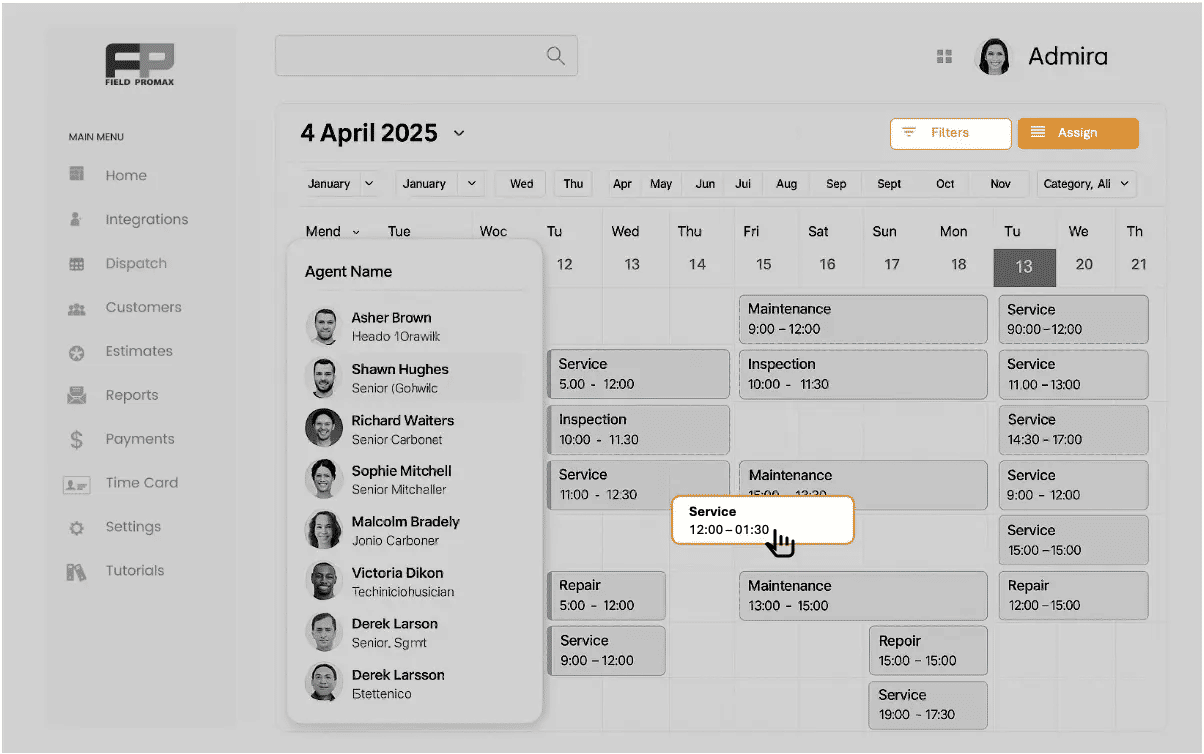
- Instant updates: When a job changes, everyone gets the memo instantly. It’s like telepathy, but for work.

- Mobile access: Technicians get updates sent straight to their phones.

- Centralized view: Managers can see who’s available without juggling a dozen different files.
.webp?updatedAt=1747733769120 )
This means fewer frantic phone calls, less chasing people down, and zero last-minute chaos. Instead of putting out fires all day, your team stays perfectly in sync. It’s the simple, correct way to keep your operations running smoother than a fresh jar of peanut butter.
Estimates and Invoices That Stay Connected
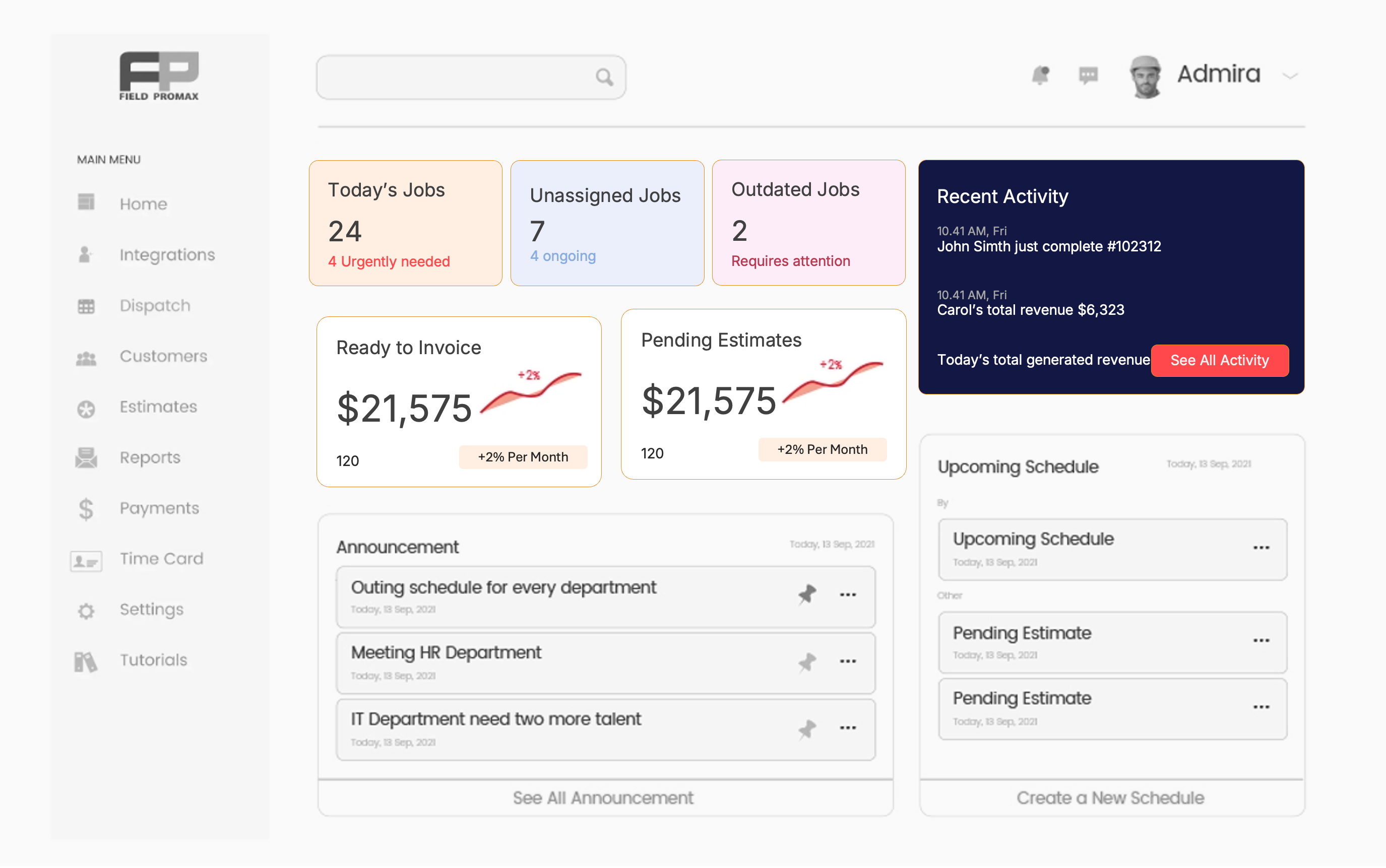
Spreadsheets keep estimates, jobs, and invoices separate, leading to risks like pricing mismatches. Field service software connects these steps automatically, converting estimates to jobs and jobs to invoices with no manual re-entry. This saves time and prevents costly errors. Construction teams get it: pricing mistakes are expensive. The same goes for any service business; connected financial data means fewer errors.
Clear Visibility for Everyone
With spreadsheets, visibility depends on who has the latest version. With field service software, visibility is shared by default.
-
Office staff can see job status in real time.
-
Technicians can access job details, notes, and history.
-
Owners can track completed, pending, and overdue work.
This transparency reduces stress and uncertainty. Teams no longer need to rely on memory, phone calls, or guesswork to understand what’s happening. Field service software doesn’t guarantee perfect outcomes, but it removes many of the blind spots that spreadsheets create.
The Hidden Financial Costs of Spreadsheet Dependence
Spreadsheets aren’t truly “free”: While they have no subscription fee, hidden costs add up quickly.
Time costs:
-
Hours spent entering data, fixing errors, checking versions, and confirming details take away from billable work or customer service.
-
Lost productivity over time directly impacts profitability.
Mistakes cost money:
-
Pricing errors, missed appointments, or incorrect invoices can lead to lost revenue, refunds, or damaged client relationships.
-
These issues may not immediately appear on a balance sheet but erode trust and profit margins over time.
Missed opportunities:
-
Manual processes reduce capacity to take on more work, respond to new requests, or expand into new service areas.
-
Solution: Field service software eliminates these hidden costs by automating processes and providing real-time data.
Real-World Scenarios Where Field Service Software Outperforms Spreadsheets
The advantages of field service software become especially clear in day-to-day operations.
Accurate Estimating for Complex Jobs
In industries like construction, estimating errors can be costly. One missed material cost or miscalculated labor hour can throw off an entire project budget. Spreadsheets rely heavily on manual formulas and assumptions, which increases risk. Construction estimating software helps teams account for labor, materials, timelines, and contingencies more accurately. This reduces disputes, protects margins, and builds client trust. Field service software applies the same logic across service industries by ensuring estimates are based on consistent, reliable data.
Managing Recurring and Emergency Service Calls
Service businesses juggle recurring maintenance and emergency calls, but spreadsheets make tracking and adjustments manual and time-consuming. Field service software automates scheduling, sends reminders, and updates technicians in real-time, saving time and reducing stress.
Estimates and Invoices That Actually Talk to Each Other
In Spreadsheet land, an estimate is a file. An invoice is a different file. A job sheet is a piece of paper. None of them talk to each other. This separation is a breeding ground for risk. There are a number of changes in the estimate, but nobody updates the invoice. You do the work and send the bill, and the customer calls back angry because the price is wrong.
Field Promax connects these dots automatically. An estimate converts into a job. A job converts into an invoice. The numbers flow through without you having to retype a single digit. This not only saves you hours of typing but also ensures you actually get paid the right amount.
.webp?updatedAt=1769757476669)
Coordinating Fast, Time-Sensitive Deliveries
When your service is a race against the clock, are you still using a horse and buggy? That's what relying on spreadsheets for time-sensitive deliveries is like.
The Spreadsheet Struggle:
-
Static & Stale: Dispatchers are working with old news. Once a route is set, good luck changing it on the fly!
-
Manual Mayhem: Any change means someone has to frantically update the file and play telephone with the whole team.
-
Communication Breakdowns: One missed call or unread email, and your tech is on the wrong side of town, arriving late, or taking a scenic tour instead of the fastest route.
Field Service Software to the Rescue!
-
Real-Time Superpowers: See your entire team on a live map. It's like having your own mission control!
-
Instant Updates: Traffic jam? Last-minute change? Update routes and schedules instantly. The software pings your team with live notifications so they're never out of the loop.
-
Happy Customers: Proactively inform customers about delays. They’ll appreciate the heads-up way more than an angry phone call later.
For businesses dealing with urgent repairs, medical supplies, or same-day deliveries in international courier, this isn't just a "nice-to-have"; it's a "need-to-survive." Spreadsheets can't handle the heat. Switching to field service software makes you faster, smarter, and more reliable.
Scalability Challenges
Why Spreadsheets Don’t Grow With Your Business
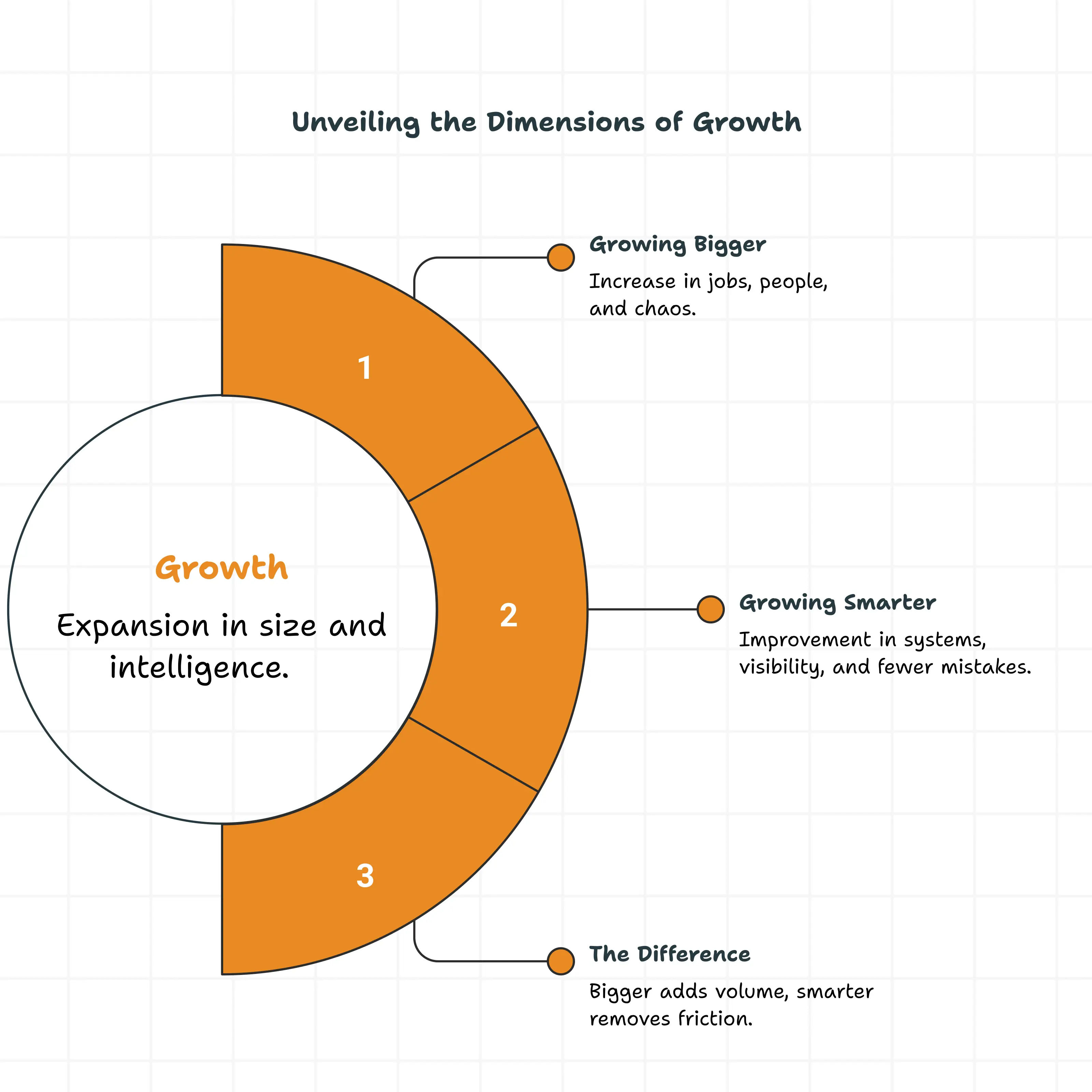
One of the biggest limitations of spreadsheets is that they don’t scale well. What works for a team of three technicians quickly breaks down when the team grows to ten, twenty, or more.
As a business expands, so does the complexity of its operations:
-
More technicians mean more schedules to coordinate
-
More customers mean more data to manage
-
More jobs mean more estimates, invoices, and follow-ups
In a spreadsheet-based system, every layer of growth adds more manual work. New sheets are created. More formulas are added. More people need access to the file. Each of these changes increases the risk of errors, slowdowns, and miscommunication.
Field service software is built with scalability in mind. Instead of adding complexity, growth becomes manageable:
-
New technicians can be added with defined roles and permissions
-
Job volumes increase without overwhelming administrative staff
-
Data remains centralized and consistent
-
Reporting and insights improve as more data is collected
This scalability allows business owners to focus on growth strategies rather than operational firefighting. Instead of constantly fixing problems caused by outdated tools, teams can spend their energy on improving service quality and expanding their reach.
Spreadsheets are great when you’re starting out, but they’re not designed to grow with you.
Changing From Spreadsheets to Software: Key Benefits
Switching from spreadsheets to field service software delivers measurable improvements across multiple areas of the business.
Accurate Estimating and Scheduling
Across industries, field service software helps teams avoid errors in material costs, labor hours, and scheduling conflicts. Real-time updates ensure that technicians always know where they need to be and when. Recurring jobs are scheduled automatically, while emergency requests can be accommodated without disrupting the entire day.
No more sifting through endless tabs or worrying about version control. Field service software keeps everything organized, accurate, and up-to-date with minimal effort.
Faster, More Reliable Operations
For businesses handling urgent service calls or deliveries, speed and accuracy are critical. Field service software provides real-time data that teams can trust. Routes, job statuses, and customer updates are tracked live, minimizing delays and reducing the need for constant check-ins.
Cost Control and Productivity Gains
Spreadsheets can drain productivity with hidden costs like double-checking numbers and fixing mistakes. Field service software streamlines operations, reducing admin work, increasing billable hours, and improving oversight. The result? Better margins, higher output, and an easier way to run your business.
Preparing for the Transition: Making the Switch Smooth
Moving away from spreadsheets doesn’t have to be disruptive. A successful transition usually starts with preparation. The first step is auditing current workflows. Understanding how jobs are scheduled, estimated, completed, and billed helps identify where software will have the greatest impact.
Next comes platform selection. Choosing a solution that fits the size, industry, and future goals of the business is critical. Not all field service software is the same, and flexibility matters.
Finally, gradual training ensures adoption without resistance. When teams understand how the new system simplifies their work, they’re more likely to embrace the change rather than push back against it.
Change doesn’t have to be complicated; it’s about turning chaos into order, one step at a time.
Conclusion
We’ve all relied on spreadsheets for managing business tasks, but as your business grows, manual entries and errors can slow you down. Field service software like Field Promax streamlines operations by synchronizing estimates, scheduling, and billing into one real-time platform.
It’s a powerful upgrade for businesses managing construction sites, deliveries, or any field service operations. While it may involve an upfront cost, the efficiency, customer satisfaction, and scalability it offers far outweigh the limitations of spreadsheets. Switch to modern software and take your business to the next level!