Field Service Customer Experience: An Operator's Playbook for 2026

1. The 10am cascade: a pattern we see in dispatch
Across roughly 40-50 mixed-trade contractors we've worked with since around 2018, the same operational break shows up at shops in the 10-50 tech range. It isn't the techs. It isn't the work. It's the 10am cascade, and it's the single biggest source of bad customer experience in field service.
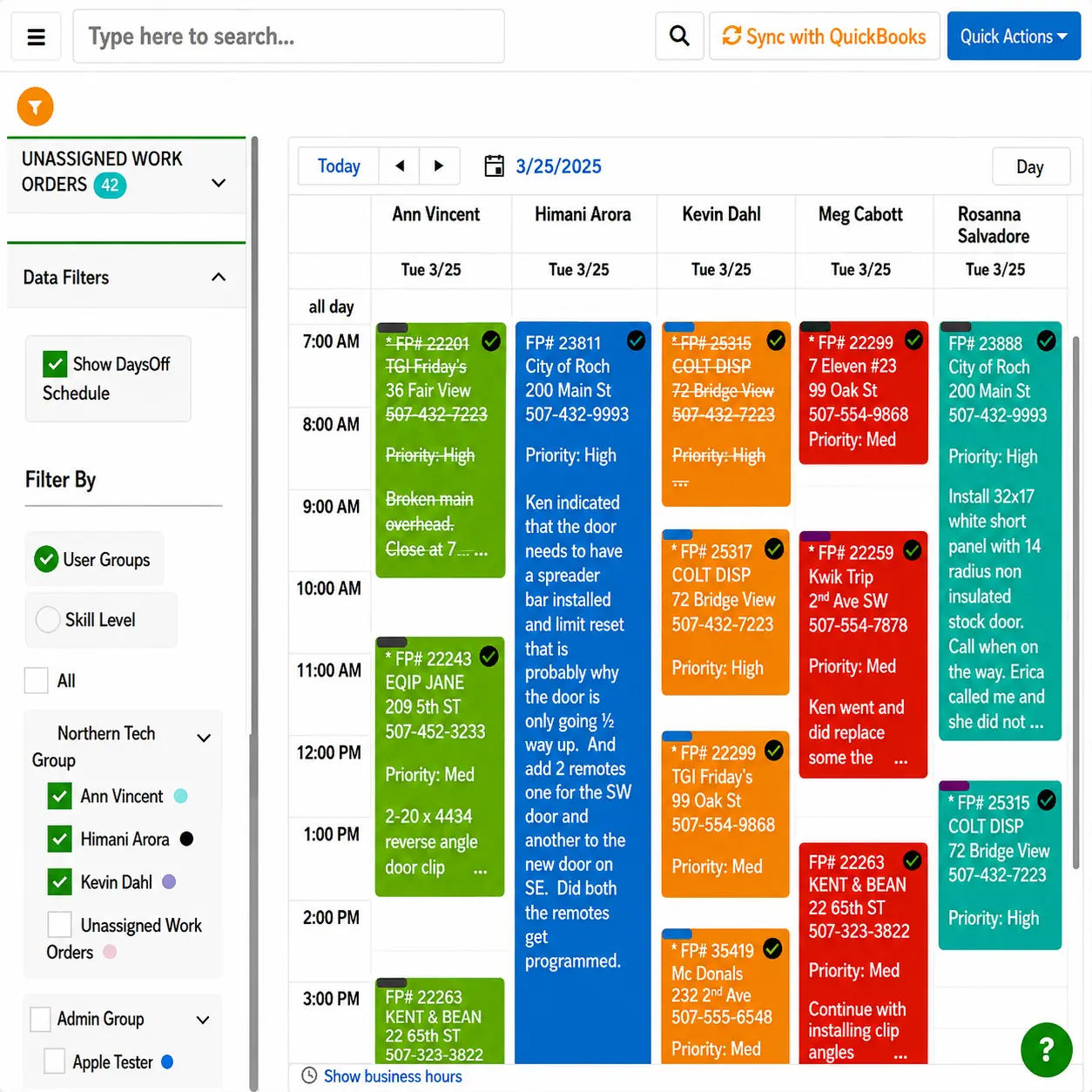
Picture a dispatcher at a mixed residential contractor running 15-20 techs out of a single shop. The board looks fine at 7am. By 10am, one morning job runs 90 minutes long and three afternoon stops shift without anyone calling the customer. By 4pm, the complaint log is almost entirely ETA-related, not workmanship.
The techs were taking heat for decisions made at the desk. The dispatcher assigned by memory of who was closest, then reshuffled on the fly when a job ran long. Customers told 'between 1 and 3' learned the tech wasn't coming when they called in at 4.
Through the back half of that season, the dispatcher locked the morning board by 7am with one rule: no reshuffle without a courtesy call first, and non-urgent reroutes get pushed to tomorrow. The first version didn't stick. CSRs kept slipping same-day adds onto the board past 9am. It took two revisions and a conversation with the owner about which call types could bypass the lock before the rule actually held.
By the end of the next quarter, on-time arrival was visibly better and ETA-related complaints dropped to roughly a third of where they'd been. The tradeoff was real: a handful of same-day emergency calls got deferred each week, which the owner felt in the deposit. The senior tech was the holdout. He liked being the squeeze-in guy and pushed back for weeks before the call-first habit took.
This is a composite. Every prescriptive 'CX best practice' below has to survive the 10am cascade to actually matter.
2. Why field service CX is the growth lever now
Salesforce's State of the Connected Customer reports that 80% of customers say the experience a company provides is as important as the product, and 88% will buy again from a brand that delivers good service. In our customer base, the shops that absorb that expectation grow without hiring extra office coordinators. The ones that don't end up adding a CSR every 18 months just to handle complaint calls.
The bigger threat sits in PwC's research: 17% of customers walk after a single bad experience, 59% walk after several. For a residential plumbing or HVAC shop with a 25% repeat-customer rate, a one-bad-experience exit isn't one lost job. It's the next four years of maintenance for that household, plus neighbor referrals you never get a shot at.
On Quora, owner conversations point to one specific symptom: customers calling the office three times for the same job, once to confirm, once for ETA, once to ask why nobody texted. The shop hasn't given them a way to self-serve the basics.
CX investment for a small-to-mid shop is mostly about removing the inbound calls that shouldn't exist in the first place. Everything else is downstream.
3. Set the CX standard before you shop for software
Conventional advice says start with vision. Write a mission statement. That isn't wrong, but it isn't where the work starts.
The shops that improve CX measurably start with one written rule per touchpoint:
- Quote response time: under 4 business hours
- Arrival-window promise: 2-hour windows, not 4
- Late-running protocol: a call before the window closes, not after
- Post-job follow-up: text confirmation within 24 hours
- Invoice timing: same-day, before the tech leaves the curb if possible
Vague vision statements lose to written operating rules every time. The first FSM rollout fails at most shops not because the software is bad but because the rules behind it were never written down.
For an 8-tech operation without a unified customer profile, techs lose roughly 30 minutes per repeat job hunting through prior invoices, notes, and texts. Shops that pull that history into a single CRM screen typically claw most of that back. That recovered half hour is where CX actually starts: the tech arrives at the door knowing the customer instead of knocking as a stranger.
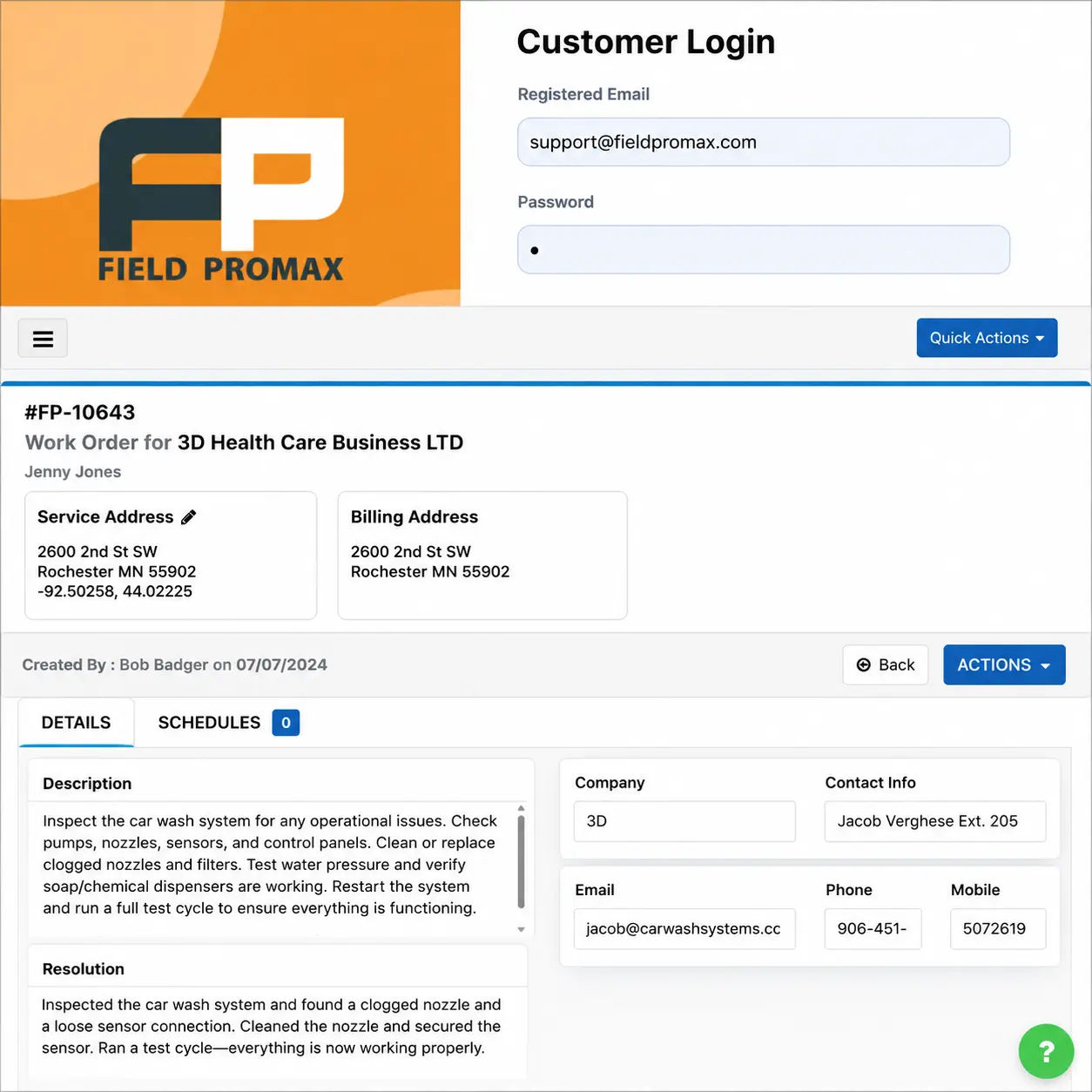
Centralized customer management only earns its keep when those touchpoint rules are written down and enforceable inside it. Buy the tool second.
4. Build communication customers actually use
Phone-and-email coverage is a default, not a strategy. The recurring Quora complaint: service businesses juggle texts, emails, and calls with no consolidated thread per customer, so the next person who picks up the account has no idea what was discussed.
The pattern that works for service businesses under ~50 techs:
- Automated SMS for booking confirmation, day-before reminder, and 'tech 20 minutes out'
- A reply-capable thread that logs to the customer record, not the dispatcher's personal phone
- Email reserved for invoices and post-job documentation
- A phone line for actual emergencies and customers who won't text
- A self-serve portal for status, history, and rescheduling
Baseline no-show rates run near 23%. Shops that flip on automated SMS and email reminders see missed appointments fall by roughly 30%, mirroring the 23% to 13% drop reported in systematic reviews of reminder programs.
The value isn't the technology, it's the reduction in phone tag. Every text the customer can self-resolve is a call dispatch doesn't field.
I read every support ticket that comes through Field Promax, and the texture of the communication problem is consistent. The shop has SMS, the shop has email, the shop has a customer portal somewhere. None of them are wired to the same customer record. So when a homeowner texts at 2pm asking about an invoice from Tuesday, the dispatcher pulls one tab, AR pulls another, and the tech who did the job is told via a different thread.
From 15 years of customer conversations, the most-requested feature isn't a new channel. It's better dispatch-to-invoice automation so the handoff between job completion and billing stops generating the same customer questions every Friday. The friction isn't the communication volume. It's the absence of one place where every touch on a customer lands.
- Joy Gomez, Founder of Field Promax
5. Make scheduling something customers can finish themselves
Self-service scheduling is the one feature most shops resist and most customers reward. Housecall Pro's 2025 homeowner survey found 80% of homeowners factor online booking into who they hire. Shops that turn on customer-facing scheduling almost always cut a meaningful chunk of dispatch call volume in the first month.
For a typical 5-20 tech shop without a portal, dispatch fields a steady stream of 'where's my tech?' and 'can I reschedule?' calls. Owners consistently report those drop by about 40% once customers can self-serve scheduling and job status online.
The pushback we hear: 'We need to control the schedule.' Fair. The fix is settings, not the absence of a portal. You can publish only the slots you want to fill, gate after-hours requests behind dispatcher review, exclude certain job types from self-booking, and still cut 40% of inbound calls. The control problem is a configuration problem.
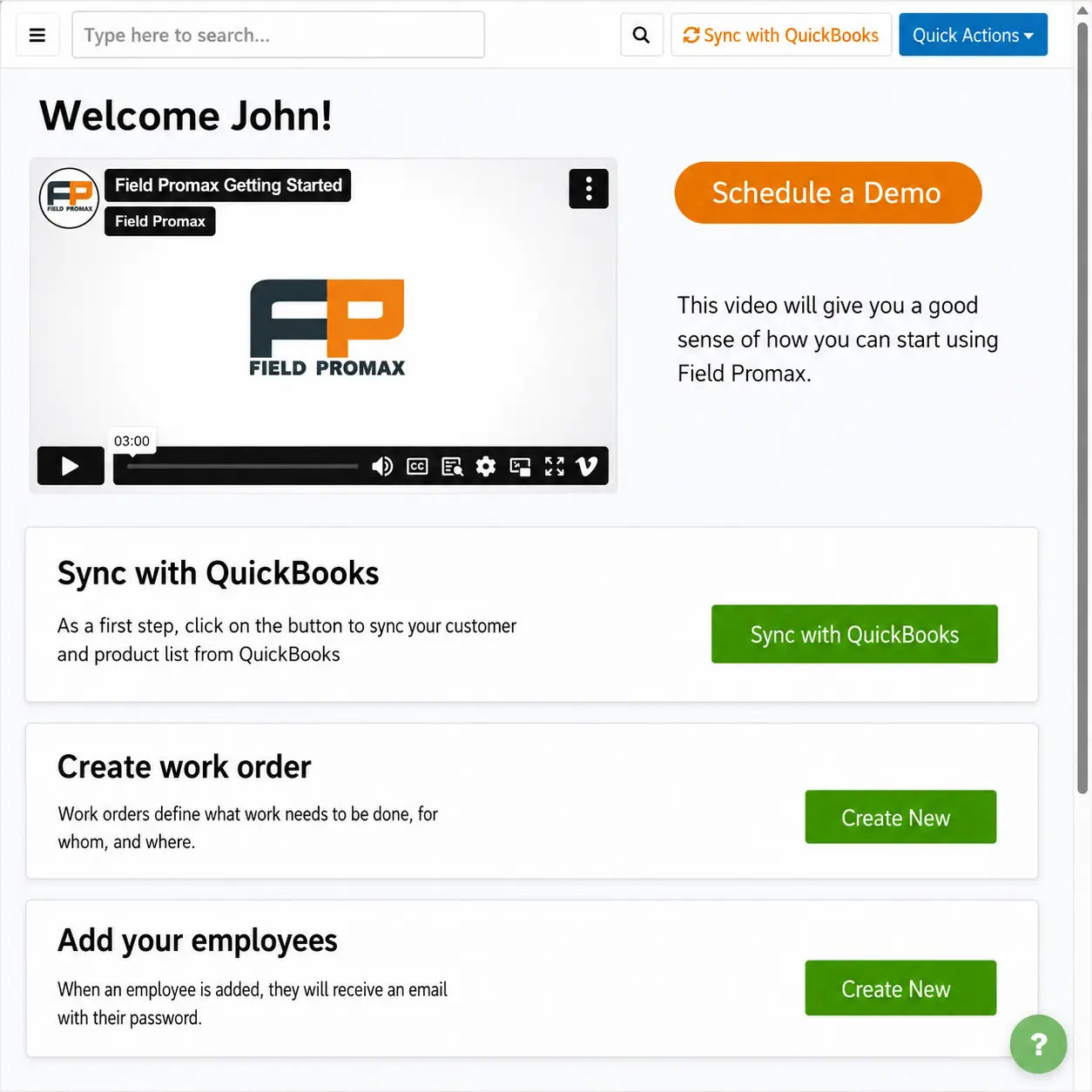
An enterprise reviewing Field Promax on the QuickBooks App Store noted deploying the platform across four of its businesses with plans for more, citing customizations that out-of-box or niche products could not match. For multi-location operators, that customization layer is what makes self-service work without losing schedule control. For a single-shop owner, the same logic applies at smaller scale.
6. Real-time progress beats reassurance every time
The reassurance call ('don't worry, he's on the way') is what dispatchers fall back on when they don't actually know where the tech is. Customers hear the hedge. Real-time GPS-backed progress updates beat any version of 'soon' because they remove the dispatcher from the loop.
Shops that hit 85%+ first-time fix rates share one habit: techs arrive at the door already knowing the customer. Full service history, past parts, last technician's notes, all on the field service mobile app before they ring the bell. That preparation is what makes the visit feel different, not the app itself.
One contrarian take: mobile-app adoption by field technicians is the single biggest predictor of a successful FSM rollout. CX improvements stall when techs don't actually use the app in the field. If the owner won't enforce app use as a job requirement, the customer-facing benefits don't compound and you're paying for software the office uses and the field doesn't.
7. Close the loop on feedback, don't just collect it
Most shops collect reviews. Few act on the negative ones in a way that closes the loop with the customer who wrote them. That gap is the difference between a 4.4 and a 4.8 on Google, and the 4.8 shops outrun the 4.4 shops on bookable lead volume by a margin that compounds.
From 14 years of customer conversations, the small plumbing and HVAC outfits that actually run CRM follow-up workflows (birthday touches, post-job check-ins, maintenance reminders) see repeat-customer share climb roughly 25% over shops relying on memory and spreadsheets.
McKinsey's home services analysis frames the math: customer satisfaction can deliver 10-20% improvement in retention and referrals plus 20-40% in on-site upselling, with one operator hitting an EBITDA uplift around 15% by pairing a 360-degree customer view with churn modeling. In our customer base, the upsell side moves faster than retention, but only where the tech has prior job context in front of them at the door.
The pain that blocks this: on Quora, contractors describe buying CRM software only to watch sales staff and field teams quietly revert to spreadsheets and notebooks. The tool gets blamed, but the real failure is that nobody updates records. The fix is rarely a different tool. It's making the CRM the system of record for one specific workflow (post-job notes is a good starting point) and refusing to accept it anywhere else.
8. The CX metrics that prove your system is working
Track five numbers weekly, not quarterly.
- First-time fix rate (FTFR): jobs resolved on first visit divided by total. Industry baseline near 75%; the better operators run 85%+.
- On-time arrival rate: arrivals inside the promised window. Target 90%+. If you tighten windows from 4 hours to 2, this drops at first, then recovers as scheduling discipline catches up.
- Repeat customer share: percent of revenue from customers who booked in the prior 24 months. The trend line matters more than the absolute number.
- Inbound status call volume: 'where's my tech?' and 'can I reschedule?' calls per week. This should drop visibly after a portal rollout.
- Review velocity: reviews collected per 100 completed jobs. Below 5 means your ask isn't automated.
Reports and dashboards only matter if someone reviews them weekly. Shops that pull these monthly drift; weekly course-corrects before a quarter goes sideways.
Field Promax was built for the shop that can't afford an enterprise-tier FSM platform but needs the same operating discipline. Most customers moving onto it aren't migrating off another FSM. They're coming from spreadsheets, paper, or QuickBooks-only setups. Step one isn't picking software. It's writing down the five touchpoint rules in section 3 and finding a platform that enforces them across HVAC, plumbing, electrical, and the ~24 service verticals where this playbook plays out a little differently each time.
Sources consulted
Ready to get started with Field Promax?
Sign Up FreeMore from the Customer CRM playbook
Continue with:
- Customer CRM for Service Businesses: The Operator's Playbook - the pillar guide to the unified customer record behind good CX
- Customer Retention Strategies for Field Service Businesses - the CLV and follow-up cadence math
- How to Improve Field Service Customer Experience with the Right FSM Tools - the tool-selection companion to this playbook
Frequently Asked Questions

Content Creator
Bhargavi Halthore is a content writer at Field Promax, a field service management platform serving trades businesses across the USA and Canada. With over a decade of experience writing for business owners, she brings detailed, ground-level insight to every topic she covers. Her research goes beyond search results - she digs into LinkedIn groups, Facebook communities, and Reddit forums to understand what field service business owners are actually dealing with on the ground. She speaks directly with industry professionals, understands their day-to-day challenges, and translates that into content that is practical and actionable. What you read in her articles reflects real industry patterns, not theory.