Content Optimization for Field Service Businesses: The Operator's Playbook

A practical guide for field service owners who want to create content that generates booked jobs - not just traffic. Learn how to connect SEO, customer reviews, and the dispatch handoff process to turn online visibility into real revenue.
How can a small, out-of-the-way shop with no marketing team turn content into booked work without wasting a week each month creating it? Most content marketing advice addresses an entirely different problem, which is why it rarely delivers long-term results.
Across the various operators we’ve worked with over the years, the same pattern appears long before SEO is ever discussed. A growing pile of unsold estimates sits untouched. Monthly advertising costs continue to rise in an attempt to capture more top-of-the-funnel traffic. The website generates inquiries, but the office is unable to respond within two hours, so many leads go unanswered. Meanwhile, the cheapest pipeline in the business already exists inside the CRM system - and no one is following up on it.
For the average 8-tech HVAC, plumbing, or electrical shop, this is not a content optimization issue. It is a handoff problem between content and dispatch. Owners on Quora discussing why their websites fail to convert visitors often describe the same pattern: traffic increases while form submissions remain flat, and no one can identify where leads are being lost. The playbook below was designed to address that reality.
Why content optimization pays back when paid channels stop.
Optimized content compounds in three ways that paid channels do not, and all three matter when every marketing hour comes out of the owner’s evenings and weekends.
The first is search visibility. Google's local 3-pack pulls click-through above 48% on local service searches, per click-through analysis aggregated by SOCi and Backlinko. Shops that pair a complete Google Business Profile with updated service-area pages show up in that pack; shops running paid search only are buying traffic the 3-pack would have surfaced for free.
The second is trust. The BrightLocal 2024 Local Consumer Review Survey found 92% of consumers read reviews before their first visit, and 50% trust online reviews as much as personal recommendations. A blog post that answers a real homeowner question, surfaced alongside fresh reviews, positions the shop as a source instead of a vendor.
Customer loyalty compounds before the first quote.
Shops we've worked with over the years say the biggest secondary benefit of content is that customers often arrive partially sold before the first call. They have already read a troubleshooting article, recognized the company name on the Google Business Profile, and reached out after the content matched the issue they were experiencing.
Referral leads close at roughly 45% for home services contractors, while paid Google Ads leads close around 18% and Angi/HomeAdvisor leads closer to 12%, per home-services close-rate benchmarks compiled by First Page Sage. A content reader who calls behaves more like a referral than a cold ad click, and it shows up in the first month.
Recurring marketing spend drops in year two.
Paid advertising bills every month at the same rate. Content optimization bills heavily up front, then trickles. Litmus and HubSpot email-ROI research puts email marketing ROI around $36 per $1 spent. Among the small plumbing and HVAC shops we work with, seasonal tune-up reminders and post-service follow-ups consistently outperform paid search on cost per booked job in year two, when the list has grown without proportional spend.
The math is not difficult to understand: a $400 article that generates 80 organic visitors per month over a three-year period costs about 14 cents per visit. No paid channel can match that level of efficiency.
A pattern across operators we've worked with.
Imagine the owner-operator of a mid-sized residential field service contractor running between 15 and 25 technicians from a single shop, handling a mix of installation and service work. This profile is a composite based on the most common operating structure we have seen.
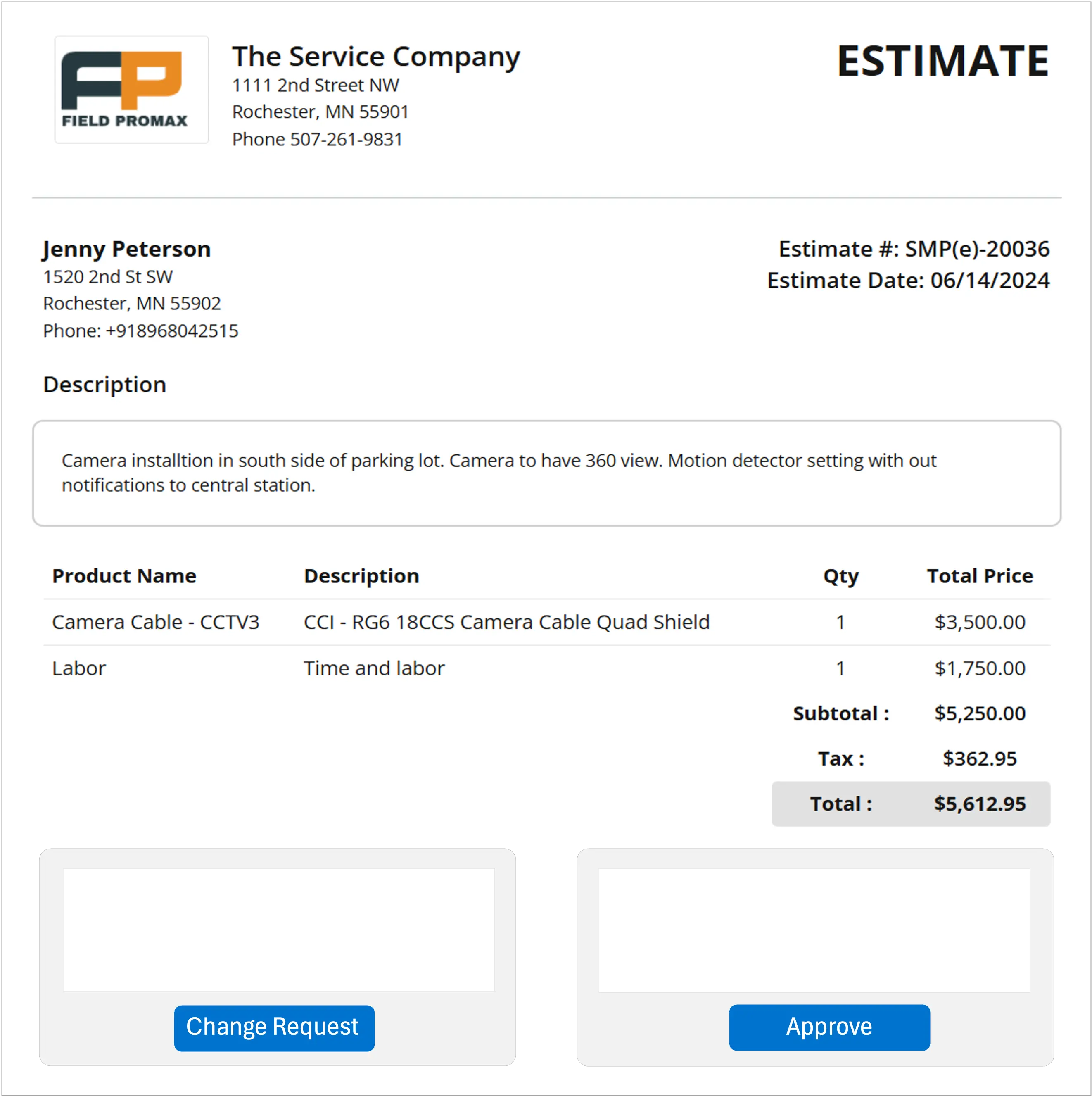
Estimates were sent through QuickBooks templates following same-day site visits. Projects either closed within two weeks or stalled, and by day 45 the lead had disappeared from everyone’s radar. No one owned the old estimate pipeline. The estimator had left the company, and the office coordinator was focused on accounts receivable. The CRM filter was never reviewed. When the owner finally pulled the report at the end of a slow quarter, there were several hundred unclosed estimates less than six months old still sitting in the CRM system - while monthly advertising spend continued to rise.
The main point raised during Monday’s meetings was that the most cost-effective leads in the business had already been captured. The problem was that no one was responsible for following up with them.
The move was not glamorous. The owner created a dedicated two-hour time block for a part-time coordinator to work through the stale estimate list, starting with the oldest leads first and using a script based on still-valid pricing. The initial version was far too polite and lacked urgency, so the script was rewritten three times before settling on a short opener that confirmed the original scope of work and asked whether the customer’s timeline had changed. Every call was tracked back to the original estimate.
By the second quarter, about one-third of the contacted leads were booking service work rather than the larger installation projects the owner originally expected to recover. The coordinator burned out from making direct cold calls, and the outreach cadence slowed twice before the process shifted to a mix of phone calls and batched email follow-ups. The remaining estimators did not initially believe the recovered work was legitimate until commissions started appearing from jobs tied to their previous quotes.
What the numbers say about field service content marketing
The field service management market is expanding at a 12.5% compound annual growth rate (CAGR). According to MarketsandMarkets, the global market is projected to reach $9.17 billion by 2030, up from $5.10 billion in 2025. The U.S. segment alone surpassed $2.8 billion in 2025, growing 8.4% year over year, according to IBISWorld. Every shop in the market is a potential competitor - and most still rely primarily on advertising and word-of-mouth referrals for growth.
FPM STANCE: Most FSM content advice was written for SaaS companies, not for a 6-tech plumbing shop in Tulsa. The channels are different. The buyer is different. And the thing that closes leads isn't a nurture sequence - it's a dispatcher picking up the phone before the homeowner calls someone else.
More than 60% of web traffic now comes from smartphones, according to Exploding Topics. Anyone searching for a plumber during an emergency is likely doing so from a mobile device. That single reality should influence every decision related to page speed, form placement, and click-to-call accessibility.
| Content Channel | Typical ROI / Benchmark | Time to Results | Source |
| Local SEO (HVAC/construction) | 748% median B2B ROI; break-even in 5-6 months | 5-6 months | AllOutSEO 2025; First Page Sage |
| Google Business Profile optimization | 50-300+ calls/month at zero marginal cost vs $5K/mo ads for 30-80 calls | 60-90 days | NetPartners 2026 |
| Review automation (50+ reviews vs under 10) | 266% more leads | 1 quarter | Local SEO benchmarks 2026 |
| Email / post-job follow-up | $36-$42 per $1 spent | Immediate on existing list | Litmus / Firework |
| Organic blog content | 14.6% close rate vs 1.7% outbound | 3-6 months to rank | First Page Sage |
| Paid Google Ads | 18% close rate; cost repeats monthly | Immediate but no compounding | First Page Sage |
What separates content that books jobs from content that gathers dust.
The basic mechanics are well known, but the sequence matters: audience first, then keywords, then pages, and finally the handoff to dispatch. If the handoff step is ignored, content ends up operating the same way an untouched stale estimate list does.
Know who's actually opening your service ticket.
The biggest advantage a field service shop has over e-commerce brands is that your employees speak with customers all day long. The customer profile that many companies would pay a research firm to build already exists inside the cab of your service trucks. Put a dispatcher and three technicians in a room for 45 minutes every quarter and ask what problems generate the most calls. Ask which phrases customers actually use and which types of homeowners are the easiest to convert into booked work.
A homeowner calling about a frozen evaporator is not describing the problem the same way an HVAC technician would. Use the customer’s language in the blog title - not the technician’s.
Here's where I'd push back on most content advice for field service shops: it treats this as a marketing project, when in our customer base it's mostly an operations project. From 15 years of customer conversations, the shops whose content actually pays back are the ones whose website forms feed directly into the dispatch board. Everyone else writes good posts that generate inquiries, the front desk can't take action inside two hours, and the lead cools off. I read every support ticket that comes in, and the most-requested capability isn't a new content feature: it's better dispatch-to-invoice automation. That tells you where the bottleneck sits for a typical 8-tech shop. Not in the writing. In the handoff.
Here's where I'd push back on most content advice for field service shops: it treats this as a marketing project, when in our customer base it's mostly an operations project.
- Joy, Founder, Field Promax
Keyword research starts with the dispatcher's inbox.

A shop’s call log is often more effective for keyword discovery than any third-party software. The phrases customers use in voicemails are usually the same phrases they typed into Google an hour earlier. Pull the last 60 customer calls and document the wording verbatim.
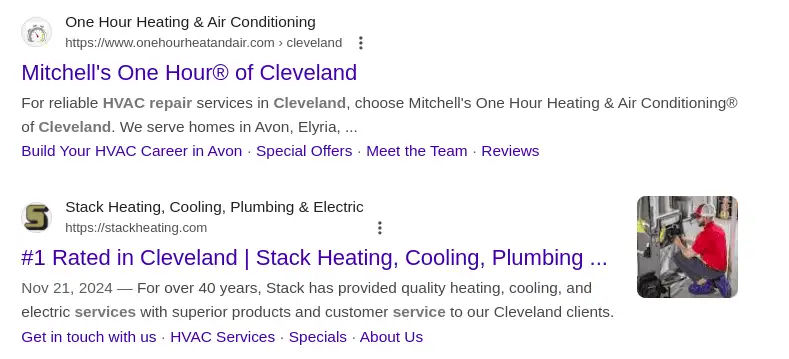
From there, expand the list using a keyword research tool and group the results into clusters. Each cluster should map to either a service landing page with commercial intent - such as “HVAC repair Cleveland” or “emergency plumbing Tucson” or an informational blog article, such as “Why is my AC blowing warm air?” Mixing different search intents on the same page is one of the most common reasons a shop’s content optimization stops performing after the first few months.
Local modifiers matter more for service shops than almost any other vertical. Near-me search behavior data compiled by Digital Applied shows 76% of consumers who run a local 'near me' search visit a related business within 24 hours. Shops that target city plus service on service pages, and neighborhoods or zip codes in supporting posts, get pulled into the 3-pack for adjacent variants.
Service pages do the heavy lifting in the 3-pack.
The primary keyword should appear in the title tag, H1, meta description, and URL slug. Supporting keywords should be incorporated naturally into H2-H4 headings, image alt text, and body copy. Add LocalBusiness or HomeAndConstructionBusiness schema markup so search results can display details such as phone number, service area, and business hours directly in the SERPs. Google’s Structured Data Markup Helper can be used to generate the JSON-LD markup, which should then be validated with the Schema Markup Testing Tool before publishing the page live.
Multi-trade shops should create a dedicated service page for each trade in every primary service area they target. A landscaping company serving three different suburbs should have three separate location pages - not a single generic page. Generic “service area” lists placed at the bottom of a page rarely rank well for the towns they mention.
The service pages that book the most jobs share three traits: the booking form sits above the fold, the page loads under three seconds on mobile, and the form submits straight into the dispatch board so technician assignment happens the same day. An HVAC contractor reviewing Field Promax on the QuickBooks App Store described it this way: lead capture forms now feed directly into the dispatch board, and they're booking roughly 30% more jobs without adding office staff. That's the handoff the case above never got working.
Blog articles answer the questions your phone keeps getting.
Three categories cover most of what a field service content marketing plan should include:
- Create diagnostic guides around the problems that make the phone ring most often. Topics such as “Why is my furnace losing power?” or “How do I know if my water heater anode rod needs replacement?” target high-intent searches while also demonstrating technical expertise and credibility.
- Seasonal preparation content should align with the service calendar. Topics such as “Winter HVAC Preparation Checklist” or “When is the best time to schedule a spring HVAC tune-up?” perform especially well in the months leading up to peak service demand and often convert better than evergreen content published year-round.
- Publish trust-building local content as well. Include permit and code information relevant to your area, regional equipment comparisons, and community-based project case studies.
The length of a piece matters less than its depth. A 900-word article that fully answers a single question will usually outperform a 2,500-word article that briefly touches on eight different topics. Add internal links naturally throughout the content that direct readers toward relevant service pages. End with a soft call to action that leads into the contact form. Prioritize readability. Tools like Hemingway Editor can help simplify sentence structure, but remember that customers are often scrolling through content on their phones while stressed, distracted, or dealing with a problem in real time.
Brand voice is the cheapest differentiator a small shop has.
Most field service blogs sound interchangeable because they are written from the same generic templates. Choose a voice that feels like the kind of person you would actually want showing up at your home: professional, straightforward, and confident enough to tell a customer when a repair is not worth the cost. Owners consistently report that tone plays a major role in why customers choose one company over several competitors. Voice may not directly impact SEO rankings, but it absolutely influences conversion rates and close rates.
CTAs that convert into booked jobs, not orphaned form fills.
Include two CTAs on every page: one above the fold and another near the end of the content. More important, however, is what happens after the click.
A booking form that sends an email to a generic inbox loses 40% of its value in the first hour. A booking form that creates a scheduled job, notifies the dispatcher, and routes the assignment to a technician's mobile app that books the work the same day. That's the integration Field Promax's field service mobile app was built to close. Mobile-app adoption by technicians is the single biggest predictor of whether a rollout delivers; if the tech in the cab isn't seeing assignments, the website lead generation for service business work routes back to voicemail.
For more information, contact Field Promax
We're here to help you get started

.webp?updatedAt=1746765319401)
Reviews and backlinks compound trust faster than ads.
Backlinks still matter. Local citations from directories, industry association websites, and local news coverage help build trust and authority. Guest posts on related trade blogs can also strengthen domain authority over time. The process is usually steady rather than viral. Most shops should expect it to take around six months before rankings begin noticeably improving.
Reviews compound faster than backlinks because they affect ranking and conversion simultaneously. Nielsen's Global Trust in Advertising research found 92% of consumers trust personal recommendations above any paid advertising. A fresh five-star review on a job completed last Tuesday reads as a personal recommendation to the next prospect comparing three quotes.
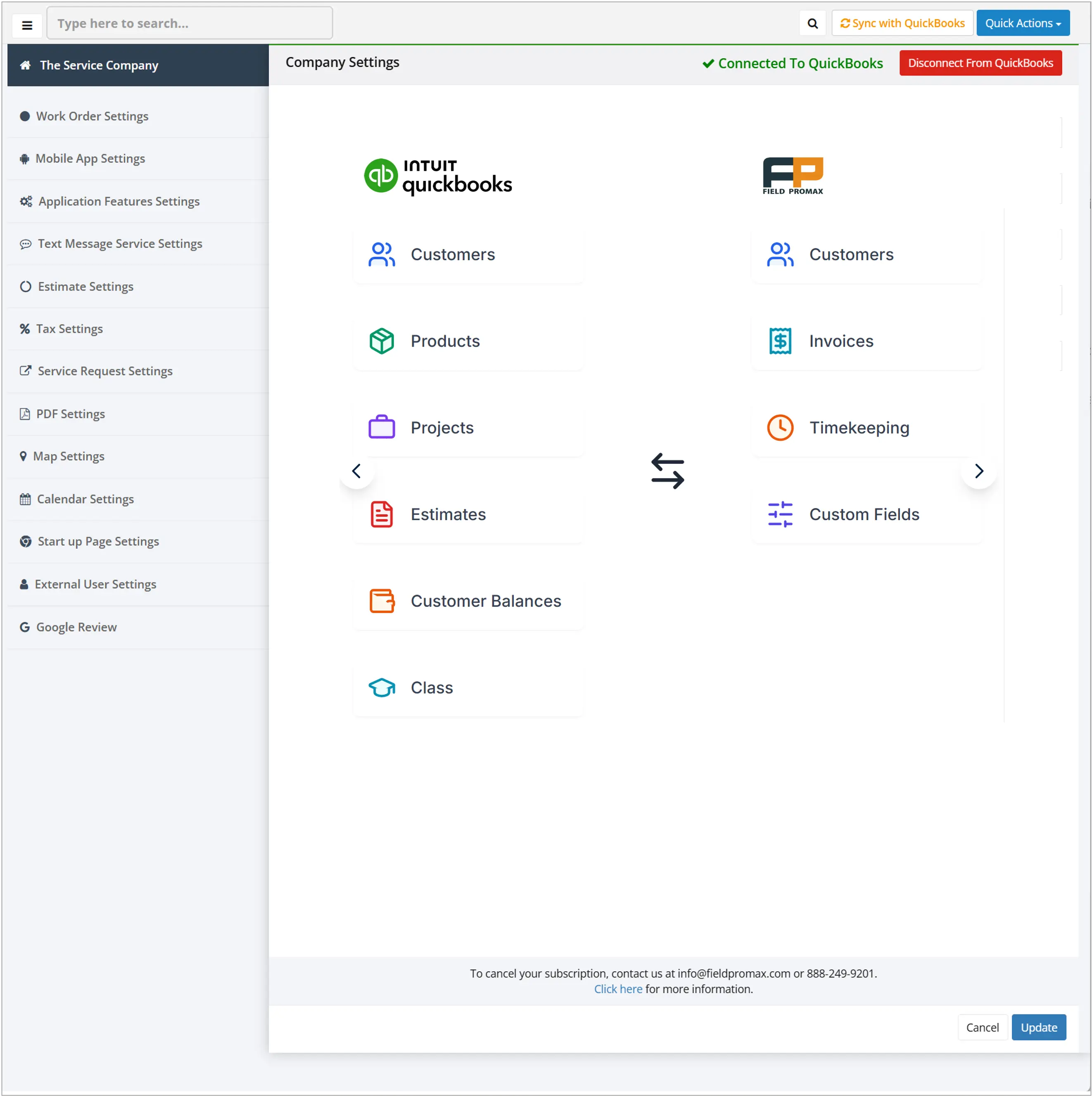
Shops that automate the post-job review ask (a one-tap SMS to the homeowner after invoice payment) consistently report a steady lift in booked calls within a quarter. Field Promax's Google review management is built around that workflow because it's the highest-leverage marketing move a small shop can run without hiring anyone.
A 90-day rollout that actually holds together.
Content optimization for field service businesses is mechanically straightforward but operationally difficult. Shops that succeed treat it as an ongoing operational commitment rather than a short-term marketing campaign.
A ninety-day schedule for most 5 to 20 tech shops: in month one, audit the call log for the top 30 inbound questions and publish three service-area pages with structured data and an operational booking form. In month two, write four blog posts that address diagnostic issues and set up the automated post-job review requests. In month three, close the dispatch handoff so every website inquiry creates a scheduled job, not a landing page for an email on a website that is not opened until Wednesday.
The third month is where most shops fall off. It is also the point where a business begins to see whether the previous two months of content work are starting to justify the investment.
Common mistakes in field service content marketing
These are not hypothetical scenarios. They reflect patterns that repeatedly appear across HVAC, electrical, plumbing, and cleaning-service businesses.
- Publishing without a CTA that creates urgency. "Contact us" at the bottom of a blog post is not an effective CTA. "If your furnace is doing this, call us now - same-day appointments are available". The difference in conversion rates between an inactive CTA and a particular one isn't small.
- Targeting high-volume keywords instead of converting keywords. "HVAC tips" receives a thousand search queries per month. "AC isn't cooling a single room" receives sixty. The sixty-search keyword converts at a rate of ten times because the person looking for it is experiencing a specific immediate issue.
- Building content for Google only. GBP questions, FAQ answers, and review responses are all part of the content. They're indexed. They show up in AI Overviews. A shop with 50 answered GBP questions is performing content optimization even if they've never published a blog post.
- Writing in jargon. If a homeowner who can't hear the sump pump in their basement does not search for "sump pump check valve failure.” The language of the homeowner isn't matched or the post isn't discovered.
- Treating content and operations as separate functions. The shop where a form fill from the website creates a job on the dispatch board without any manual step will always outperform the shop where it lands in someone's email inbox. Content feeds operations. If the two aren't connected, half the content budget is wasted.
- Going dark in slow seasons. The content published during October is ranked in January. Shops who stop publishing in winter then have to compete for rankings in spring are competing with shops that maintained their publishing. The six-week gap between publication and ranking punishes inconsistency.
Regional considerations for USA and Canada
A content optimization for field service businesses strategy in Phoenix is not the same as in Minneapolis. The seasonal windows differ. Permit requirements differ. And what homeowners in Calgary are looking for in October is not what homeowners in Houston look for.
Canadian provinces have their own licensing bodies for trades - TSSA in Ontario, Safety Codes Council in Alberta. A plumbing or electrical contractor whose content references these bodies by name is more trustworthy to a Canadian homeowner than one who writes generic North American content. Most content guides skip this because they're written exclusively by a US-based audience.
| Region | Peak Content Window | High-Value Local Content Angle | Notes |
| Northern US (Chicago, Minneapolis, Detroit) | HVAC heating: Aug-Sep publish; plumbing freeze: Oct publish | Pipe freeze prevention, furnace emergency guides | Tight seasonal window - timing is critical |
| Southern US (Phoenix, Houston, Dallas) | AC prep: Feb-Mar publish; heating content is minor | High-SEER AC efficiency, humidity and mold content | Longer AC season, smaller heating window |
| Gulf Coast / Florida | Hurricane prep: Apr-May publish | Generator prep, storm-drain service, flood remediation | Unique content category not relevant elsewhere |
| Pacific Northwest (Seattle, Portland) | Rainy season drainage: Sep publish | Sump pumps, drainage, heat pump efficiency | Heat pumps are dominant - content angle differs from gas-heat markets |
| Canadian Prairies (Calgary, Edmonton, Saskatoon) | HVAC heating: Aug publish | TSSA/Safety Codes Council licensing references, extreme cold pipe guides | Provincial licensing bodies build local trust signal |
| Ontario / Quebec | Heating: Sep publish; spring thaw: Feb publish | TSSA compliance, spring drainage, basement waterproofing | French-language content opportunity in Quebec |
Future trends in field service content marketing
FPM STANCE: The field service shops that built their content infrastructure in 2024 and 2025 are going to look like they have an unfair advantage by 2027. They don't. They just started before everyone else realized AI Overviews were eating the top of the SERP. That window is still open - but it's closing.
1. AI Overviews become the first layer of local discovery
Google's AI-generated answer boxes currently appear in around 32% of local service search results. Industry Analysts expect that to reach 50% by 2027. The field service shops which will benefit are those that have complete GBP profile, well-structured schema, and high review speed - because those are the sources AI Overview algorithms pull from. Traditional blue-link rankings alone will not be enough to hold above-the-fold visibility since AI will take over much more of the space.
2. Video content becomes a local ranking signal
YouTube is the second-largest search engine. A three-minute video from an expert explaining "how to determine whether your water heater's anode rod is in need of replacement" is ranked on YouTube for the query, gets embedded in the blog post covering the same topic, and offers a trust signal that the text alone can't replicate. Shops that create even an insignificant YouTube collection of actual field content - shot on a phone, not a film crew - will increase their advantage against shops that never start.
3. Zero-click becomes the primary homeowner journey
A growing number of homeowners will resolve their query in the search results, in an AI Overview, or in a GBP Q&A - without visiting a website. Content optimization for field service businesses increasingly requires optimizing for no-click interactions: GBP questions, review keyword density, and schema coverage. Not just organic page visits.
| Year | FSM Global Market Size | Key Content Channel Shift | Source |
| 2021 | ~$3.0B | Mobile site and blog content baseline | Allied Market Research |
| 2023 | ~$4.0B | GBP and local SEO optimization surge | MarketsandMarkets |
| 2025 | $5.10B global; $2.8B US | AI Overview optimization begins | MarketsandMarkets; IBISWorld |
| 2026 | ~$6.2B | GEO / generative engine optimization mainstream | MarketsandMarkets projection |
| 2028 (projected) | ~$7.8B | Video + AI-generated FAQ from job data | MarketsandMarkets CAGR |
| 2030 (projected) | $9.17B | Zero-click and voice search dominance | MarketsandMarkets |
KPI benchmarks for field service content marketing
| Metric | Benchmark | Source |
| Local 3-pack CTR | 44-48% of clicks for local-intent queries | SOCi / Backlinko |
| Near-me search to offline visit (within 24 hrs) | 76-78% | Digital Applied 2026 |
| Consumers who read reviews before buying | 92% | BrightLocal 2024 |
| Leads: 50+ Google reviews vs under 10 | 266% more leads | Local SEO benchmarks 2026 |
| SEO break-even (HVAC/construction) | 5-6 months | AllOutSEO 2025 |
| Organic search lead close rate | 14.6% vs 1.7% outbound | First Page Sage |
| Email marketing ROI | $36-$42 per $1 spent | Litmus / Firework |
| AI Overview share of local service queries | ~32% (2026) | Local SEO tracking 2026 |
| Mobile share of web traffic | 60%+ | Exploding Topics |
| Content marketing ROI vs traditional marketing | 3x more leads at 62% lower cost | Revenue Zen / Content Marketing Institute |
Conclusion
Content optimization for field service businesses will pay off only when it is integrated into dispatch, and then the review loop after the job. The shops that can close this loop see compounding returns in year two; the ones that do not have to pay for traffic that never book.
Frequently Asked Questions

Content Creator
Bhargavi Halthore is a content writer at Field Promax, a field service management platform serving trades businesses across the USA and Canada. With over a decade of experience writing for business owners, she brings detailed, ground-level insight to every topic she covers. Her research goes beyond search results - she digs into LinkedIn groups, Facebook communities, and Reddit forums to understand what field service business owners are actually dealing with on the ground. She speaks directly with industry professionals, understands their day-to-day challenges, and translates that into content that is practical and actionable. What you read in her articles reflects real industry patterns, not theory.