The 5 Revenue Leaks Killing Your Service Business (And How to Fix Them)
%20(3)%20(1).webp)
There’s a phrase you hear a lot in service businesses: “busy but broke”.Your team is working all day. Calls keep coming in. Jobs are booked. But your bank account still doesn’t look right.
If this feels familiar, you’re not alone. Many service businesses lose about 1% to 5% of their revenue each year without realizing it. It’s not because of fewer jobs. It’s because of small problems in how work is tracked, scheduled, billed, and followed up.
For example, if your business makes $400,000 a year, you could be losing up to $20,000 without even seeing it. The money is there. It’s just slipping away through small gaps in your process.
Let’s look at where those gaps are and how you can fix them.
How Much Is This Actually Costing You?
Before you fix anything, it helps to know the size of the problem. Here's a simple three-step check:
Step 1: Add up the value of all jobs your team completed last month.
Step 2: Add up all invoices actually collected in that same period.
Step 3: Subtract. That gap is your revenue leak.
Example: You completed $80,000 worth of jobs but collected $72,000. That's $8,000 leaked in one month. Over a year, that's $96,000 in work you did but didn't get paid for in full.
Most owners are shocked when they see this. The good news is these problems can be fixed.
Are You Leaking Revenue Right Now?
Check off how many of these sound like your week:
-
You're fully booked, but cash is always tight.
-
Invoices go out 2 or 3 days after jobs are completed.
-
Your team is busy, but profit feels lower than it should be.
-
Customers get one visit, and you never hear from them again.
-
Scope changes happen on the job but don't always show up on the bill.
-
You're not sure exactly how much idle time your techs had this week.
If two or more of those hit home, keep reading.
1. Missed Opportunities Before the Job Even Starts
Here’s a number every service business owner should think about: If you miss just two calls a week, you could lose $30,000 to $80,000 in a year, depending on how much each job is worth.
When someone needs a service, especially something urgent, they call two or three businesses at once and book whoever picks up first. Not whoever does the best work. Not whoever has the best reviews. Whoever answers.
Think about how someone calls for urgent electrical repairs or a lockout. They call every contractor in the area simultaneously. The first one to pick up gets the job. The rest lose it permanently, with zero record that it ever happened.
This isn't a lead generation problem. It's a response problem. And the painful part is that you have no record of it happening. A missed call never enters your system, so it never shows up in your numbers as a loss. That's exactly what makes it so easy to ignore.
The most common ways lead vanish before the job starts:
- No one picks up during peak hours when the team is all out on jobs
- Online inquiries sit unread for hours because nobody owns the inbox
- Follow-up happens days later, after the customer has already booked someone else
- No system exists to track where inquiries came from or what happened to them
"Responding in 5 minutes vs. 30 minutes increases your chance of converting a lead by 400%." - WorkZen research on HVAC businesses.
The Fix
Set up a structured intake system so every inquiry gets logged and assigned a follow-up owner. Use field service management software to track response times and capture every lead in one place. Even committing to a one-hour callback window and actually tracking it can have an immediate impact on how many inquiries convert to booked jobs.
2. Scheduling Gaps That Cap How Many Jobs You Can Do
HVAC industry data shows that companies stuck at the same revenue level often have a labor utilization problem, not a labor shortage problem. The techs are there. The hours just aren't being used well.
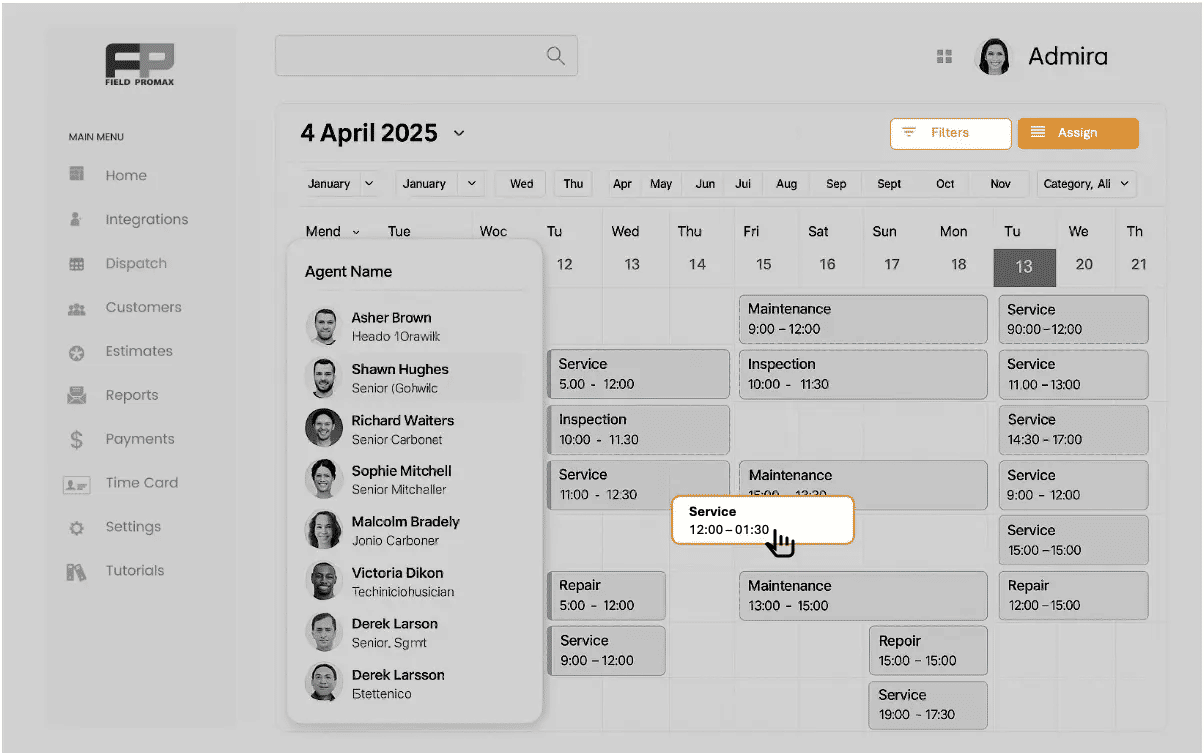
Poor scheduling means empty miles between jobs, unbalanced workloads, and gaps in the day that nobody notices because the team still looks busy. A technician shouldn’t be driving across town while nearby jobs wait. That’s not a staffing issue; it’s a scheduling problem.
Here's what a typical poorly-planned day actually looks like:
Both techs are "busy" on paper, but the idle blocks mean you're completing 6 jobs when the same team could handle 8 with better routing.
The usual causes of scheduling leaks:
- Jobs aren't grouped by location, so techs drive past each other all day.
- No real-time visibility into who's available, where they are, and when they'll wrap up.
- Workloads aren't balanced, leaving some techs overwhelmed and others finishing at 2 pm.
- Last-minute changes are handled by phone and on the whiteboard, with no central log.
The Fix
Use scheduling and dispatch software to group jobs by area, balance workloads, and give techs their schedule on a mobile app. When dispatchers can see the full board and move jobs in real time, you can realistically add one or two more jobs per tech per week without adding a single new employee.
| Time Slot | Tech A | Tech B |
|---|---|---|
| 8:00 - 10:00 | Job | Job |
| 10:00 - 12:00 | Idle | Job |
| 12:00 - 2:00 | Job | Idle |
| 2:00 - 5:00 | Job | Job |
3. Underpricing, Missed Charges, and Weak Job Scoping
This is the leak that experienced contractors talk about most. It happens in the field. A tech finishes the job, does a great job, packs up the van, and drives away, having done $190 worth of work that will show up on a $90 invoice.
No one did anything wrong on purpose. A part was used but not written down. The job got a little bigger while the tech was already working. An extra 20 minutes didn’t seem worth tracking. But this happens again and again. Over time, it can add up to thousands of dollars each month.
Here's what that looks like in real numbers:
Multiply that across 10 jobs a week, and you're losing $1,900 every week before you even look at pricing.
As one HVAC business coach says: “If parts are taken from the van and not written down, your job costs aren’t real. Every missed hour, every forgotten callback, and every small change not recorded is slowly cutting into your profit.”
The most common reasons charges get missed:
- No materials log on the work order before the tech leaves the site
- Verbal scope changes were agreed on the spot with no written record
- Time and materials pricing with no standard rates for techs to reference
- “Plumber’s guilt” is when you charge less just to avoid an awkward moment with the customer. It feels like good service, but it slowly hurts your profit, especially when most customers would have been okay paying the full price anyway.
.png?updatedAt=1747763704661)
| What Happened on the Job | Actual Value | What Got Billed | Gap |
|---|---|---|---|
| Extra labor (30 min) | $90 | $0 | $90 |
| Part pulled from van stock | $60 | $0 | $60 |
| Scope expanded on-site | $40 | $0 | $40 |
| Total per job | $190 | $0 | $190 |
Flat-Rate vs. Time and Materials
Contractors using flat-rate pricing tend to net around a 7% profit margin, compared to 4% for time and materials shops, according to HVAC industry data. That 3-point gap is significant on a $500,000 revenue year, the difference between $35,000 and $20,000 in take-home profit.
Flat-rate pricing removes the guesswork. Every service has a fixed price. Anything outside the agreed scope is automatically a separate line item. Techs don't have to decide on the fly whether to charge for an extra 20 minutes.
The Fix
Require techs to complete a work order before leaving every site, logging all materials used, time spent, and any scope changes. When your invoice is generated directly from the work order, there's no gap between what was done and what gets billed.
%20(1).webp)
4. Delayed Invoicing and Slow Collections
Construction bookkeepers who work with HVAC and plumbing contractors report the same finding consistently: invoicing within 24 hours of service completion can improve payment timelines by around 30%. Most service businesses aren't doing that.
What usually happens instead: The tech finishes the job on Monday and writes notes on paper or sends a quick text. The office only gets to it on Thursday when things slow down. By then, the customer had moved on. The urgency is gone, and payments take longer to come in.
There’s even a strange version of this problem you hear about in contractor forums: a big job gets finished, but no invoice is sent at all. Weeks later, the customer reaches out asking how to pay, while the contractor doesn’t even realize the money was waiting.
The typical delayed billing cycle:
That means waiting a week or more to get paid after finishing the work. When you have 20 or 30 jobs going, this creates a steady cash flow gap. Because of that, you’re always chasing new work just to cover today’s expenses.
What drives invoicing delays:
- Batch billing at week's end instead of same-day or next-day billing
- Office staff recreating job details from handwritten notes or phone calls
- No mobile billing option, so techs can't send an invoice from the job site
- Unexpected charges on late invoices, causing confusion and payment delays
| Stage | When It Happens |
|---|---|
| Job completed | Monday |
| The office creates an invoice from notes | Wednesday or Thursday |
| Invoice sent to customer | Friday |
| Payment received | The following week or later |
The Fix
The quickest win here is to generate and send invoices on-site the moment a job is complete. When a tech can send the invoice from their phone before they pull out of the driveway, customers often pay on the spot or within hours while the work is still fresh and there's nothing to dispute.
.webp?updatedAt=1748048384467)
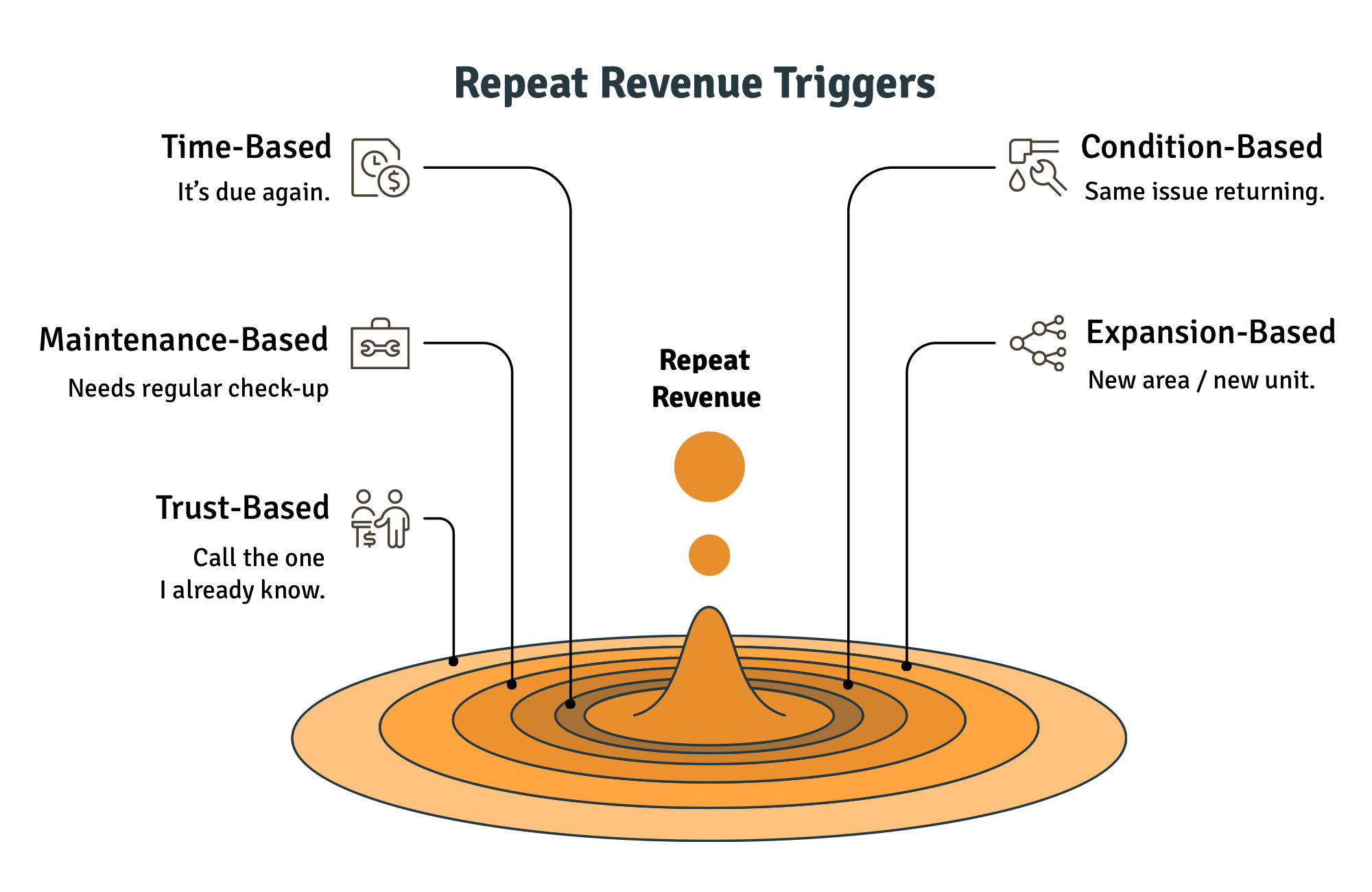
5. No System for Repeat Business
Customer acquisition costs have increased by 60% over the past five years, according to SimplicityDX. Getting a new customer is more expensive than it's ever been. And yet most service businesses put their entire focus on new leads, while existing customers quietly drift to whoever sends them a reminder first.
A missed maintenance agreement isn't just a missed appointment. It's a missed relationship. A customer who gets one annual tune-up visit and never hears from you again isn't your customer. They're whoever's postcard they see in October.
What this leak typically looks like:
- No follow-up call or message after the job is done
- No seasonal reminders sent to customers who need annual or semi-annual services
- No maintenance agreements or service contracts were offered at the time of the job
- Customer history lives in a tech's memory, not in a system that can trigger the next visit automatically
What a Service Agreement Actually Means for Your Revenue
Service agreements and maintenance plans are the most profitable revenue stream in most trades businesses when structured correctly. They give you predictable income across slow seasons, keep techs busy when demand naturally drops, and turn one-time customers into multi-year relationships.
Residential contractors who've built out a maintenance plan base describe it as the difference between scrambling every slow season and knowing their schedule is half-full before January starts.
The most common mistake: offering maintenance agreements after a repair visit as an afterthought. It works far better when it's presented as the natural next step right at the end of every service call.
The Fix
Build recurring work orders for every customer on a maintenance agreement. Use automated reminders before service is due. Keep full customer history so your team always knows when someone last had a visit, what was done, and when they're due next. This doesn't require extra admin work when it's all in one system.
Here's How to Monitor These Leaks Going Forward
Most service business owners find out something went wrong when they check the bank account at the end of the month. High performers find out on Tuesday morning.
The difference isn't luck or experience. It's knowing which numbers to watch and checking them consistently.
Successful shops don't just track total revenue. They track the metrics that predict revenue problems before they become cash flow problems. Things like:
- Average response time to new inquiries - If this number creeps up, booked jobs drop within the week. Not the month. The week.
- Revenue per tech per day - When this dips without an obvious reason like weather or holidays, it usually means scheduling gaps or unbilled work. Both are fixable, but only if you see them early.
- Invoice turnaround time - The gap between job completion and invoice sent. Every extra day here is a day your cash flow is funding someone else's business instead of yours.
- Job completion rate vs jobs scheduled - If techs are completing fewer jobs than dispatched, something is breaking down in scheduling, scoping, or both.
- Customers without a return visit in 12 months - This number tells you exactly how much repeat revenue is quietly walking out the door every quarter.
You don’t need a finance degree to track these numbers.You just need a simple system that collects the right information and shows it in one place.
The businesses that grow are not working harder. They are making better decisions and making them early enough to actually fix the problem.
Fix the Leaks, and the Numbers Change
“Busy but broke” isn’t a work problem. It’s a system problem. The jobs are there. Customers are calling. But small gaps between doing the work and getting paid slowly eat your profit every week.
The good news is that none of these issues needs a big change. Each one is a simple process fix. But when they stack up a missed call, an undercharged job, a late invoice, and a customer who doesn’t come back, they can cost you a lot.
Most of these problems don’t look serious on their own. They feel small in the moment. But over time, they turn into lost revenue, slower cash flow, and more stress for you and your team. You end up working harder just to stay in the same place.
When everything in your business is connected, the same amount of work brings in more money. Your team knows what to do next. Your office isn’t chasing missing details. And you get a clear picture of what’s actually happening in your business.
That’s what Field Promax helps you do: keep scheduling, job details, invoices, and customer info all in one place, so nothing slips through.
Frequently Asked Questions

Content Creator
Bhargavi Halthore is a content writer at Field Promax, a field service management platform serving trades businesses across the USA and Canada. With over a decade of experience writing for business owners, she brings detailed, ground-level insight to every topic she covers. Her research goes beyond search results - she digs into LinkedIn groups, Facebook communities, and Reddit forums to understand what field service business owners are actually dealing with on the ground. She speaks directly with industry professionals, understands their day-to-day challenges, and translates that into content that is practical and actionable. What you read in her articles reflects real industry patterns, not theory.