The Field Service Mobile App Guide: What Tech-First Shops Actually Gain
.webp)
Many shop owners believe that a mobile app is a good idea. It’s like a fancy cooler: nice to have, but something you could live without. Based on 14 years of conversations with customers, that is not the case.
A mobile app changes that math for both the technician and the owner. We see the same pattern in almost every HVAC and mixed-trade shop we visit: a technician finishes a job, drives back to the office to drop off a paper work order on the dispatcher's desk, stops by the supply house, and then spends part of the evening re-entering notes he already wrote once. The owner sees the labor hours being worked, but not the hidden capacity trapped inside them.
Owners on Quora and contractor subreddits frequently discuss the same challenges: paperwork that slows down jobs, work orders that get lost in the back of trucks, and end-of-day data entry that feels like an extra shift nobody signed up for.
Industry research finds techs on paper work orders burn about 6 hours a week on admin alone. Move an 8-tech crew to mobile work orders and that most of that back - nearly a full extra service day across the crew. Service Council research reports 93% of technicians say technology made them more productive. What that actually looks like: the tech goes home at 5 instead of transcribing his day at 6:30.
1. Information access kills the second truck roll
The main issue with paper isn't the paper itself. The problem arises when the paperwork is inaccurate. Or missing. Or smudged to the point that what looks like a phone number is actually a part number.
A tech shows up for a routine maintenance call but doesn’t have the equipment history. They call dispatch. Dispatch can't read the previous tech's notes. The customer spends 25 minutes playing phone tag. Everyone loses, and the clock keeps running the entire time.
A field service mobile app displays the customer's account, complete equipment history, notes from previous techs, and site access details directly in front of the technician. There is no need to place a call or make an educated guess. The information is already available.
Owners have reported that second truck rolls caused by missing information often disappear within the first month. Technicians didn't suddenly become more skilled. They stopped working blind.
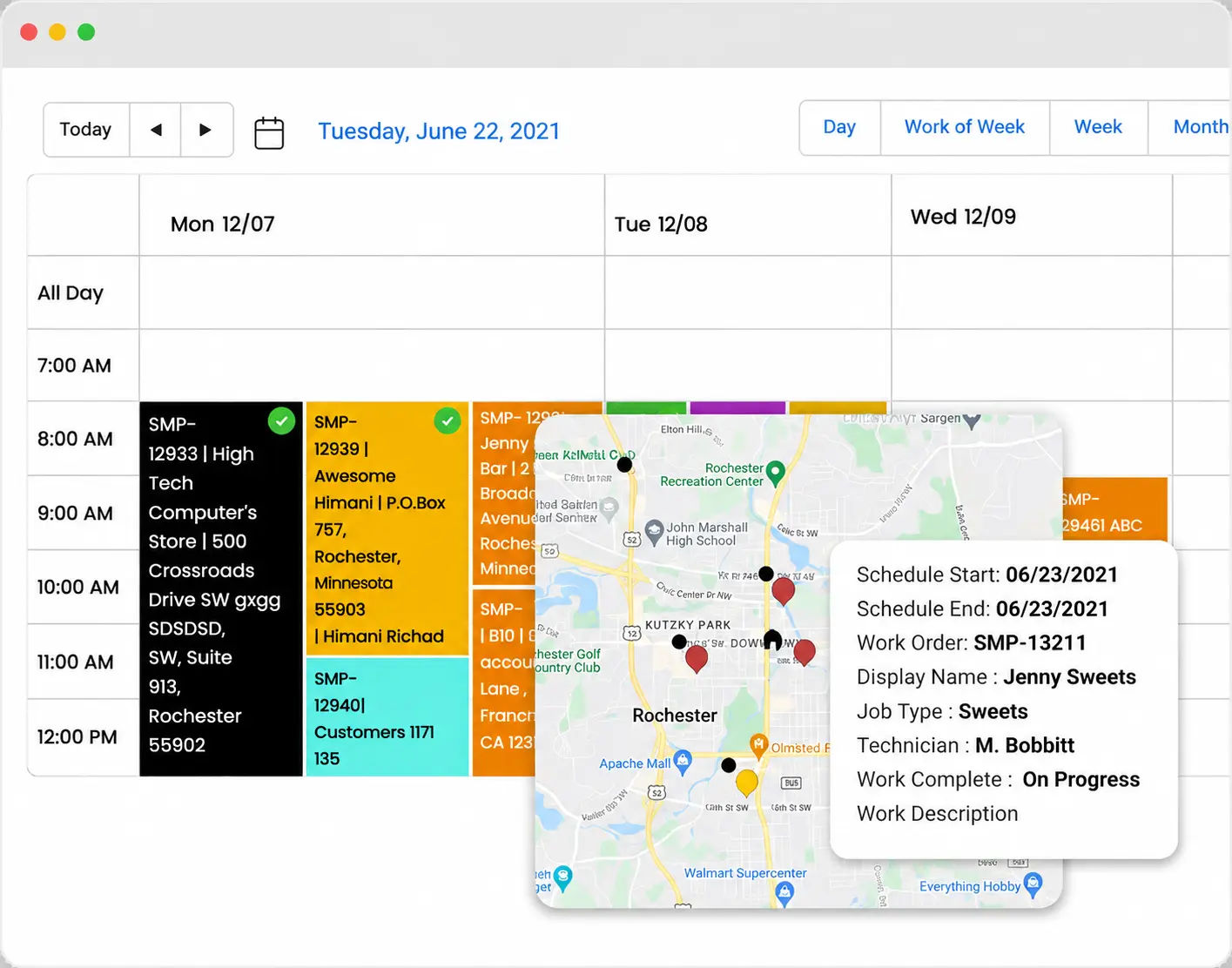
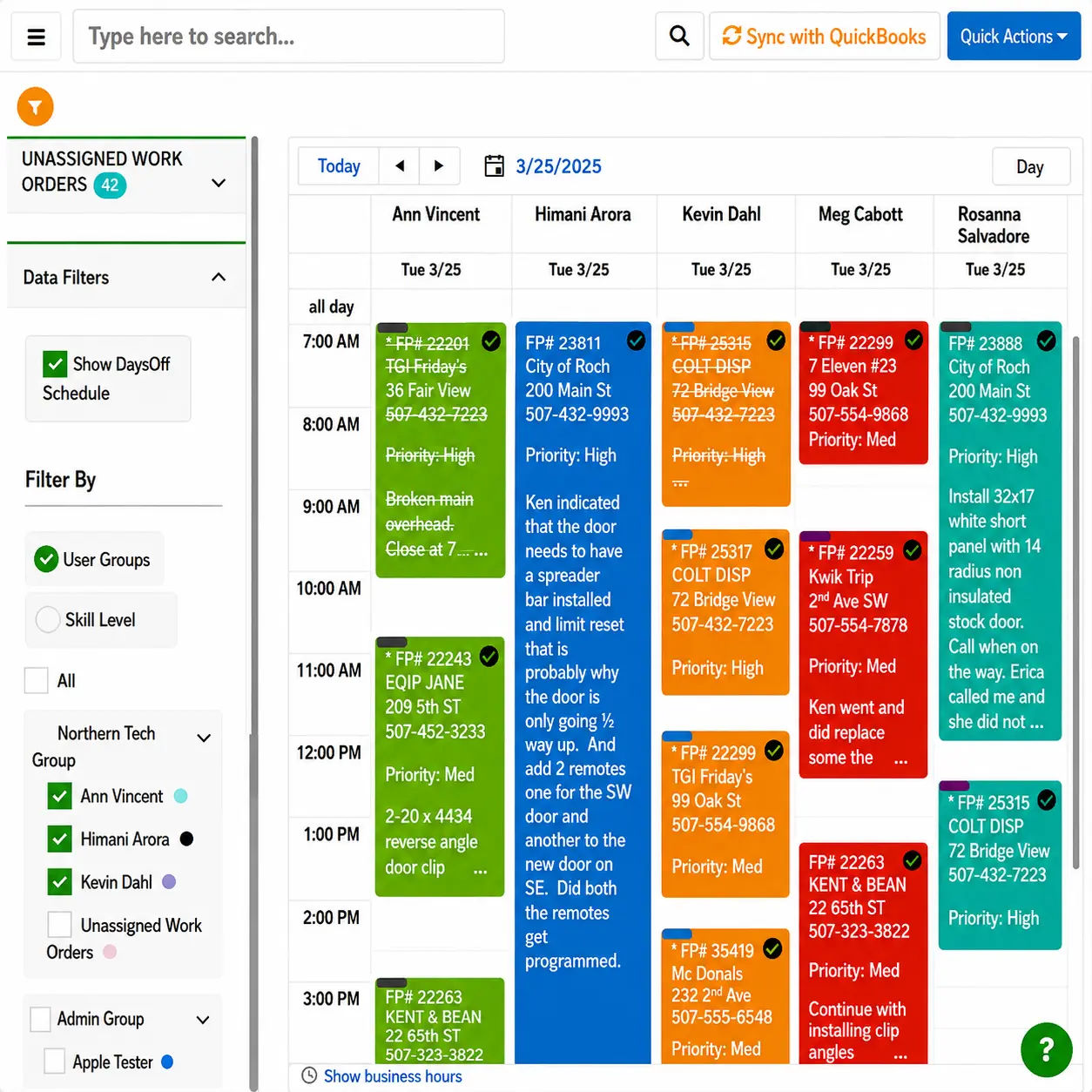
This is where scheduling and dispatch software earns its place: the dispatcher re-routes mid-shift and the tech sees the new job on the same screen, with the address and access notes already attached.
Our STANCE: The second truck roll is not a parts problem. It is a data problem. When a tech walks into a job with no equipment history, no access notes, and no record of what the last tech tried - the second visit is already scheduled before the first one is done. A mobile app fixes that. A clipboard does not.
2. Dispatch becomes a live board, not a phone tree
Without a mobile app, dispatch often functions like an unofficial phone tree and not a very efficient one. The dispatcher calls Tech A to find out where they are. Then the dispatcher calls the customer with an updated arrival time. When Tech A runs behind schedule, the entire process starts over again. It’s a bit like herding cats, except the cats are driving vans and the customers are watching.
In a mobile-first system, the dispatcher can monitor tech locations on a map. They can see job statuses change in real time and reroute schedules using drag-and-drop tools. Customers receive an "on my way" text automatically. There is no need to call anyone.
The advantages of mobile scheduling apps for field service show up fast here. Forrester's Total Economic Impact study of Salesforce field service customers measured 195% three-year ROI driven by productivity gains. In our customer base, the smaller-shop version of that looks like fewer mid-day reshuffles - and a dispatcher who can actually take lunch.
One dispatcher on the r/HVACAdvice forum put it simply: before mobile job tracking was introduced, she spent the first two hours of each shift figuring out where the tech had been and what jobs were still outstanding from the previous day. That dead time disappears when the dispatch board is updated in real time.
3. Errors stop at the source, first-time fix climbs
Each time a tech writes something down on paper and someone else types it into a system, there are two chances for an error to occur - or for the information to disappear entirely. Mobile data capture reduces that risk to a single entry made by the person actually performing the work.
A mobile FSM analysis citing Field Service News reports 25% higher technician productivity and 20% faster service resolution for mobile-first shops. Aberdeen-cited research puts best-in-class field service at 88% first-visit resolution. The gap between average shops and the best ones is almost entirely about whether the tech knows the equipment history before he pops the panel.
One G2 reviewer reported that switching to mobile-based work orders reduced callback rates by roughly one-third within the first two months because techs arrived with complete job context instead of relying on a stapled work order from three weeks earlier.
| First-Time Fix Rate Benchmark | Mobile-First Shops | Paper/Hybrid Shops | Source |
| Best-in-class FTFR | 88%+ | 68-72% | Aberdeen Group |
| Avg HVAC first-visit resolution | 82% | 64% | Field Service News, 2024 |
| Technician productivity gain | +25% | Baseline | Field Service News mobile FSM analysis |
| Service resolution speed | +20% faster | Baseline | Field Service News mobile FSM analysis |
| FTFR with diagnostic data access | 62% to 84% | N/A | Fieldy KPI Report, 2026 |
4. Skill-matching depends on data the app captures
Matching the right tech to the right job only becomes a software problem when the system has accurate skills data to work with. Small shops typically keep that information in the owner's head: Mike handles ductless systems, Carlos handles commercial RTUs. That approach works well with four techs. The process starts to break down once the team grows to a dozen or more people, especially when several techs call in sick on the same day.
A field service mobile app earns its spot when it stores certifications and skill tags per tech and surfaces them at assignment time. Team management features that do not write back to the schedule view are just decoration.
Bonuses can be tied to EPA 608 certification, NEC-tagged electrical work, or state-licensed pest control qualifications. If expiration dates are tracked in the app, the dispatcher receives a warning before assigning an uncertified tech. Shops that fail audits often still record them on a sheet of paper pinned to the break room wall.
This is where regional distinctions matter most. In states like California and New York, contractor licensing enforcement is strict - missing certification is not just an audit risk, but a legal liability. In rural Canada, where skilled trade professionals are harder to find, matching jobs to techs is less about proximity and more about making the best use of available skills. The application must handle each job assignment without requiring the owner to oversee every decision.
5. Offline mode is where rural shops live or die
In a typical 5-20 tech shop, owners estimate about 20% of service calls happen in spotty or zero-signal zones. Basements. Rural properties. Industrial buildings with walls thick enough to stop a satellite. On apps without true offline mode, that is where notes, photos, and signatures quietly disappear. No warning. Just gone.
Owners on Quora and contractor subreddits tell the same story: a technician records clock-in data, parts notes, and customer signatures while working in difficult conditions such as basements. But by the time the job reaches the truck, the app often fails during sync. The solution isn't better cellular coverage or a better phone experience. The solution is software that stores data locally and syncs reliably once the signal is restored.
One plumbing business owner on r/Plumbing mentioned that his team covers a large number of rural routes across the Pacific Northwest, where mobile coverage is limited at best and nonexistent at worst. He tried two different field service apps before finding one that could sync reliably after working offline. The others lost data during synchronization. That isn't ideal when billing depends on accurate tracking of time and materials.
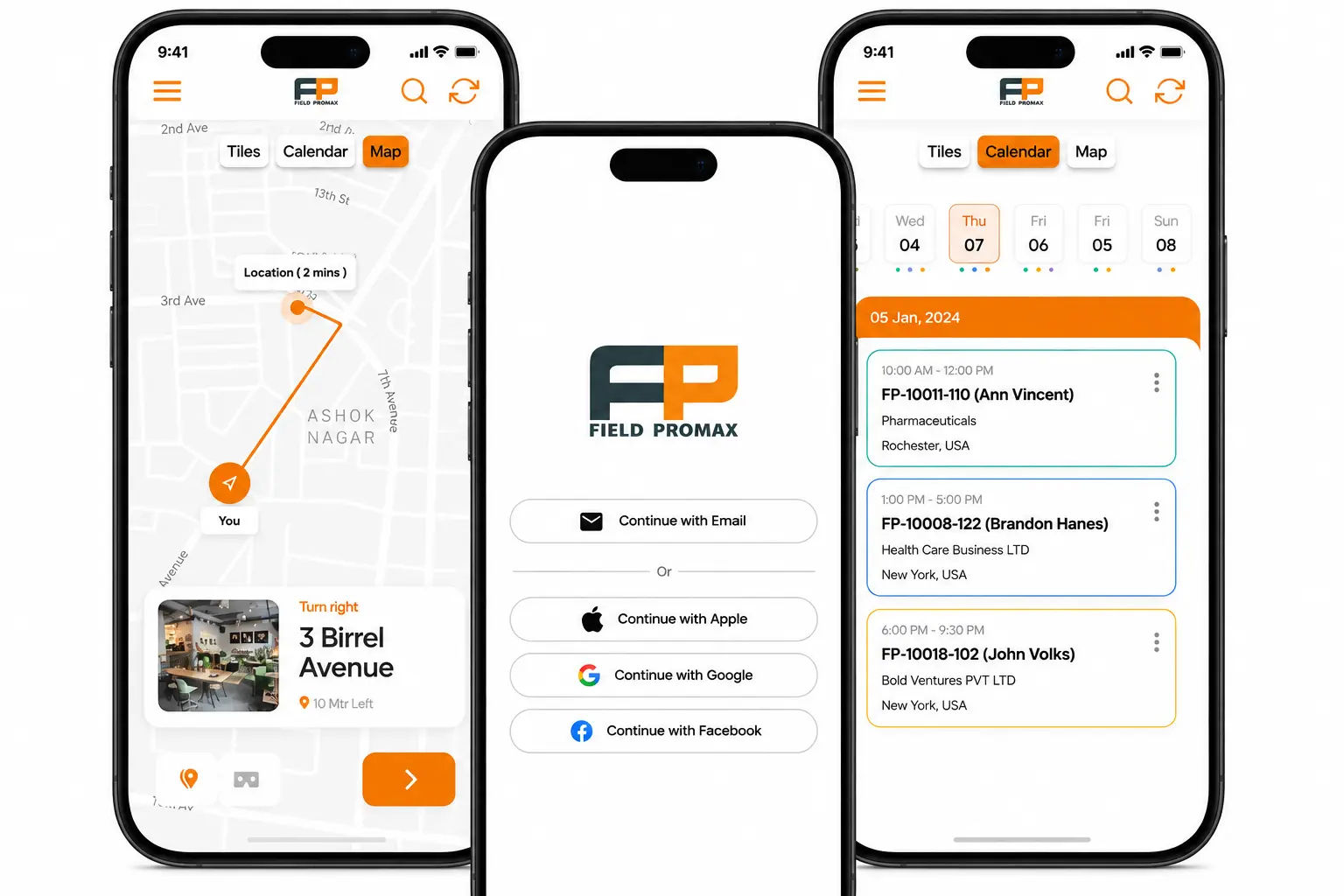
One simple test to determine whether offline mode is working: turn on airplane mode, complete an entire work order - including signatures and photos and then turn the radios back on. If everything works as expected, the system supports true offline mode. If anything is missing or fails to sync correctly, further evaluation is needed.
6. GPS clock-ins close the 2% payroll leak
Manual timesheets increase payroll costs by around 2% due to rounded start times, padded lunches, and unclear job transitions. For a service shop with 5-20 techs, this can add up to nearly a full week of unpaid-but-recorded labor per technician each year. Shops that use GPS-stamped clock-ins help close this gap by capturing time more accurately in real time.
This is also where technology pushback becomes visible. Owners’ threads on Reddit and Quora are often filled with similar concerns: employees find loopholes in grace periods or describe the system as surveillance. Operators who avoid these issues tend to have a few things in common. Their policies are clearly written, and the grace period is reasonable (for example, five minutes). Technicians can also view their own payroll records, and any exceptions are escalated to a manager rather than being silently deducted.
For time-and-materials billing, timecard and GPS tracking closes a second hole: hours billed to the customer that never hit payroll, or the reverse. Industry analysis of timekeeping leakage shows the gap between recorded and actual labor hours is one of the most common sources of revenue bleeding in small service shops.
An HVAC owner on r/HVACAdvice revealed that his team had been rounding clock-ins to the nearest 15 minutes. This wasn’t intentional - it was simply easier to record that way. For a six-technician team, this resulted in roughly $400-$600 per month in payroll overages. GPS-stamped clock-ins solved the issue. No one quit over the change.
| Payroll Leakage Source | Typical Impact per Tech/Year | Fix |
| Rounded-up clock-ins | 20-30 hours | GPS-stamped mobile clock-in |
| Padded lunch/break entries | 10-15 hours | App-tracked break start/end |
| Fuzzy job transitions | 15-25 hours | Job-linked status updates |
| T&M billing vs. payroll mismatch | Variable - avg 2% payroll | Timecard-to-invoice linkage |
| Unrecorded overtime | 5-10 hours | Automated OT flag + manager alert |
7. Same-day invoicing rewrites your cash cycle
The case for mobile apps for technicians to close work orders onsite is not just speed. It is the invoice that goes out before the tech is back in the truck. PTC's 2024 field service trends analysis, citing ServiceMax pegs revenue leakage at up to 5% of annual revenue - mostly the gap between work getting done and paperwork catching up. That leakage hides in three places: parts used but never billed, hours under-recorded, and invoices stuck waiting on missing details.
A garage door business and a hurricane protection company in South Carolina noted in a QuickBooks App Store review that going 100% mobile eliminated lost work orders and moved invoicing from the next day to the same day. This improvement to the cash cycle is often one of the most immediate benefits after go-live: DSO compresses because invoices are delivered while the customer is still on-site.
This is where the QuickBooks integration does the real work: tech closes the work order, invoice generates, customer pays, entry hits QuickBooks - zero re-keying. Boom.
Our STANCE: Most shops think they have a cash flow problem. They actually have a billing delay problem. Work finishes Monday. Invoice leaves Thursday. That is not a bank account issue - it is a workflow issue. Same-day invoicing from a mobile app does not need a finance overhaul. It needs a tech who closes the job on the phone before he pulls out of the driveway.
8. What this pattern looks like in the wild
A pattern we've observed across operators since 2019 involves the owner-operator of a small mixed-trade shop running fewer than ten technicians from a single yard in a storm-prone region.
When a storm pulls trucks offline for two or three days, dispatchers often work through rebooking queues based on who calls back the most. There is no consistent rule for determining who gets rescheduled first. In one shop a weather event sidelined two trucks and wiped out three days of scheduled work. Maintenance-contract customers were pushed aside by one-time callers who happened to be more vocal. The issue became obvious when a contract customer waited four days for service while a non-contract customer was rebooked twice.
The following month, the owner created a one-page incident playbook that ranked jobs by urgency level and contract status. He walked the dispatcher through it using the previous week's disrupted schedule to test the case. The first version didn't stick. The second version was refined after two additional trials, and eventually the dispatcher stopped second-guessing priority-tier calls in the middle of a shift.
The next disruption went smoothly and involved roughly half the chaos. However, a new issue emerged when an elderly residential customer without a service contract had a situation that clearly justified an exception to the playbook's logic. A complaint escalated, resulting in an update that added a vulnerability alert to the process. The part-time after-hours call handler needed another two weeks to get on board.
This is a composite example based on the most common version of a pattern we've observed across many small operators we've worked with.
The most reliable indicator of whether a mobile rollout will succeed isn't the size of the shop. It's whether techs are using the app on day three in exactly the same way they used it on day one. The successful shops are the ones where owners actively watch how trucks move through the workflow and identify points of friction. They are not the shops that conduct a 90-minute training session and then declare it onboarded. The most common feature request we receive is better dispatch-to-invoice automation - and that's not a coincidence. This is exactly the type of process that mobile apps are designed to eliminate. Shops that still rely on paper packets are increasingly losing bids to competitors using mobile workflows, and they pay for it every single season.
9. What to look for when you pick a mobile app
Most shops picking up a field service mobile app are coming from spreadsheets, paper packets, or a QuickBooks-only setup - not switching off another FSM platform. That matters a lot. It shapes what "good" actually looks like when you are shopping for a field service app.
The things you cannot compromise on:
- A real offline mode that works even when you're in airplane mode.
- Drag-and-drop field service scheduling software that sends real-time updates directly to technicians' mobile devices.
- Automatic attachment of signatures and photos to customer records.
- GPS-stamped clock-ins that help calculate job costs and payroll accurately.
- QuickBooks integration that sends invoices without requiring manual data entry.
- Pricing that doesn’t penalize you for adding a seasonal tech in May and removing them in October.
- A mobile UX that a 56-year-old tech can learn in the morning - not after a week of training.
Small-to-mid-sized trade shops are often pushed toward enterprise-level platforms, even though the extra cost rarely delivers features they'll actually use. The question is not whether you need a field service mobile app. The real question is whether the one you choose was built for a shop you run - not for a 200-truck national fleet.
The short version
About 70% of field service technicians now work from tablets or smartphones as their primary tools. Shops that still give technicians paper work orders are the exception when they bid against mobile-equipped competitors. The gap between them grows larger every year.
In the first thirty days, the transition is almost always smoother than the team expects. The improvement in the cash-cycle shows up during the initial billing cycle. The increase in capacity typically shows up by the end of the second month.
Common mistakes when rolling out a mobile app
Many owners who have been through a rough rollout can name the same group of mistakes. Here's what actually goes wrong - and how to avoid it.
- Training once and walking away. A 90-minute group session may cover the buttons, but it doesn’t build habits. The shops that stick are the ones where the owner rides along during the first week - not to supervise, but to identify the friction points before they turn into permanent workarounds.
- Picking an enterprise platform for a 6-person crew. Bigger isn't always better when the feature-rich platforms are designed for 50-truck fleets, not small teams. A 56-year-old technician who still can't find the work order tab by day four will probably be back to using paper by day seven. Guaranteed.
- Not testing offline mode before go-live. Apps don't always notify users when data fails to sync. The technician assumes the data was saved, but it wasn't. Run the airplane-mode test before your first day using the app - not after.
- Skipping the GPS tracking conversation with the crew. If you enable GPS clock-ins without explaining why, the pushback you get looks like resistance is often just confusion. A five-minute all-hands meeting - a written policy, a grace-period explanation, and clear payroll visibility - can dramatically reduce friction by about 80%.
- Not verifying the QuickBooks integration before signing."Integrates with QuickBooks" can mean a live two-way sync or a one-way CSV export that someone has to upload manually. Ask a specific question: Does a closed work order automatically generate an invoice to QuickBooks without anyone touching a keyboard? If the answer is anything but yes - keep looking.
- Treating onboarding as a one-time event. In many companies, technicians hired after the initial rollout receive little or no training. The result is a divided workforce: experienced employees use the app correctly, while new hires create their own workarounds. A simple quick-start guide for new employees can solve this problem, and it takes only about 20 minutes to create.
Regional considerations: USA and Canada
The basic workflow remains the same across the globe. However, some regional factors influence which features matter most.
Rural USA and rural Canada: Offline mode is not optional. If your techs work on industrial sites, agricultural properties, or remote residential routes, cellular service is often the first thing that fails. A mobile app without reliable local data storage can become a serious operational risk.
California contractors: License enforcement is strict. The app's certification tracking and expiration notifications are not merely useful features - they are how you avoid sending an uncertified tech to a state-regulated job site and finding out the hard way.
Northeast (NY, MA, CT): Dense urban dispatch makes rerouting a constant challenge. Live dispatch boards and real-time tech location tracking deliver significant value in these markets. A single traffic delay can affect multiple jobs when dispatch teams lack real-time visibility.
Canada (Ontario, BC, Alberta): Trade licensing requirements vary by province. EPA 608 equivalents fall under provincial certification frameworks in Canada. The app needs to handle Canadian postal code formats and ideally flag province-specific license types for shops that operate across provincial borders.
Sun Belt HVAC shops (TX, FL, AZ): Seasonal demand spikes can cause technician headcount to fluctuate significantly between peak summer months and slower periods. Pricing models that charge the same rate for seasonal technicians in June the same way it charges for a year-round tech is a real cost. Understanding how licensing and subscription costs scale during peak seasons is an important consideration before signing a contract.
Where mobile field service tech is heading
The FSM market is expanding rapidly. Global Market Insights values the global field service management market at $5.49 billion in 2025 and projects it to reach $23.61 billion by 2035 - a 16% annual growth rate. This growth is driven largely by mobile technology and smarter scheduling. Here are the implications for service businesses with 5-20 tech shops in the coming years.
Three things coming in the next 24 months that will matter to small shops:
- AI-assisted dispatch. Scheduling engines that manage skill matching, location, traffic conditions, and job priorities in real time are moving from the enterprise price range into the SMB market. Drag-and-drop scheduling works well today. But in the next two years, the gap between shops using AI-powered dispatch and those that aren't using it will show up in jobs-per-day-per-tech metrics.
- IoT-linked work orders. Equipment that can detect faults and automatically generate service requests is already common in commercial HVAC systems. Residential HVAC is likely to follow as connected home devices become more common. Small shops running with maintenance agreements will begin experiencing these benefits first.
- In-app customer portals. Real-time job status updates, technician ETAs, and photos shared with customers upon job completion are becoming standard expectations. Research from Quixy indicates that 89% of customers would pay more for on-demand updates. Shops that keep customers informed throughout the service process also tend to collect payments faster.
| Year | FSM Market Size | Key Driver | Source |
| 2022 | ~$3.8B | Cloud move, post-COVID mobile shift | Global Market Insights |
| 2023 | ~$4.4B | SMB mobile app adoption speeds up | Global Market Insights |
| 2024 | ~$4.9B | AI scheduling pilots, IoT integration | Global Market Insights |
| 2025 | $5.49B | Offline-capable apps, predictive maintenance | Global Market Insights |
| 2026 | $6.21B (est.) | AI dispatch, 5G field connectivity | Global Market Insights |
| 2030 | $9.68B (est.) | Predictive service, connected assets | Fieldwork HQ, 2025 |
KPI benchmarks: mobile-first vs. paper field service shops
| KPI | Mobile-First Shops | Paper/Hybrid Shops | Source |
| First-time fix rate | 82-88% | 62-68% | Aberdeen Group; Fieldy KPI Report 2026 |
| Admin hours per tech per week | 1-2 hours | 5-6 hours | Field Service News; industry research |
| Days Sales Outstanding (DSO) | 7-14 days | 18-30 days | PTC Field Service Trends, 2024 |
| Revenue leakage (unbilled work) | 1-2% of revenue | Up to 5% | PTC/ServiceMax analysis, 2024 |
| Payroll accuracy | 98-99% | 96-97% | Industry timesheet research |
| Technician productivity gain | +25-30% | Baseline | Field Service News; invoiceasap.com, 2025 |
| Customer satisfaction with job visibility | +20% | Baseline | Aberdeen Group, 2024 |
| 3-year ROI (enterprise FSM) | 195% | N/A | Forrester TEI study (Salesforce FSM) |
The single biggest predictor of whether a mobile rollout sticks is not the size of the shop - it is whether techs use the app on day three the same way they did on day one.
- Joy Gomez, Founder of Field Promax
More from the mobile app cluster
Continue reading:
- The Field Service Mobile App, From an Operator's Bench - the pillar operator-view guide.
- The Mobile Field Service App: What Actually Changes in the Shop - operational shifts in the shop when paper work orders go away.
- Mobile Job Management for Cleaning and Maintenance Teams - vertical deep dive for cleaning, janitorial, and multi-site maintenance shops.
Conclusion
The transition to mobile-first fieldwork is well underway. The first 30 days after transitioning are usually less painful than the crew expects - and the cash cycle changes show up during the first billing cycle.
Field Promax starts at $99/month for a single user, $159/month for up to 5, and $239/month for teams up to 12.
Frequently Asked Questions

Content Creator
Bhargavi Halthore is a content writer at Field Promax, a field service management platform serving trades businesses across the USA and Canada. With over a decade of experience writing for business owners, she brings detailed, ground-level insight to every topic she covers. Her research goes beyond search results - she digs into LinkedIn groups, Facebook communities, and Reddit forums to understand what field service business owners are actually dealing with on the ground. She speaks directly with industry professionals, understands their day-to-day challenges, and translates that into content that is practical and actionable. What you read in her articles reflects real industry patterns, not theory.