How to Prevent Last-Minute Cancellations in Field Service
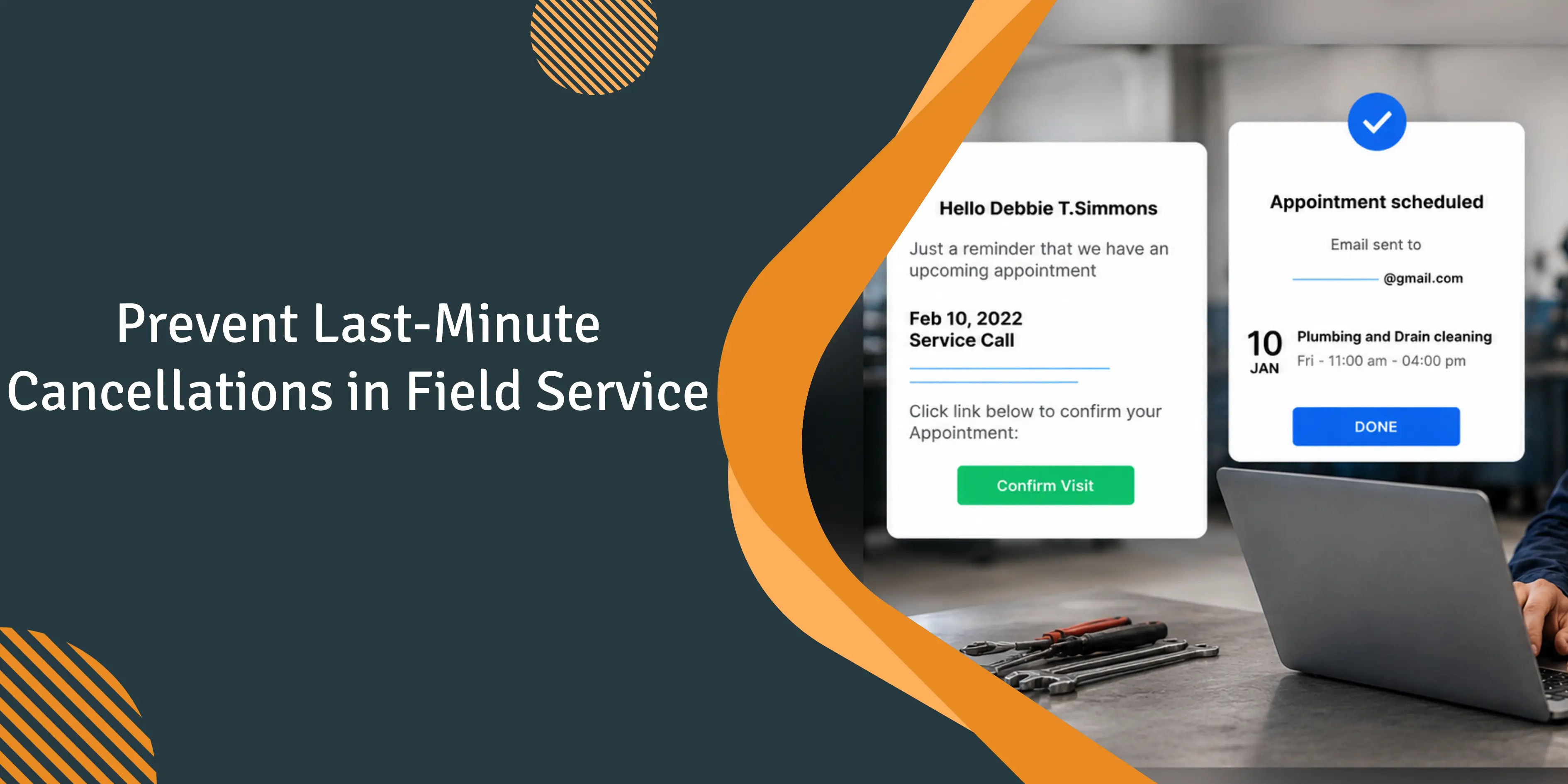
Your routes are already set. The tech is 15 minutes away from the stop when the call comes in. A last-minute cancellation in field service doesn’t just cost a job - it disrupts the entire route and creates an unfillable gap in the schedule. Before you can reorganize the day, it’s already over.
The usual recommendation is to send multiple reminders and charge a cancellation fee. That’s not bad advice. However, it’s not the full picture - and for many shops, it doesn’t even move the needle. Businesses with cancellation rates below 5% aren’t necessarily the ones with the strictest policies. They’re the ones whose scheduling, dispatch, intake, and customer workflows give customers almost no reason to cancel in the first place.
That's the angle this article is built around.
Why does one cancellation actually cost three jobs?
The client who cancels at 10:47 a.m. the day before an 11 a.m. appointment isn’t the issue. The real problem is what happens to dispatch. By the time the cancellation comes in, the tech is already 15 minutes away from the location. The rest of the route was built around that stop because the tech was already scheduled to be in that part of town. The open slot usually stays empty because no waitlist customer can be moved into that slot on such short notice.
From 14 years of conversations with smaller HVAC and plumbing shop owners, one thing has remained consistent: approximately 40% of missed-window complaints stem from arrival windows that are too wide to be meaningful, especially the standard “8-to-5” window that forces customers to waste an entire day waiting. In a typical 5-20 tech operation, a single broken appointment window is not just the loss of one job. It often leads to the loss of a rebooking opportunity and two potential referrals from that household. One last-minute cancellation in field service can easily turn into the loss of three jobs.
That math is why generic advice - send a reminder, charge a fee - doesn't move retention. The ServiceTitan contractor playbook treats 5% or below as an acceptable cancellation rate. In our customer base, the shops sitting below that line aren't the ones with the harshest fees. They're the ones who tightened the upstream workflow so customers stop having a reason to cancel.
On Quora, contractors’ questions about scheduling usually start from the same point: small-scale operators begin with Google Forms, Calendar, and a shared spreadsheet, then watch the manual process fail as the crew grows. Bookings are re-entered three different times between intake and dispatch. Confirmation emails are missed. Clients do not receive update messages when a tech’s arrival time slips by 40 minutes because no one updated the calendar. Cancellation in that kind of workflow isn't really customer behavior. It's the schedule telling you it has no way to talk to the customer in real time.
What's actually causing the cancellation?
The majority of customers do not cancel because they changed their minds. They cancel because something in the workflow gave them an excuse - or an opportunity - to do so.
Based on owner discussions on Reddit and Quora over the past 12 months, the most commonly discussed dispatch issue is the gap between where a tech is supposed to be and where they actually are. Without live tracking, the office often operates in a state of uncertainty between dispatch and job completion. On busy Tuesday mornings, a 90-minute delay can easily turn into a cancellation.
The four upstream causes of cancellations, in approximate order of impact:
- Arrival windows are too wide to defend. A four-hour arrival window forces customers to schedule their entire day around the visit. If the tech is another 90 minutes late on top of that, the customer is far more likely to cancel.
- No confirmation between booking and the day-of. A job scheduled on Tuesday for Friday, with no communication in between, is a job the customer has not fully committed to remembering.
- Inbound bookings that hit voicemail. Calls made after 7 p.m. or on Saturday mornings often are not returned until Monday. By then, the customer has usually booked the next contractor who answered the phone.
- Dispatchers without route reality. A dispatcher who assigns the 11 a.m. slot without realizing the 9 a.m. job is already running 75 minutes behind is quietly setting up the next cancellation.
None of these issues can be fixed by sending more reminders. They are fixed by tightening the process so customers rarely need a reminder in the first place.
The pattern I keep seeing in support tickets is this: a shop turns on SMS confirmations and assumes the cancellation problem is solved. A month in, the rate barely moves. When I dig in with the owner, almost every time the root cause is that the arrival window in the booking confirmation still reads "between 1pm and 5pm." A four-hour window is the customer's whole afternoon, and any tech delay inside that window reads to the customer as you wasting their day. The reminder fired, the SMS went out, none of it mattered. Tighten the window to two hours and back it with a live ETA text 30 minutes before arrival, and the same shop sees cancellations drop inside one billing cycle. The reminder isn't the fix. The window is.
- Joy Gomez, Founder of Field Promax
A pattern we've watched across small mixed-trade operators
Across the roughly 25-40 small contractors we’ve worked with since the beginning of 2019, the same disruptive pattern continues to appear. Consider an owner-operator running a small mixed-trade field service shop with fewer than ten techs. When a weather event takes trucks off the road for up to three days, the dispatcher is forced to manage the rebooking queue based on which customers are the angriest rather than on any clear scheduling rules or priority system.
In one case, a weather-related event took two trucks off the road and wiped out three days of scheduled work. Without a structured system in place, the dispatcher was forced to rebook customers only after complaints started coming in. Maintenance-contract customers - the recurring revenue accounts the owner valued most - were pushed behind one-time callers who simply happened to complain louder. The owner had no clear way to explain the situation to contract customers once they eventually found out.
The following month, the owner drafted a one-page incident playbook that ranked jobs by urgency level and contract status. The first draft did not work particularly well. The process had to be tested repeatedly before the dispatcher stopped second-guessing priority decisions mid-shift. The second disruption caused roughly half the chaos of the first. The hardest issue to resolve was an edge case involving an elderly residential customer with no service contract. His situation clearly deserved higher priority than the playbook allowed. After the complaint escalated, the system was updated to include a vulnerability flag.
It’s a composite built around the most common version of the pattern we’ve seen across smaller operators we’ve worked with. It’s not perfect, but it is representative. The shops that recover fastest from disruption aren't the ones with the most tech. They're the ones with the clearest written rules.
What changes when the schedule actually communicates itself?
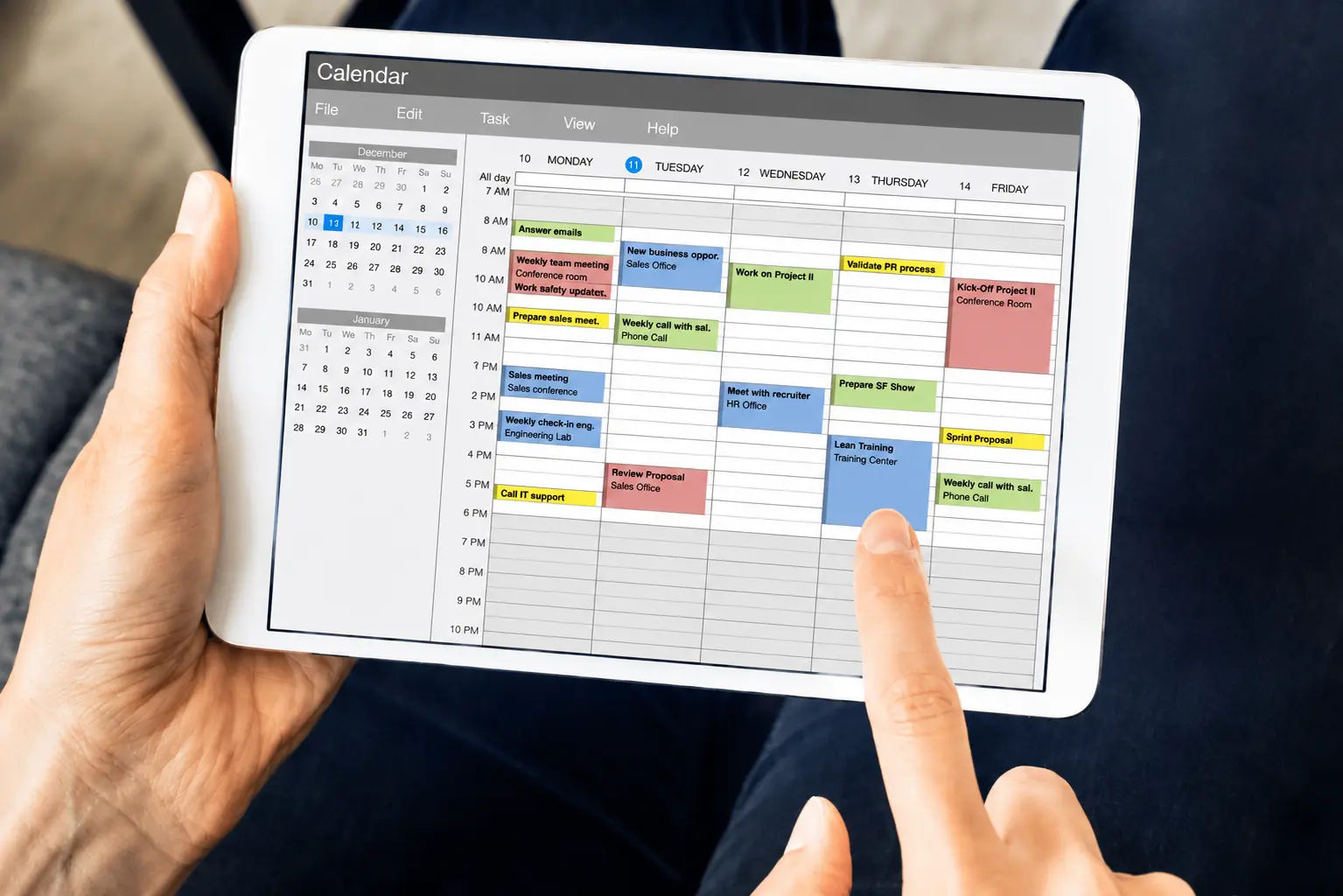
Closed arrival windows only work if the schedule itself can adapt without breaking. That is what businesses relying on spreadsheets regularly underestimate.
Dispatchers in a typical 8-tech operation can spend up to 15 hours per week manually coordinating schedules, playing phone tag with technicians, updating paper calendars, and managing last-minute reroutes. Businesses that switch to a drag-and-drop dispatch board can recover a large portion of that time because when a 9 a.m. job runs 40 minutes behind, the schedule updates downstream appointments automatically instead of forcing the dispatcher to switch between three different tools.
When updates flow, customer touchpoints fire correctly: confirmation at booking, reminder 24 hours before, on-the-way text 30 minutes out with the tech's name and a live ETA. A synthesis of reminder studies puts automated SMS reminders at a 20-38% reduction in no-show rates. Shops getting the high end of that range are the ones where the reminder cadence is tied to the dispatch board's live status - not a static booking date that doesn't know the tech is running late.
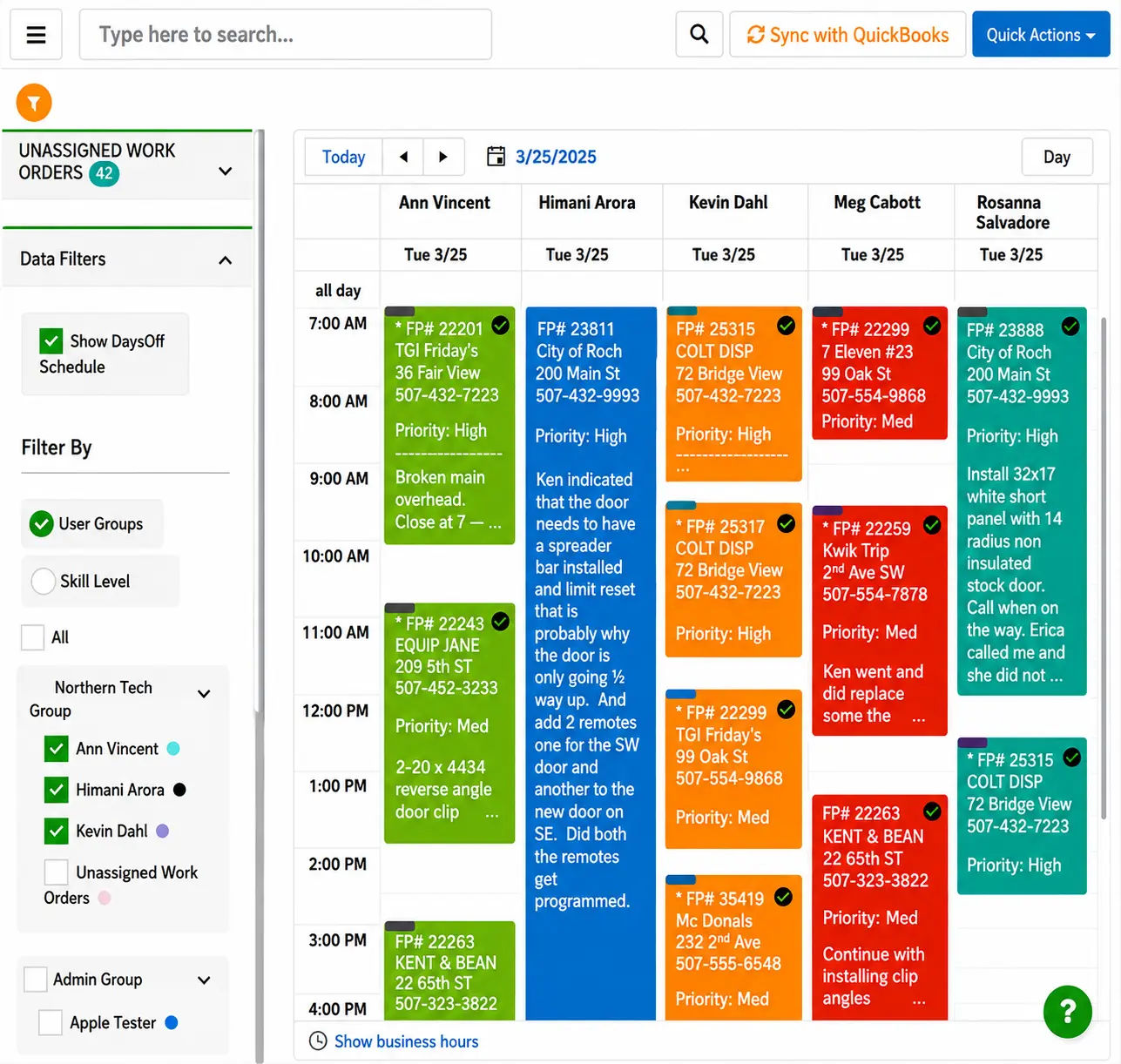
A reviewer on the QuickBooks App Store described Field Promax as streamlining everything from scheduling to invoicing, highlighting the color-coded calendar and, most importantly, the ability for technicians to create service requests directly from the field. That second feature matters because when a technician finishes a job and the customer asks, ‘Can you come back next week?’, the follow-up request can be entered immediately from the truck. The dispatch board updates within minutes instead of leaving the request buried in a technician’s notes app until Friday - and eventually forgotten. That is exactly the kind of process failure that turns legitimate booked work into ghost appointments.
Field service mobile app adoption is a leading indicator. The shops where techs use the app daily are the shops whose confirmations, on-the-way texts, and completion proof fire on time. The shops where techs avoid the app are the shops where the office finds out about delays from the customer calling to cancel.
Why does after-hours intake leak so many bookings?
For the typical 5-20 tech shop that relies solely on phone-based intake, callers who reach voicemail after 5 p.m. or over the weekend can quietly move on to the next contractor. Owners we’ve spoken with estimate that roughly 35% of service inquiries come in outside normal business hours. Shops that use an online booking widget can capture those jobs overnight instead of losing them to missed callbacks on Monday afternoon.
The leak does not only come from lost bookings. It also creates a hidden source of cancellations. If a customer calls on Saturday, leaves a voicemail, and does not receive a response until Tuesday, there is a good chance they booked another contractor in the meantime. Most customers will not call back to cancel the original appointment they think they made with you. They simply will not be there when the scheduled time arrives.
This Google Forms + Calendar + spreadsheet stack can work for a three-tech operation, but it usually breaks down by the time the business reaches eight techs. By the time a company is ready for a dedicated dispatcher, the system has already created enough re-entry errors and scheduling mistakes to drive cancellation rates higher - even though nothing about the customer base has changed.
The fix isn't more booking channels. It's one channel that pushes into one schedule and notifies one tech, with the customer getting a confirmation text inside the same minute. An online intake widget tied into scheduling and dispatch plus auto-confirmation closes the most leak-prone part of the funnel before fees or deposits even enter the conversation.
What does dispatch see versus what the tech is actually doing?
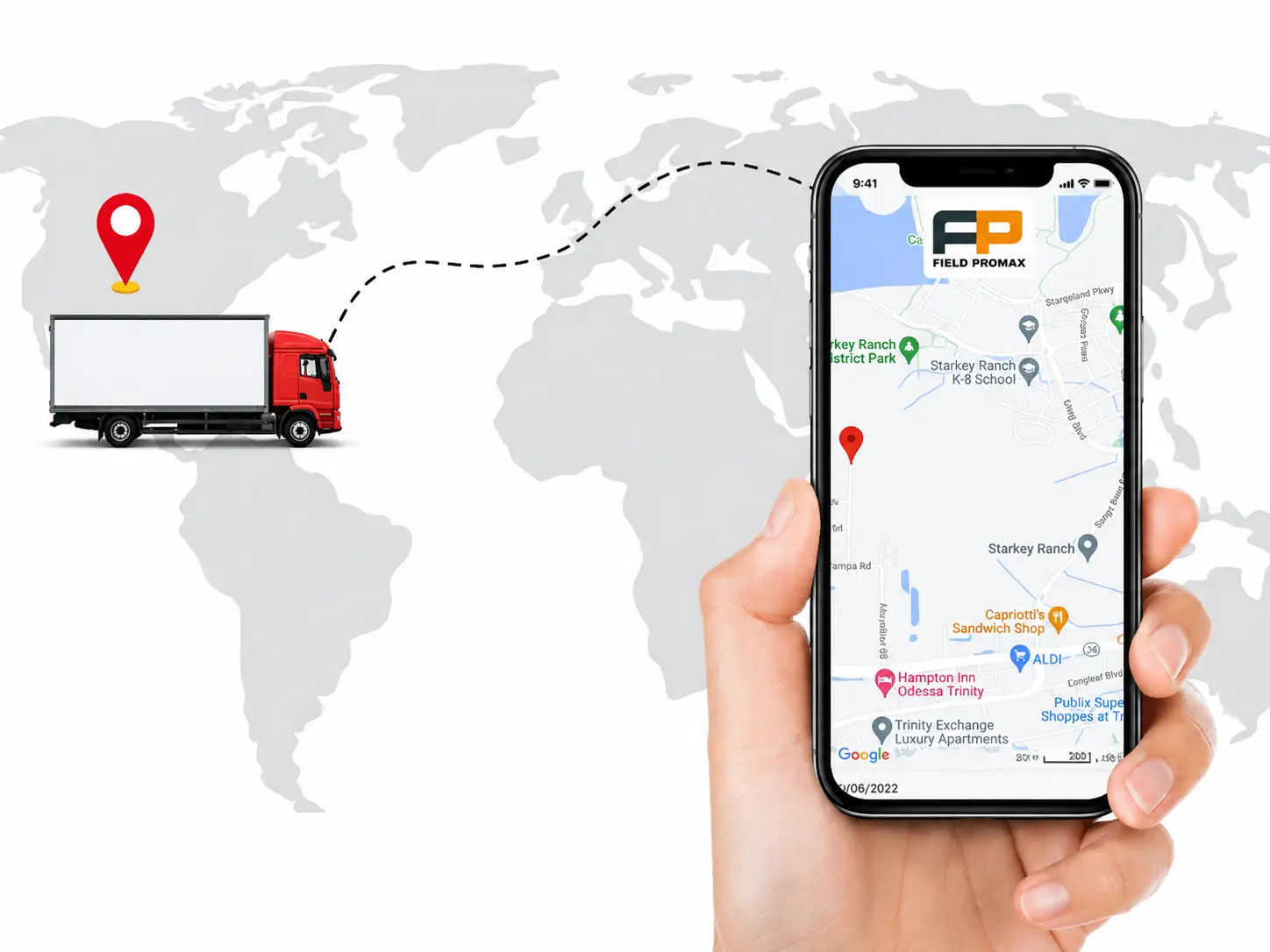
Industry benchmarks indicate that urban HVAC and plumbing crews typically lose more than 30% of the workday to windshield time. The best-routed operation keeps the share of time spent in the car less than 20%. In an 8-tech operation, the difference is approximately a tech-and-a-half amount of hourly billable hours each week - not through hiring, but through better routing.
This recovery time is the buffer that absorbs job slippage before it is forced to cancel. When the 9am job runs over 45 minutes, the buffer ensures the 11am customer still gets their two-hour time frame honored. In the absence of it, 11am becomes 12:15pm, the customer's afternoon appointment takes priority, and the cancellation is posted on the notice board.
Owners on Quora identify a routing issue that consumer GPS cannot solve: drivers are sent on routes that have low bridges, weight restrictions, or commercial site access limits the algorithm couldn't be aware of. What operators want is routing that accounts for vehicle profile and site-specific constraints, not just the shortest distance.
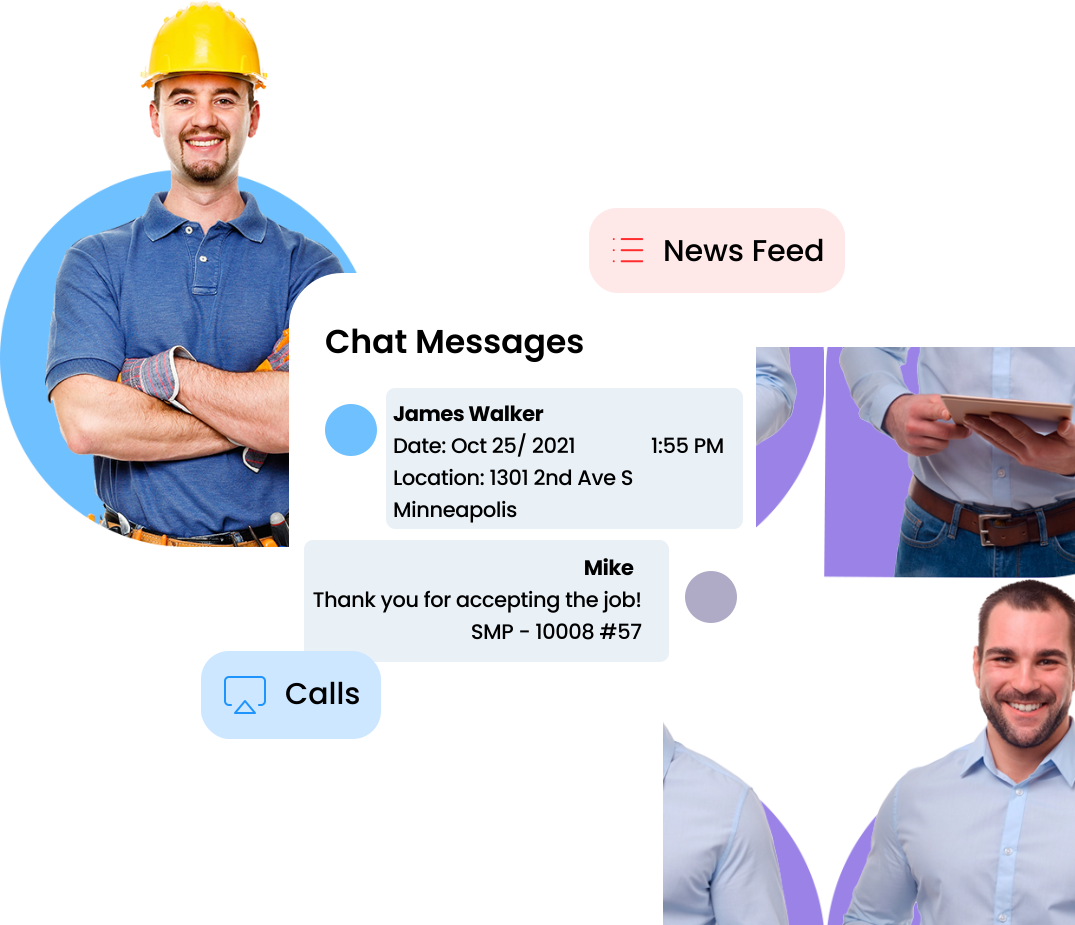
Real-time GPS visibility is the other half of the equation. At 10:45am "where's my tech?" call comes in, the dispatcher needs to answer with a specific minute - not a hedge. A customer who hears "he's 12 minutes out, turning off Route 9" stays on the schedule. A customer who hears "I'll call you back" cancels.
The conversations in the 5-15 subreddits for tech shops point at the communication gap between dispatcher and driver as the main friction point: when the dispatcher does not have a clear understanding of route realities - site access hours, live-load wait times, break requirements - they assign work that the tech can't realistically execute. The customer feels that gap as a missed window. It's not about more technology, but more about having the same image on both sides.
Which patterns expose the customers worth firing?

Not every cancellation is an issue with workflow. Some customers simply decide to cancel. They make three appointments, keep one, and waste your truck on the other two. A small percentage is responsible for an excessive amount of slot loss.
You can't spot the pattern by memory past a few dozen accounts. You need reports and analytics to surface cancellation count per customer, cancellation timing, no-show rate, and rebook conversion. Shops that run this report monthly find that 5-8% of their customer list generates a sharply disproportionate share of cancellations. Tagging those accounts as "deposit required" or declining the next booking attempt is one of the few moves that improves margin without any technology change - just data you already have.
A second pattern: cancellation rate by booking channel. If web bookings cancel at 4% and phone bookings at 11%, the call-handling script is the lever. If 24-hour-notice bookings cancel at 6% and same-day bookings at 18%, the policy needs a same-day surcharge. Without the data, owners default to the policy lever - fees, deposits - because that's the lever they've read about, even when it isn't the one moving the rate.
The same reports surface which techs slip windows most often, which days spike, and which job types carry the highest no-show risk. Maintenance contracts almost always cancel less than one-off service. Quote visits cancel more than diagnostic visits.
Our STANCE: Most shops that struggle with high cancellation rates are solving the wrong problem. They read about cancellation fees and charge them. They read about reminders and send them. But they never look at the data to find out whether the problem is their booking channel, their arrival windows, a handful of repeat cancellers, or a specific tech who consistently runs late. The shops that actually crack 5% or below run a monthly cancellation report. Full stop.
What should a cancellation policy actually contain?
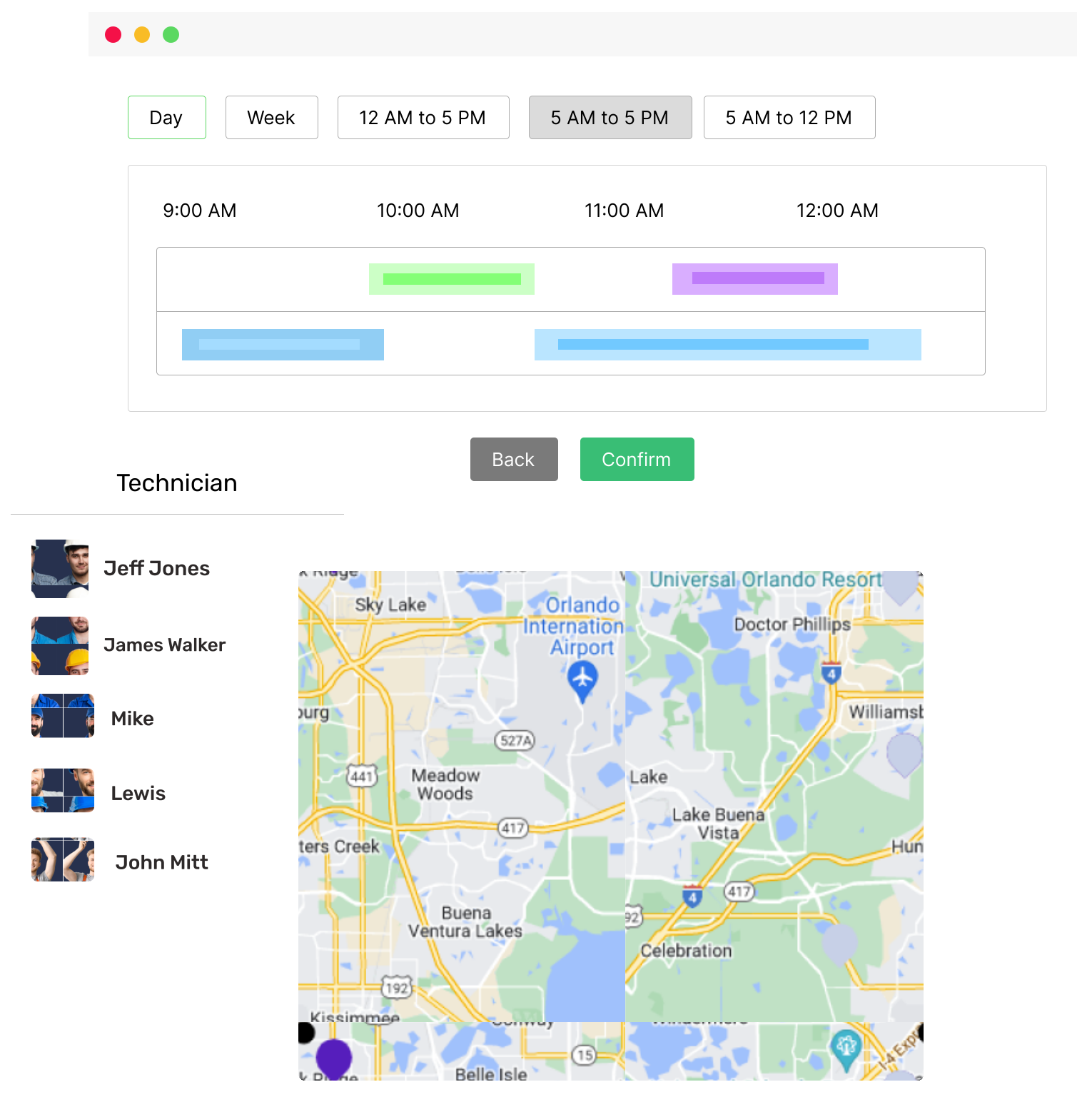
The policy isn't the prevention mechanism. It's the cleanup mechanism. Treat it as the floor, not the wall.
Published fee benchmarks cluster tightly: no fee with 48+ hours notice, a 25% fee or flat $25-$75 inside the 24-48 hour window, 50% of service price with less than 24 hours, full charge or forfeited deposit for a no-show. For HVAC and plumbing tickets where the average call runs several hundred dollars, Housecall Pro and other field-service sources point to a 10-20% deposit at booking as the most consistent way to reduce same-day cancellations - more reliable than a back-end fee applied after the damage is done.
Shops that have policies but don't enforce them, have a much higher cancellation rate than those with no policy. The policy should be enforced with a strictness that the shop doesn't possess - and customers find that out quickly. If you're planning on charging an amount, you should charge it for the first cancellation, after the customer is informed when booking, and then again on the confirmation. If you're not planning to charge the fee, you can take the entire section.
A policy that holds up in practice has four pieces:
- The notice period (24 or 48 hours), that is clearly stated
- The deposit structure or fee linked to that window
- A documented exception (weather, medical, contract-customer goodwill) means that the dispatcher can't make the call live while under pressure
- A checkbox during bookings confirming the client has read and consented to the conditions
The policy is the last 10% of the cancellation problem. The first 90% is everything upstream: the arrival window, the confirmation cadence, the after-hours intake, the dispatcher's view of the route. Get those right and the policy almost never has to be invoked.
Cancellation KPI benchmarks by trade
If you're going to keep track of cancellation rates as a real business metric, you'll need a benchmark to compare it against. Here's where trades usually are
Sources: Apptoto industry data (2024), IBISWorld Home Services Research (2024), field service operator accounts
| Trade / Segment | Typical Cancellation Rate | Benchmark (Healthy) | Monthly Revenue Risk (100 jobs, $250 avg ticket) |
| HVAC Maintenance | 12-22% | <10% | $3,000-$5,500 |
| HVAC Installation | 3-8% | <5% | Higher ticket - $5,000-$12,000 |
| Plumbing Service Calls | 8-15% | <8% | $2,000-$3,750 |
| Electrical Service | 10-18% | <8% | $2,500-$4,500 |
| Residential Cleaning | 15-25% | <12% | $1,875-$3,125 |
| Pest Control | 8-14% | <7% | $1,000-$1,750 |
| Property Management Maintenance | 10-20% | <10% | $2,500-$5,000 |
How cancellation prevention has evolved:
| Year | Key Development in Cancellation Prevention | Impact on Field Service Cancellation Rates |
| 2019 | SMS reminder tools become affordable for SMBs; manual callbacks start being replaced by automated texts | Early adopters see 15-25% no-show reduction |
| 2020 | COVID-19 causes scheduling disruption; cancellation rates spike; digital confirmation becomes essential for trust | Shops with automated systems recover faster than phone-only operations |
| 2021 | Two-way SMS confirmation goes mainstream; online rescheduling links added to most FSM confirmation messages | Industry average cancellation rates begin declining toward 12-15% |
| 2022 | FSM platforms add CRM with customer history; "On My Way" alerts with tech name/photo become standard features | Day-of cancellations measurably reduced in shops using live ETA alerts |
| 2023 | AI-assisted scheduling routes based on job type, skills, and historical cancellation risk; waitlist management integrated | High-risk bookings get targeted intervention rather than blanket reminders |
| 2024 | Post-cancellation rebook nudges automated; cancellation tracking by tech and job type normalized in reports dashboards | Top-performing shops achieve <5% cancellation rates with full system adoption |
| 2025+ | Predictive cancellation scoring at booking, flagging risk based on customer history, lead time, and job type, entering SMB market | Proactive intervention before cancellations happen, not reactive cleanup after |
Sources: IBISWorld FSM Market Report (2024), Gartner Peer Insights (2024), Apptoto (2024), field service trade publication research
Conclusion
Cancellations are a workflow signal, not a customer behavior issue. The shops with the lowest fees aren't necessarily the ones that have the most expensive charges. These are the shops whose schedule, dispatch and intake methods leave the customers with almost nothing to cancel around.
Make sure the arrival window is closed. Repair the leak in the intake after hours. Give your dispatcher real-time route visibility. Make a monthly cancellation report by customer and by booking channel. The reminder and the policy are the last 10%. Make sure you get all the first 90% right and you'll never require either.
Field Promax places all of this in one place - the dispatch board, automated notifications, GPS visibility, CRM history, and the reports dashboard that tells you exactly which knob you need to turn. Plans start at $99/month (Light, 1 user), $159/month (Standard, 5 users), and $239/month (Premium, 12 users).
Frequently Asked Questions

Content Creator
Bhargavi Halthore is a content writer at Field Promax, a field service management platform serving trades businesses across the USA and Canada. With over a decade of experience writing for business owners, she brings detailed, ground-level insight to every topic she covers. Her research goes beyond search results - she digs into LinkedIn groups, Facebook communities, and Reddit forums to understand what field service business owners are actually dealing with on the ground. She speaks directly with industry professionals, understands their day-to-day challenges, and translates that into content that is practical and actionable. What you read in her articles reflects real industry patterns, not theory.