Smart Scheduling Software for Field Service Businesses: A 2026 Guide
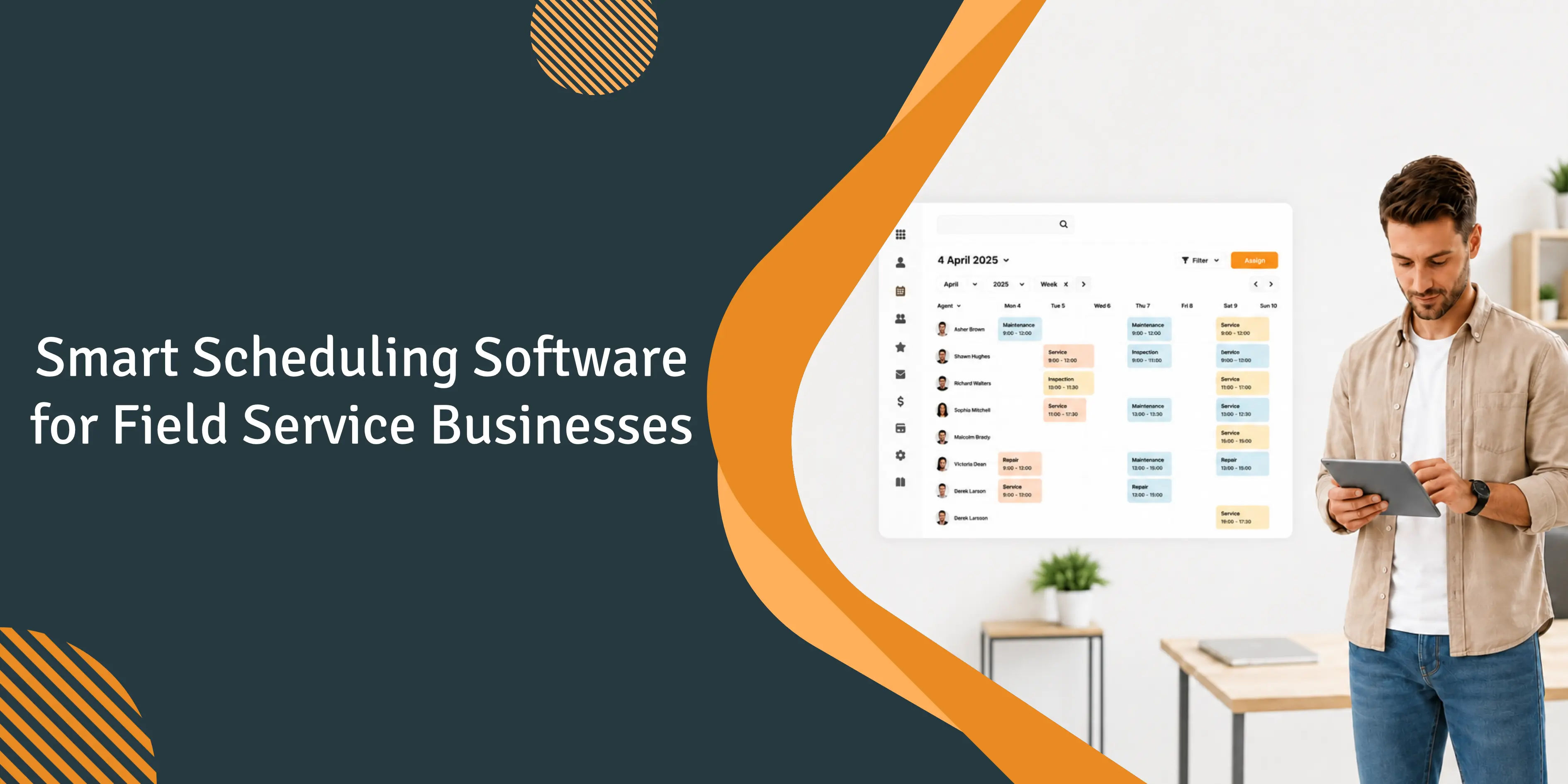
You've got a dispatcher, a whiteboard, a shared Google Calendar, and eight technicians who must be at the right spot at the right time on a daily basis. Through May, it works. By mid-July, it doesn’t.
This is what smart scheduling software for field service solves and it helps to understand how it works.
Why does scheduling break first when an 8-tech shop hits summer?
Imagine a mixed HVAC and plumbing shop that runs eight technicians from a single yard, mid-sized metro, late June. The dispatcher - a long-time CSR - creates the following day's agenda on a whiteboard by 4pm, then copies it onto the Google Calendar, and emails out the assignments. Through April and May, it works. In the mid of July, it starts to fall apart.
The maintenance call that starts at 7am runs 90 minutes because the homeowner installs two thermostats. At 10am, the dispatcher is constantly rearranging up to four different downstream stop options in her head. The customer was told ‘between 1 and 3’ isn't getting a courtesy phone call. The call comes in at 4 to inquire about the location of the technician. The complaint log is full of ETA complaints, not work complaints - and the techs are the ones who take the heat for the decisions made at the desk.
This is the kind of wall every growing service shop comes across. Tools that worked at three techs don't survive contact with eight. When owners talk on Quora about outgrowing scheduling is outgrowing the pattern is the same: a small operator starts with Google Forms, Calendar, and spreadsheets, then watches the system buckle, and starts looking for a tool that records the booking, schedules the job, and pushes it to the right tech without having to re-key it.
From 14 years of customer conversations, dispatchers in a typical 8-tech operation burn roughly 15 hours per week wrangling manual schedules. Shops we work with on drag-and-drop dispatch boards claw most of that back - because the schedule updates itself when a job slips. That recovered time is what smart scheduling and dispatch software actually buys you.
FPM STANCE: Most FSM software is over-engineered for a 5-person crew. You don't need a flight deck - you need something your dispatcher can run on day three and your techs are happy to open on day four. That's the bar. Any tool that fails isn't smart, it's just expensive.
Ready to get started with Field Promax?
Sign Up FreeWhat is smart scheduling?
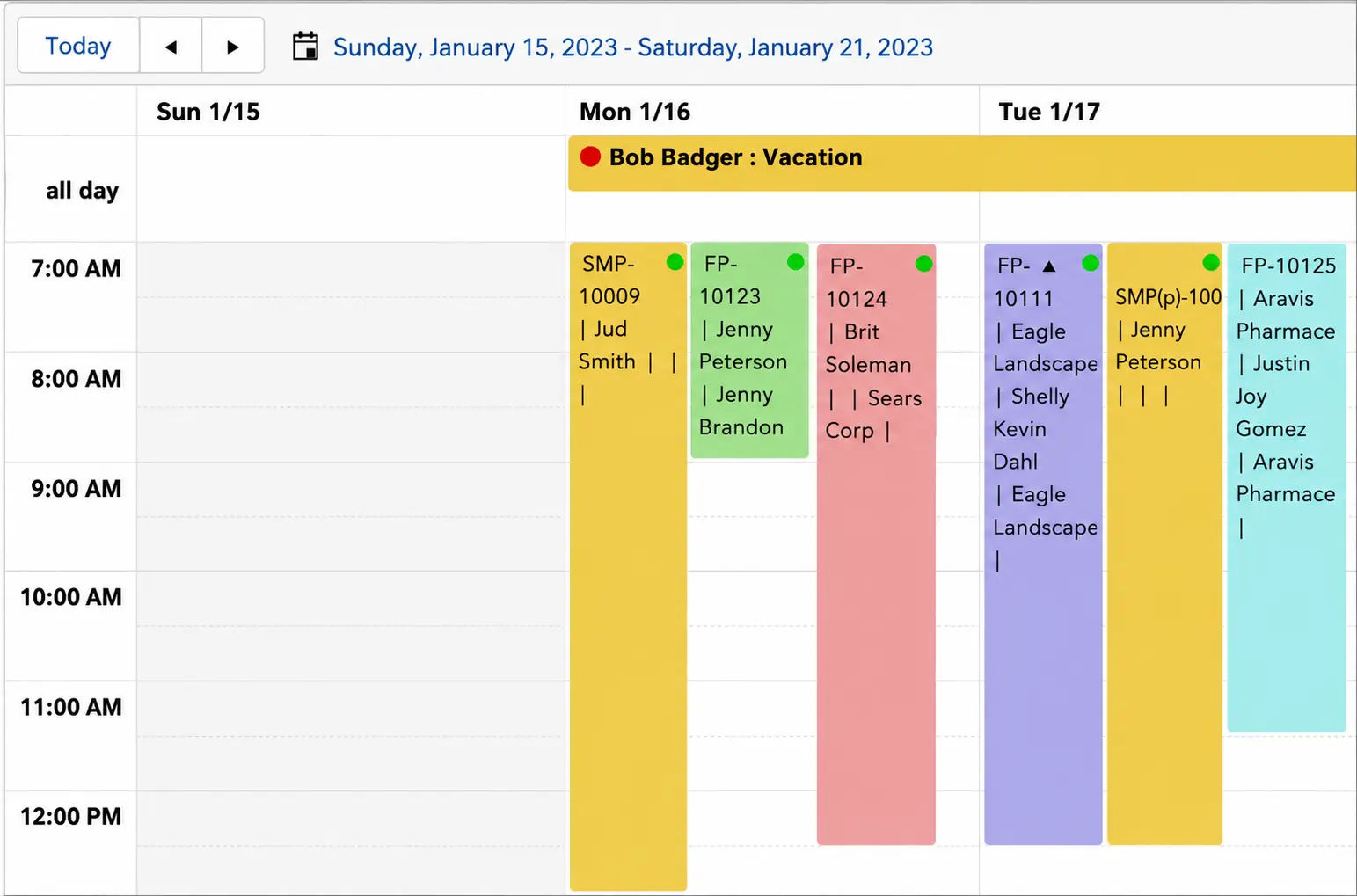
Smart scheduling software for field service is a system that makes decisions the whiteboard cannot take and runs them on live data: technician location, skill set, drive time, the customer's arrival time, what parts are in the truck. For the 8-tech shop, it replaces the dispatcher's mental model with an interface that the office and field can see.
The job is submitted via - phone, web form, or repeat customer auto-booked. It appears on a color-coded calendar visible to dispatch and to every technician's mobile app. The system will suggest the best assignment based on skill match, proximity, and workload, then informs the chosen tech. If the job starts at 7am and runs over the scheduled time, it is updated and the affected customers receive an updated ETA instantly.
McKinsey's research on tech-enabled field force optimization found productivity gains of roughly 10 to 20 percent by reducing discretionary time, cutting drive time, and improving job efficiency. Shops that see the high end are the ones whose technicians live in the mobile app.
How does smart scheduling actually work in an HVAC and plumbing shop?
Static scheduling is ideal for businesses that have fixed shifts: with two teams working on a fixed roster, predictable, well-planned in advance. Dynamic scheduling is a good fit for the 8-tech shop, where job sites shift through the day and emergencies cause disruption to the plan. For HVAC and plumbing, dynamic is the only method which can stand up to a week of extreme heat.
In a dynamic system typically, you'll get:
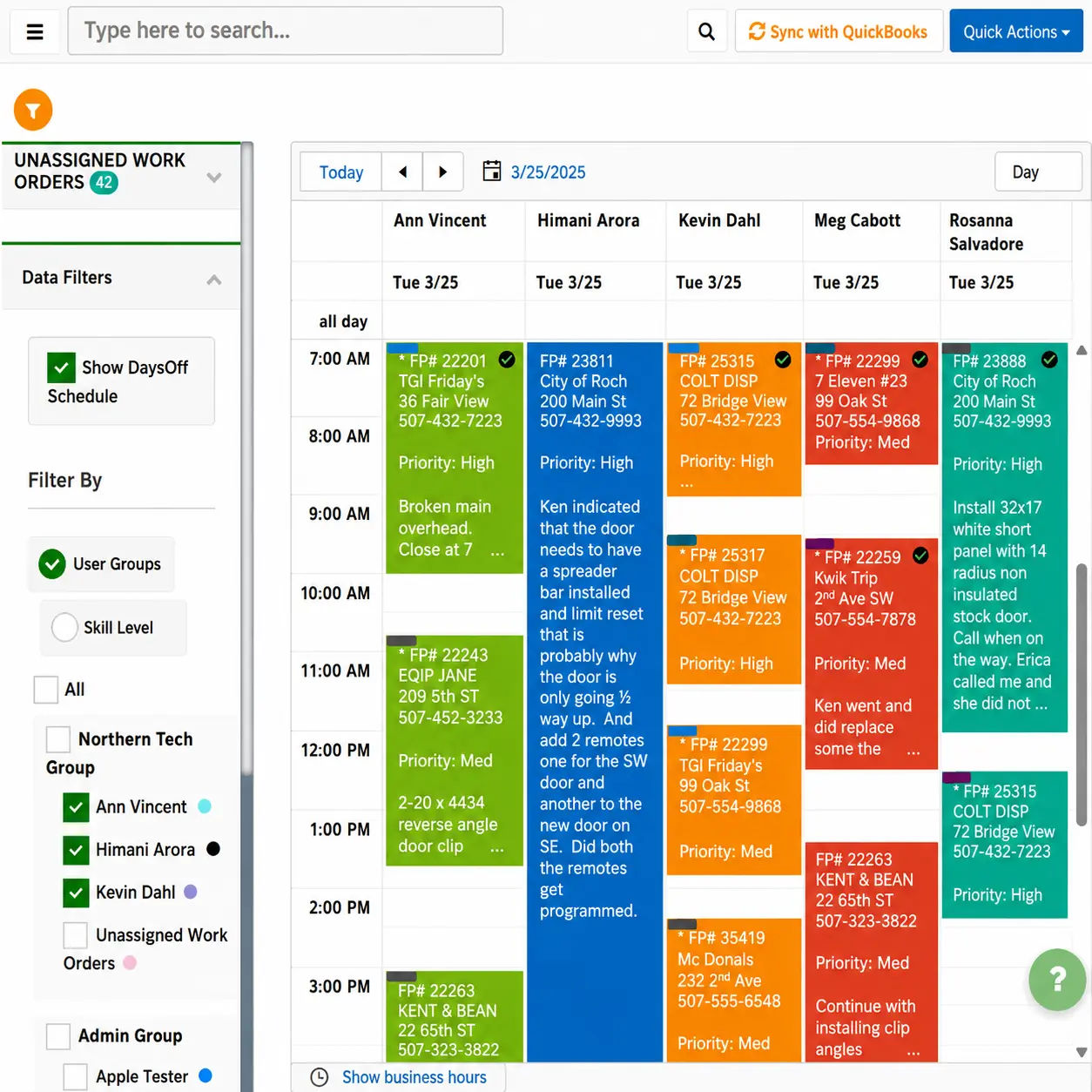
- A weekly and daily calendar view that reveals capacity gaps prior to them becoming same-day fires.
- A new-job form that collects customer, service type, address, window, and tech assignment in one screen
- Skills and certification routing (a Section 608 Type II job goes to a Type II certified tech, not the apprentice)
- Automated ETA text messages and a user-facing tracking link
- Mobile work orders that the technician fills out in the field, complete with signatures and photos, and that sync back in real time.
An HVAC contractor reviewing Field Promax on the QuickBooks App Store described the process of moving the paper-based system to paperless within little time, pointing out how easy it was to assign a team to different locations. The speed of the ramp is crucial: the shops that are successful are those who have the dispatcher and technicians trained in a matter of days, instead of the months-long rollout larger platforms quote.
Want a personalized demo?
See how Field Promax can transform your field operations
A new appointment takes under a minute to book. The dispatcher who was reshuffling four downstream stops in her head at 10am now reshuffles them with two clicks - and the techs see the change on their phones before they finish the current job. The field service mobile app is where that handoff happens.
A pattern across mid-size service contractors
With the operators we've worked with around 2018, similar patterns have been observed at shops within the 10-50 tech category. Consider a dispatcher from an integrated residential contractor running 15 to 20 techs in a single shop. The team was running the board the way our 8-tech scenario does, just at twice the amount. In the beginning of the summer, the dispatcher kept tech locations in her mind and assigned them based on the memory of who was closest.
In mid-summer the complaint log was almost exclusively ETA-related. Customers were told that ‘between 1 and 3’ discovered that the tech was not there when they called at 4. Techs were taking responsibility for the decisions they made on the desk, and the senior tech was becoming hostile about it.
Through the latter part of the season the dispatcher blocked the morning board by 7am. There was a rule: no reshuffles are allowed without a courtesy phone call first, and reroutes that are not urgent will be pushed to tomorrow. The initial version didn't work. CSRs were able to sneak same-day ads into the board until 9am. The rule was changed twice and a lengthy discussion with the manager about what types of calls could be able to bypass the lock to get the rule in place.
By the end of the next quarter, on-time arrival was visibly better and ETA complaints dropped to roughly a third. The tradeoff was real: a handful of same-day emergency calls got deferred or lost to a competitor each week. The senior tech was the holdout - he liked being the squeeze-in guy. This account is a composite assembled from a pattern we see repeatedly across small-to-mid contractors.
What changes when scheduling, dispatch, and billing share the same data?
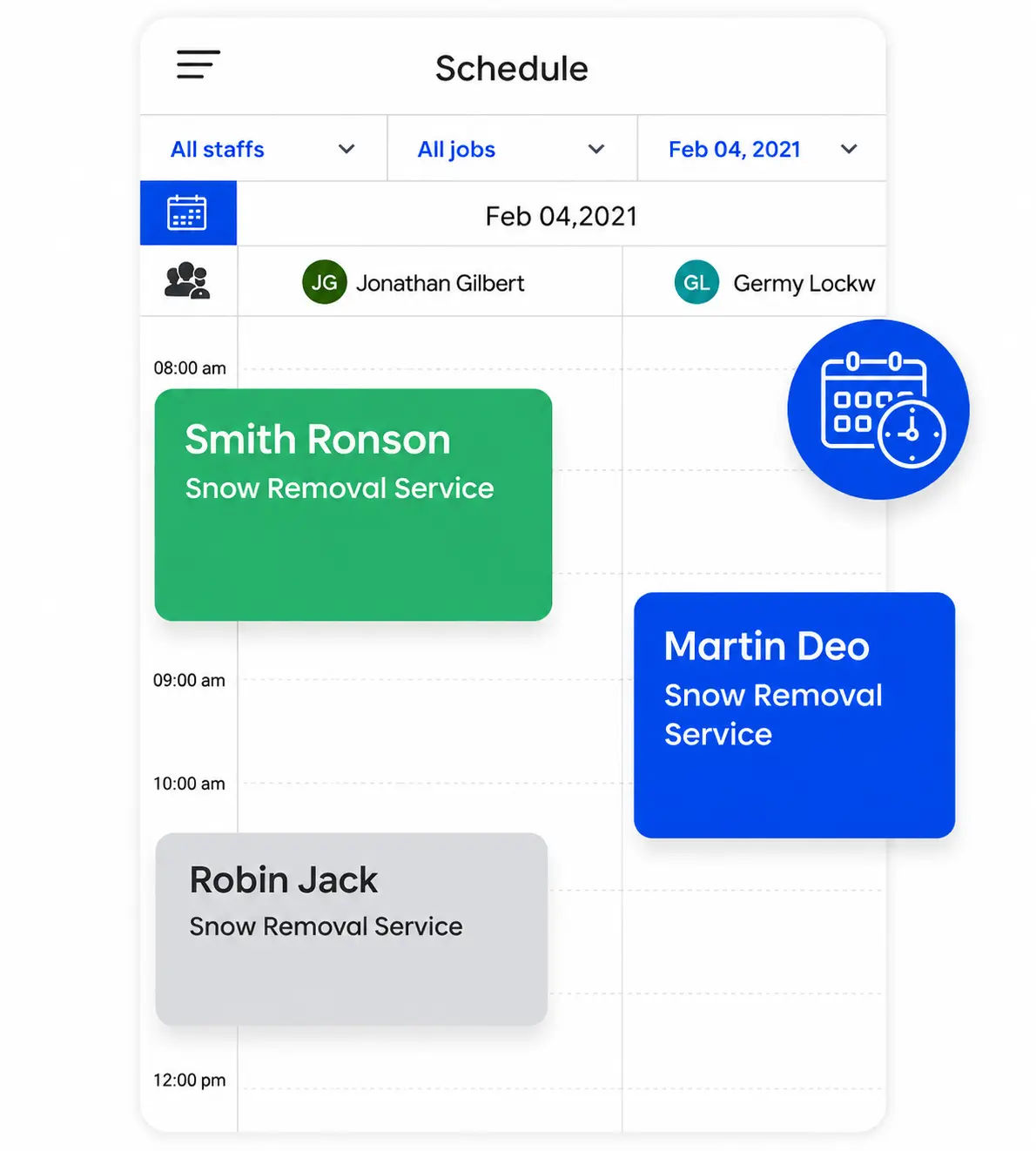
The biggest benefit of smart scheduling software is not the attractive calendar. It's what the calendar connects to. An appointment that's scheduled at 9am will be able to land on the tech's mobile app, generate a work order that is signed at 11 and then post to the QuickBooks invoice that same day, without anyone having to re-keying anything.
Owners on Quora consistently describe the same blind spot: they want to see where each tech actually is, not where the schedule said they should be. Live GPS visibility paired with the scheduling board closes that gap. The dispatcher who used to call three techs to find out who was closest now opens the GPS tracking view and assigns the right one in 10 seconds.
The second half is the backend. When scheduling data updates payroll and invoicing automatically, the Friday payroll issue disappears. Techs clock in and out on the mobile app, hours flow to timecards, timecards flow to payroll. Invoices are generated from the completed work.
order rather than from a clipboard. For shops coming from a QuickBooks-only setup, the two-way sync removes the duplicate-entry tax eating an afternoon a week.
The calendar feature is not where the value lives. The value is what the calendar connects to. The most common feature request isn't a prettier dispatch board - it's tighter dispatch-to-invoice automation. And I'll push back on a piece of conventional wisdom: most rollouts don't fail at the office. They fail in the field. Mobile-app adoption by your techs is the single biggest predictor of whether smart scheduling works. If the techs don't live in the app, the schedule never updates in real time and every downstream automation collapses.
- Joy Gomez, Founder of Field Promax
How does smart scheduling handle the schedule change that always happens?
Every Monday a tech calls in sick, two same-day requests are received before 8am, and then someone's truck is waiting at the dealer. Smart scheduling is built for that. Shift-swap workflows let available tech select the slot in real-time, while the dispatcher decides whether to approve the slot automatically or wait until review.
The most significant flex is that at the entrance. For a typical 5-20 tech shop that have a phone-only intake, calls that go voicemail after 5pm or on weekends, take a walk over to the next contractor. Owners we've talked to estimate about 35% of service requests occur outside of business hours - and shops we work with that turn on an online booking widget can capture that 35% as scheduled jobs by morning. The 8-tech shop gains both ways: the customer who could have called a competitor at 7pm books directly while the dispatcher comes into the shop on Monday and finds a board that's already half-built.
Why does workforce optimization actually matter for first-time fix rates?
The metric that decides whether a service shop is healthy is whether the tech fixes it on the first visit. Aberdeen Group's field-service research, summarized by Fieldpoint, put the industry average first-time fix rate around 75%, with best-in-class operations reaching roughly 88%. Shops climbing that gap do it by matching the right tech to the right job at dispatch time - which is what skill-based smart scheduling software for field service does automatically.
Industry benchmarks indicate that the urban HVAC and plumbing workers regularly drop 30% or more of their working hours to driving time, whereas well-planned operations limit it to less than 20%. Shops we work with that flip on optimized dispatch report drive-time shares that are closer to 20% - effectively a free tech and a half of billable hours that are reclaimed each week. Owners on Quora discussing route optimization point to the same need: general consumer GPS chooses routes that appear small on a map but ignore low bridges, weight restrictions, and access limits.
What do mobile access and credential tracking add for compliance-heavy trades?
Mobile is the layer that makes the rest real. The field service mobile app is where the tech accepts the job, sees customer history, captures photos, gets the signature, and triggers the invoice. Without it, the office has a beautiful calendar and the field has paper.
Credential tracking is the other piece. HVAC service businesses live by EPA Section 608, which requires technicians who service equipment containing refrigerants to hold a Type I, II, III, or Universal certification. Shops that pass surprise audits without scrambling are the ones whose credential records sit in the same system that builds the schedule. A scheduling system that knows which tech holds which cert won't accidentally route a refrigerant job to an uncertified apprentice. Same logic applies to ACCA Manual J load calculations, electrical license tiers, OSHA certificates, and state plumbing endorsements.
How does smart scheduling actually reduce labor costs?
The labor-cost story is a prediction story. Historical job data informs the system how long a typical AC tune-up will take in July, the frequency at which maintenance is converted into an upsell for repairs and which days are hot. The schedule is built according to the actual demand, not the guesswork. The 8-tech shop that pays time-and-a-half on a Saturday since the dispatcher didn't know the week's schedule clearly stopped working that way.
Job costing at the line-item level closes the loop. When the system tracks labor hours against quoted hours, the owner finally sees which job types are losing money, which technicians are consistently slow on which call types, and where the estimating template needs updating. The shops that get the biggest labor-cost reduction are the ones whose dispatchers can see a week ahead clearly enough to spread the load.
Is free scheduling software enough for an 8-tech field service shop?
Honest answer: no. Free tools such as Calendly, Setmore, and Google Calendar work fine for solo consultants and one-person appointments. They do not assign technicians, handle work orders, monitor GPS, or sync with QuickBooks. The 8-tech HVAC and plumbing shop which tries to create Calendar along with a spreadsheet and a paper invoice book work ends up where we started: ETA complaints, missed referrals, and the dispatcher who is running out of memory.
A small business reviewing Field Promax on the QuickBooks App Store described it as pulling scheduling from techs and into invoicing in one workflow, while also calling out the color-coded calendar and the ability for techs to generate their own service requests from the field. That last feature separates field-service-grade scheduling from standard appointment-booking: the tech who finds an additional repair on-site can create the work order on the truck without calling the office.
Picking software that fits a small-to-mid shop
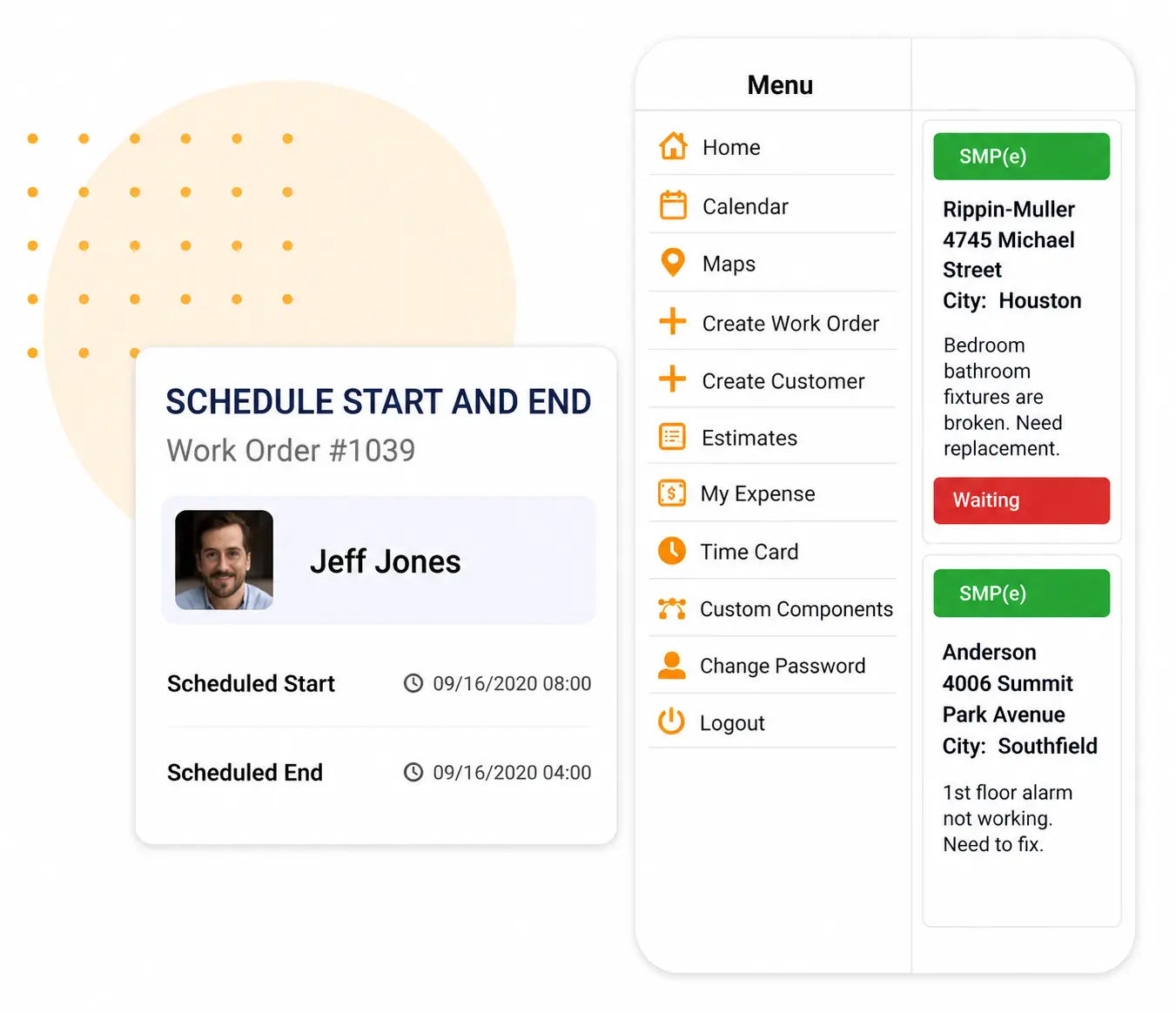
The 8-tech HVAC and plumbing shop doesn't need an enterprise FSM platform designed for 200-truck operations. It requires a system that does scheduling, dispatch, mobile work orders, GPS, and QuickBooks sync without a six-month rollout. Most shops that are implementing smart scheduling software for the first time have come from spreadsheets, paper, or QuickBooks-only setups - so the implementation process is measured in days.
Field Promax is built for that shape of shop. The scheduling logic flexes across HVAC, plumbing, electrical, lawn care, pest control, garage doors, and roughly two dozen other trade verticals, which matters for any owner running a mixed crew or expanding into an adjacent service line.
Pricing starts at $99/month for the Light plan (1 user), $159/month for Standard (5 users), and $239/month for Premium (12 users).
Field service scheduling benchmarks: how does your shop stack up?
These are the numbers that differentiate shops that are tight from those that rely on guesswork. If you're not sure which side you're on in most of these, it's the first thing you need to address.
The number that is most surprising to most owners is the utilization rate difference. Most shops running manual dispatch have 50-65% billable utilization - which means that their techs are earning revenue for roughly half their available hours. Companies implementing intelligent scheduling see 20-30% improvements in technician utilization, according to fieldservicesoftware.io. For a four-tech team billing at $85/hour, this level of improvement could be enough to pay for your software subscription several times per month.
The market growth story is more crucial for one practical reason: the tools are becoming more efficient and effective, quickly. More than 72% of service organizations report using AI tools by 2026, according to BroCoders - and that number was in single digits just five years ago. Shops that have adopted now are building operational habits on platforms that are constantly improving, not ones they'll need to replace in 18 months.
| KPI | Industry Average | Top Performer Target | Source |
| First-time fix rate | 68-75% | 85-90% | ServiceWorks Academy, 2025; Aberdeen Group via Fieldpoint |
| Technician utilization rate | 50-65% of billable hours | 75-85% | fieldservicesoftware.io, 2025 |
| Missed/no-show appointment rate | 10-15% | Under 3% | Forrester Total Economic Impact study, Salesforce, 2025 |
| Windshield time share (urban crews) | 30%+ of workday | Under 20% with optimized routing | Field Promax customer data; industry benchmarks |
| Dispatcher time on manual scheduling | ~15 hrs/week (8-tech shop) | Under 5 hrs/week with smart scheduling | Field Promax, 14 years customer conversations |
| After-hours service requests not captured | ~35% walk to competitors | Captured via online booking widget | Field Promax owner conversations |
| Productivity gain from tech-enabled optimization | Baseline (manual dispatch) | 10-20% improvement | McKinsey research on tech-enabled field force optimization |
| Year | Global FSM Market Value | Key Driver | Source |
| 2022 | ~$4.0 billion | SMB digital transformation post-pandemic | Grand View Research (estimated) |
| 2023 | ~$4.6 billion | AI dispatch tools entering the SMB market | Mordor Intelligence |
| 2024 | ~$5.0 billion | IoT integration, predictive maintenance growth | Mordor Intelligence |
| 2025 | $5.37-$5.66 billion | AI-native platforms; workforce shortage accelerating automation | Fortune Business Insights; Mordor Intelligence |
| 2026 | $6.14-$6.26 billion | Self-service booking, real-time data adoption | Fortune Business Insights; Mordor Intelligence |
| 2030 (projected) | $9.68 billion+ | Full AI scheduling autonomy, IoT-driven predictive service | Grand View Research; BroCoders, 2026 |
Conclusion
The 8-tech HVAC and plumbing scenario in this guide doesn't require enterprise FSM. It needs a system the dispatcher can run on day three and the techs are ready to go at the end of day four.
Frequently Asked Questions

Content Creator
Bhargavi Halthore is a content writer at Field Promax, a field service management platform serving trades businesses across the USA and Canada. With over a decade of experience writing for business owners, she brings detailed, ground-level insight to every topic she covers. Her research goes beyond search results - she digs into LinkedIn groups, Facebook communities, and Reddit forums to understand what field service business owners are actually dealing with on the ground. She speaks directly with industry professionals, understands their day-to-day challenges, and translates that into content that is practical and actionable. What you read in her articles reflects real industry patterns, not theory.