Fleet Management & Maintenance Software
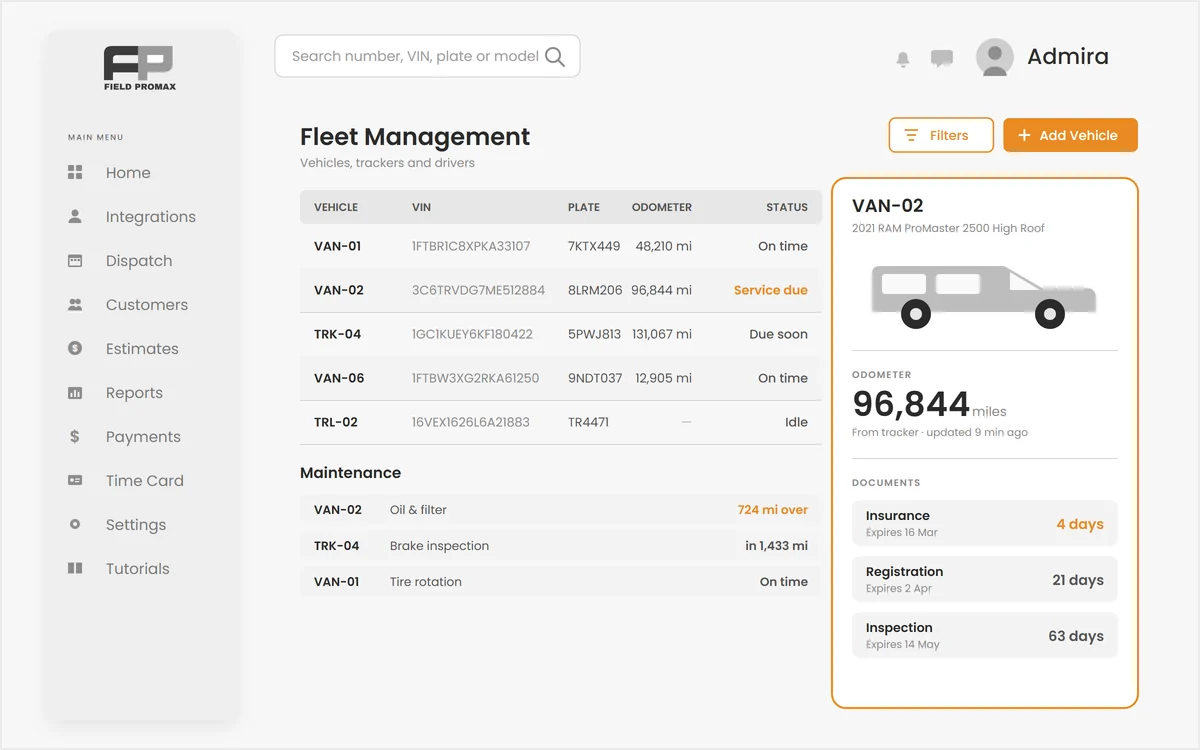
Do you know what each service vehicle really costs to run?
Field Promax fleet management connects GPS trackers in your service vehicles to the same system as your work orders: true odometer, preventive maintenance, fuel economy, cost per mile and driver safety scores. Service happens on schedule, and the cost of running each truck stops being a guess.
Trusted by 100,000+ contractors. Rated 4.7 on Google and 4.2 on Capterra.
Every Vehicle, Fully On File
Stop guessing which van is due.
Enter a VIN once and Field Promax decodes year, make and model for you. The odometer comes straight from the vehicle's GPS tracker, with a manual starting-mileage offset for trucks that already have miles on them, so every maintenance rule works from real mileage rather than a guess.
Request Demo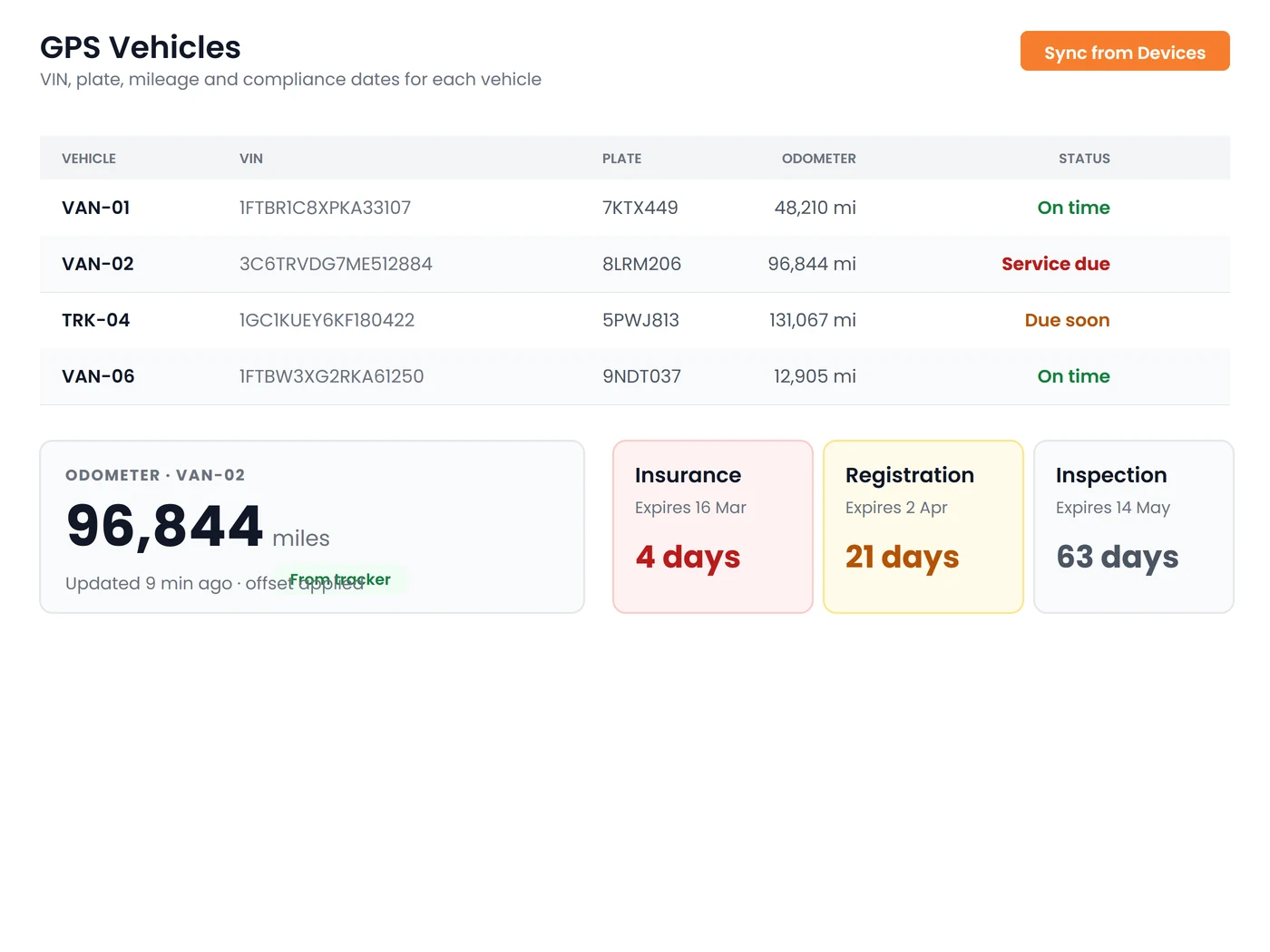
Service Schedules That Watch the Odometer For You
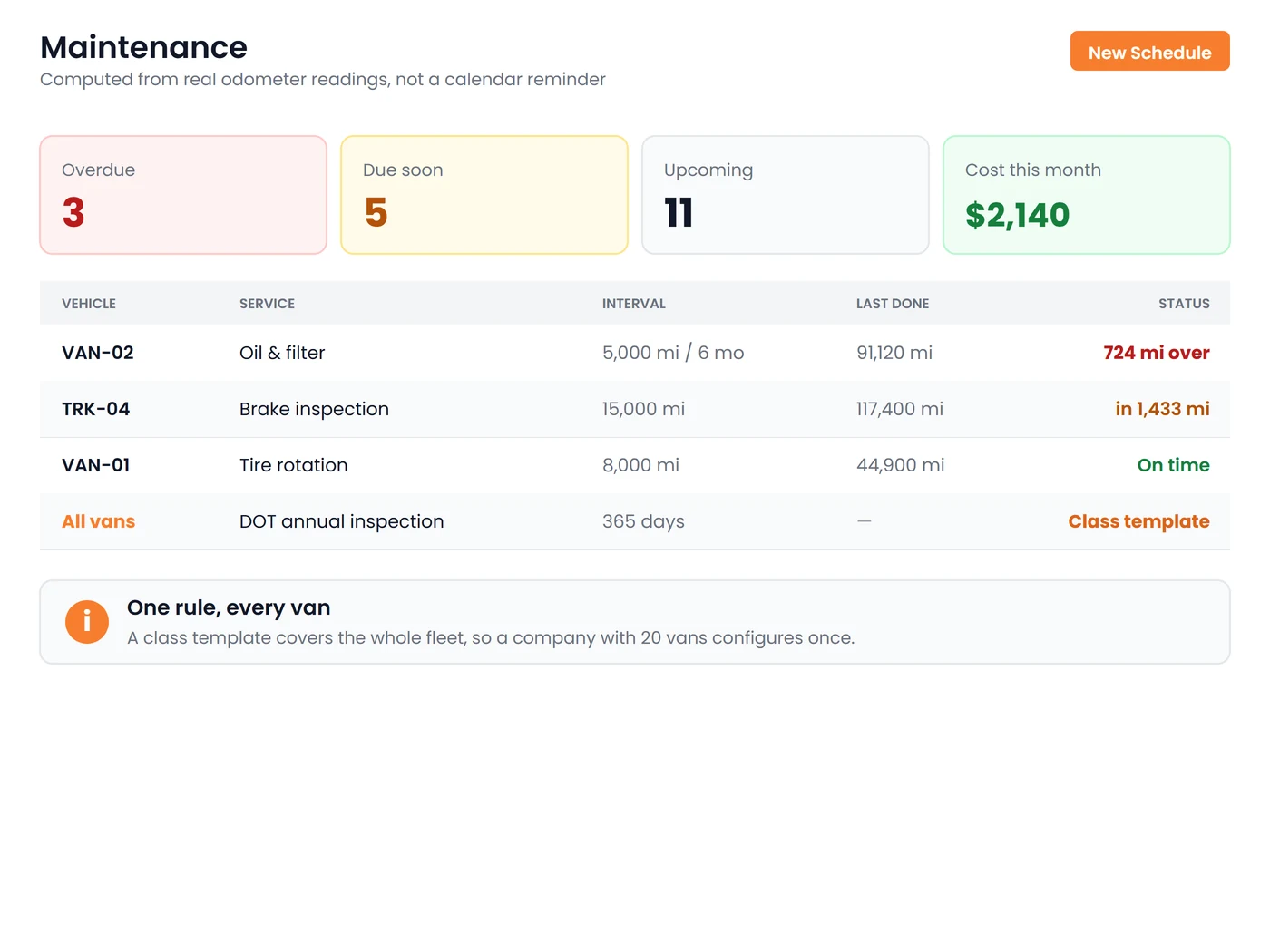
Oil change every 5,000 miles or 6 months, whichever comes first.
Build a rule for one vehicle or a class template that covers your whole van fleet at once, including trucks you add next year. Field Promax works out what is overdue, due soon and upcoming from real mileage, logs each service with its cost, and lets you snooze a reminder without hiding an overdue item.
Request DemoRun the Fleet, Not Just the Map
Location is the easy part. These are the numbers that decide whether a truck pays for itself:
Live GPS Tracking
Plug-in OBD-II or wired asset trackers report each vehicle's position to a live map in Field Promax, right alongside the work orders those technicians are driving to.
Fuel Log & Real MPG
Log fuel purchases with gallons, price and odometer. Fuel economy is computed across genuine full-tank-to-full-tank segments, so partial fills do not distort the number, and any reading far outside that vehicle's own history is flagged for a second look.
Cost Per Mile
Fuel and logged maintenance are rolled against the miles actually driven, so you can compare what each truck really costs to run. Until there is enough data, it says so instead of showing a misleading zero.
Driver Safety Scorecards
Speeding, excessive idling and after-hours driving are detected against thresholds you set, scored per 100 miles so a high-mileage driver is judged fairly, and rolled into a per-driver safety ranking.
Vehicle Assignment History
Know which technician had which truck on which day, so an event from last Tuesday still names the right driver instead of whoever happens to be in it today.
Tracking Policy & Consent
Load a state-specific disclosure template, publish your tracking policy, and record each employee's acknowledgement of the current version. Republishing asks everyone to acknowledge again, so the paperwork stays current.
Frequently Asked Questions
Fleet management software tracks the vehicles a business runs: where they are, how many miles they have covered, when they are due for service, what they cost in fuel and maintenance, and how they are being driven. Field Promax builds this into the same cloud-based system that schedules the technicians driving those vehicles, so you do not need a separate fleet tool.
Fleet management tracks the vehicles; GPS tracking follows the technicians. Field Promax GPS tracking uses the mobile app on each technician's phone to show where your technicians are. Fleet management uses a GPS tracker fitted in each vehicle to report its position and odometer, which then drive maintenance schedules, fuel economy, cost per mile and driver scorecards. See GPS tracking.
A GPS tracker in each vehicle, either a plug-in OBD-II unit or a hardwired tracker, reports position and odometer to Field Promax. An OBD-II unit reads the vehicle's own VIN and dash odometer. A hardwired unit reports distance since it was fitted, so you enter a starting mileage when it goes in. The odometer then drives maintenance schedules, fuel economy and cost per mile.
No. Field Promax includes preventive maintenance rules by miles or months, whichever comes first, applied per vehicle or to a whole vehicle class. It works out what is overdue, due soon and upcoming from the odometer, logs each service with its cost, and feeds that spend into cost per mile. A new rule on a high-mileage van starts as upcoming, not years overdue.
Yes. A maintenance rule written once for a vehicle class covers every van in that class, including vehicles you add later, so a small office can keep the fleet on schedule. Fleet data sits beside your work orders, schedules, invoices and timecards in one account.
Field Promax adds each vehicle's logged fuel and maintenance spend over the last 12 months and divides it by the miles it actually drove, taken from its odometer readings. A vehicle with no recorded mileage shows as unknown rather than a misleading $0.00.
From fuel purchases you log with gallons, price and odometer. Field Promax only measures MPG between two full-tank fills and counts partial fills toward the next full tank, so a top-up never produces a false number.
Speeding above a threshold you set, excessive idling and after-hours driving. Events are attributed to whoever was assigned to the vehicle at the time and scored per 100 miles so high-mileage drivers are judged fairly. Drivers with under 100 miles in the period are listed but not ranked. Harsh braking, acceleration and engine fault codes are not measured.
Yes. Field Promax includes a tracking policy template with notes on state notice rules, such as those in New York, Connecticut and Delaware. You publish your policy, each employee acknowledges the current version, and an access log records who has looked at location data.
There is no free plan, but you can try Field Promax free for 14 days after a short demo. Plans start at $99/month in the US and A$149/month in Australia. See plans and pricing.