Construction Invoicing Dispute Management: What Actually Prevents a Contested Invoice

Fifty-nine percent of small businesses are carrying invoices overdue by 30 days or more, and the average amount owed sits at $17,700, per the QuickBooks Small Business Late Payments Report. In our customer base, the contractors feeling that hardest are the ones who bill from the office days after the crew leaves site, by which point the customer has forgotten which change order they approved.
Owners talking about collections on Quora describe the same issues: customers going beyond net-30 payment terms without a reason, months spent trying to recover money that has already been earned, and cash flow planning that becomes a mess even when the paperwork is clean. The issue usually begins with an invoice that the client is unable to reconcile with the agreed-upon terms, rather than an outright refusal to pay. In our experience, many manually keyed invoices sent by 5-20 tech shops are returned for disputes or corrections because of errors in part numbers, missing line items, or incorrectly entered hours. Each issue triggers a phone call or a resend and adds another week to the payment cycle.
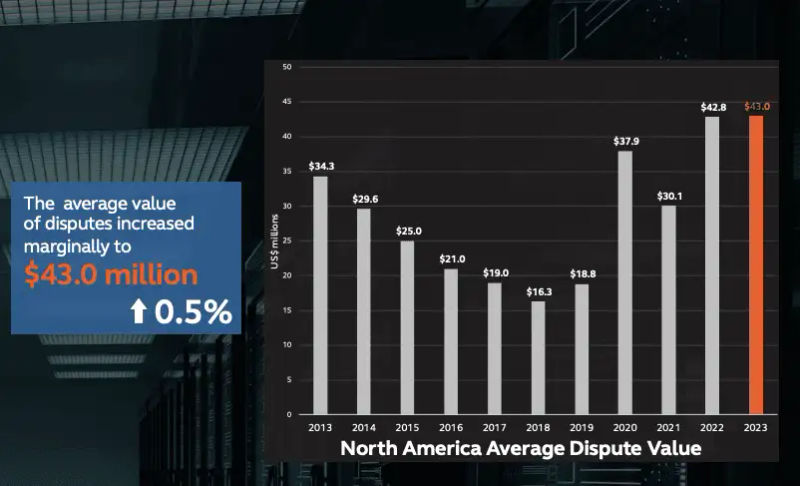
Arcadis' 2024 Construction Disputes Report puts the global average dispute value at $42.8 million against 14 months to resolve, with North America at $21 million over 15.6 months, per this summary of the report's North America findings. Those are megaproject figures. The small-contractor version of the same problem, in our experience, is a disputed change order sitting unpaid for weeks while the owner rebuilds a timeline out of text messages, truck photos, and a tech's memory. The practices below are ordered by how much dispute risk they remove per hour of effort.

What we've seen across multi-trade operators
A pattern we've seen across multi-trade businesses since the beginning of 2018 takes a particular form: an owner-operator runs HVAC and plumbing teams with dispatchers and around two dozen technicians in a mid-sized Midwestern metro area. The reason for the problem was not the software. It was a dispatcher operating an HVAC board on one system and a plumbing board on another, then checking for scheduling overlaps on Tuesday morning, when technicians were being assigned to a tune-up while an identical plumbing rough-in was being scheduled on the second board.
In the midst of a busy spring and summer, the shop double-booked technicians licensed for both trades because the two calendars were reconstructed from memory. Estimate language compounded the problem: HVAC estimates included weather and equipment-availability disclaimers, while plumbing estimates included material-assumption disclaimers. When a scope of work involved both trades, customers pointed to whichever disclaimer favored them.
The owner merged the two boards into one shared calendar that allowed the dispatcher to work from a single system. He also rewrote the two disclaimers into a single template covering scope limits, material assumptions, and weather- and access-related contingencies in plain English.
Double bookings were essentially eliminated, but the problems did not stop immediately. During the first month, the unified calendar exposed disputes that had previously been concealed. The disclaimer required two revisions after a client contested a water damage exclusion that the plumbing lead considered standard but that the client viewed as overreach when it appeared in the template. Plumbing foremen were the last to adopt the shared calendar.
This is a composite anchored to the most common variation of this pattern among the multi-trade operators we work with.

Contract terms that decide the dispute before the invoice does
The contract defines the rules that you'll argue about for the next nine months. Informal agreements are how businesses end up litigating a handshake.
Write these down in plain language:
- Deadlines for work, broken down by module or phase rather than a single deadline at the end
- Payment dates, payment amounts, and when the payment clock starts (job completion, invoice receipt, or owner acceptance)
- The interest rate for late payments and when interest begins to accrue
- Named contact persons for disputes on both sides, identified by role rather than individual name, so staff turnover does not invalidate the clause
- Each escalation step, including how long it takes before the next step can be initiated
- The retainage percentage and the specific event that triggers its release
State law already sets a floor. ASA's Prompt Payment Laws in the 50 States shows retainage caps commonly running 5% to 10% with statutory late interest often at 1% to 1.5% per month; Florida allows 2% per month on late construction payments, and Alabama accrues 1% per month (12% per annum) on unpaid balances and excess retainage. In our customer base the interest clause is the most under-used term in the entire contract. Owners write a softer rate than statute permits, then never invoke it, and net-30 quietly becomes net-whenever. Charge it once on a repeat commercial account and watch that account's payment behavior change.
The fast invoice beats the perfect invoice
Itemization makes a disputed line easier to identify and resolve. It separates parts by number, labor hours by date and technician, trips charged as trip costs, and change orders as separate lines with their approval dates.
Speed matters as much as detail. ServiceTitan reports that 20% of contractors take more than a week to send an invoice and 33% of customer payments arrive more than a week late. In our experience, shops that flip to on-site mobile invoicing put the bill in front of the customer before the tech leaves the driveway and get paid noticeably faster. The mechanism is memory: a customer who signs on the tech's phone while the equipment is still warm has very little left to dispute.
Most of our customers arrive from spreadsheets, paper, or a QuickBooks-only setup, which is exactly where mistyped hours and dropped line items come from. Generating the bill in the field service invoicing software on the tech's mobile app removes the evening re-entry step that manufactures the dispute.

I review every support ticket I receive through Field Promax, and invoicing disputes nearly never turn into legal issues. They usually result from a customer wanting to know why there are four hours of labor on an hour-long visit. Based on what we see in the industry, tighter contract language makes disputes easier to avoid. I'd place contract language third in importance. First, you need to send an invoice before the client forgets the task. Another factor is the detail in each line item, which a homeowner should be able to understand without help. Our most-requested feature every year is a more precise, automated dispatch-to-invoice system. The greater the gap between completing the task and generating the invoice, the more information someone in the office needs to recover about what happened. Reconstruction is where incorrect numbers get entered.
Which payment method moves your write-off rate?
The payment method a customer uses determines how easily you can collect. Based on our experience, businesses that accept checks only carry the highest burden of bad debt. Shops that accept credit cards and ACH payments at the job site write off much less because the transaction is processed before the technician pulls out of the driveway.
The Federal Reserve's 2024 business payments insights study found 60% of businesses using standard ACH and 56% using Same Day ACH, while checks stayed high among small firms at 83%. We see that same split in field service: the office still prefers checks, the customer wants a link.
Owners on Quora make the same argument about paper invoices and bank transfers: they allow people to delay payment because there is no one-click payment method. Recurring work is where this becomes fragile. Maintenance agreements fall apart when cards expire, and automatic charges stop without notice until a quarter falls short. Check the failed-card process before you rely on the schedule.

| Check | No processing fee, but mail float plus a bank trip | Check-only shops carry the heaviest bad-debt load we see |
|---|---|---|
| Credit card | Roughly 1.5%-3.5% plus a fixed per-transaction fee | Fastest close on residential jobs; far fewer write-offs |
| ACH | Flat fee of roughly $0.20-$1.50 per transaction | Cheapest route for larger commercial invoices and recurring accounts |
Progress updates remove the end-of-job shock
Clients will forgive a timeline that has slipped. They are less likely to accept an unexpected total. At the beginning and end of each phase, make a quick note stating the work you've completed, the hours billed to date, the next steps, and anything beyond your control that has changed. You can ask questions about the scope and record the responses.
That log is what you reach for in a dispute. Keeping tasks, messages, and customer replies in one system, whether through construction scheduling software or a fuller construction management setup, gives every dispatcher and lead the same history instead of one person's inbox. Supply delays and inclement weather are where update frequency should double.
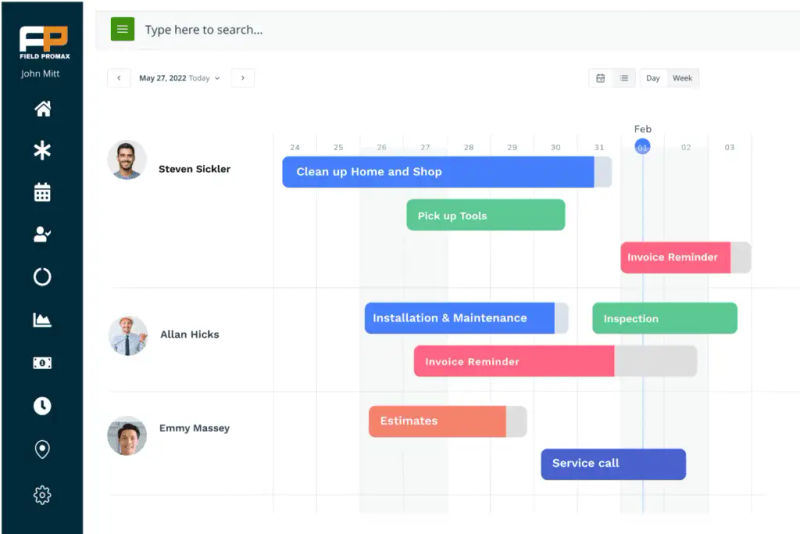
Shops that follow this procedure use the note at the end of each phase as a preview of the invoice. When the final invoice arrives, the customer has already reviewed each number twice.
What each escalation step actually costs you
Choose the order of dispute resolution before you need it, then include it in the contract.
- Negotiation: Begin here. Most disputes result in a phone call followed by a new invoice showing the approval date on the contested line item.
- Mediation: A low-cost, neutral, third-party process that is non-binding compared with the next step. It is used when preserving the business relationship is worthwhile.
- Arbitration: A more formal process in which the decision is generally binding on both sides. The arbitrator is typically an attorney or construction expert. You are bound by the decision.
- Litigation: It is expensive, time-consuming, and usually ends the relationship with the client. It is rarely justified.
The remedy most contractors reach for before court is the mechanics lien. A Levelset survey found 58% of respondents had filed one and 98% had threatened to file, reported in its US construction statistics roundup. In our customer base the threat works far more often than the filing, and only when the documentation is clean: signed work orders, dated change approvals, delivery records. Lien deadlines are state-specific and short, so check yours before the invoice ages out of remedy.

The documentation that wins a disputed invoice
Maintain them by project, in one location, rather than splitting them across emails or keeping them in your truck's glovebox.
- Construction agreement: Scope of work, supplier information, delay clauses, and contractor protections
- General conditions: The legal framework for the project
- Specifications: Equipment inventory, material requirements and acceptable alternatives, and mandatory tests
- Construction schedule: Phase dates and permit milestones
- Cost estimate: Labor, materials, overhead, and contingencies
- Signed work orders and dated change-order authorizations. Together, these documents can help settle disagreements.
Operators describe the monthly grind of chasing invoices by hand: reminder emails, a spreadsheet, the owner personally babysitting accounts. Automate the nudge instead. In our experience, reminders that start early and repeat on a schedule collect more than a carefully worded letter at day 60, and they cost nobody a relationship. Syncing invoices and payments through QuickBooks integration keeps your AR ledger and job records telling one story, which matters when a customer challenges a number and you need the original entry rather than a retyped copy.
Crew capability, and the legal ground you stand on
Disputes cluster on jobs where the work was defensible but the paperwork wasn't, which makes prevention partly a training problem. Supporting specialized certifications raises the technical standard of the crew. The field habits that save invoices are smaller: photograph the condition before and after, get the change order approved over the phone before the part goes in, and close the job in the app before leaving the driveway.

A dispute over an invoice in the private sector is typically handled in civil court within the state where the work was completed. Federal court is primarily used for federal projects. Check your state's prompt-payment and lien deadlines before you start negotiations, since your leverage depends on how much time remains under the applicable statute.
Conclusion
Disputes can arise from weather, delivery times, and customers' memories of verbal agreements. The only things you can control are the gap between completing the project and sending the invoice, the details included on the invoice, and how easily you allow customers to make payments. Tighten these processes, and you can prevent many disputes from escalating.
Frequently Asked Questions

Content Creator
Bhargavi Halthore is a content writer at Field Promax, a field service management platform serving trades businesses across the USA and Canada. With over a decade of experience writing for business owners, she brings detailed, ground-level insight to every topic she covers. Her research goes beyond search results - she digs into LinkedIn groups, Facebook communities, and Reddit forums to understand what field service business owners are actually dealing with on the ground. She speaks directly with industry professionals, understands their day-to-day challenges, and translates that into content that is practical and actionable. What you read in her articles reflects real industry patterns, not theory.